Installation guide
 Owner’s manual
 Error Codes



What is the most common problem with a GE refrigerator?
The most common GE refrigerator problem is a cooling complaint (refrigerator too warm, freezer too warm, or temperature swings). On the GE PYE23PSDCSS, the most frequent root causes are restricted airflow from dirty condenser coils, a failing fan motor, or a defrost system issue that lets frost block the evaporator.
- Confirm the controls are set to normal temps (most households use 37°F fresh food and 0°F freezer); verify in the PYE23PSDCSS owner’s manual.
- Make sure vents inside the compartments are not blocked by food packages.
- Clean the condenser area (dust buildup commonly causes warm temps and long run times).
- Listen for fans: an evaporator fan should run when the compressor is running and the doors are closed.
- Check door closing and gasket seal; a door left slightly open can mimic a cooling failure.
| Symptom | Most common cause | Example part for PYE23PSDCSS |
|---|---|---|
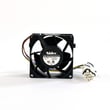
| Fresh food warm, freezer OK | Weak airflow in fresh food section | Refrigerator evaporator fan motor WR60X25858 |
| Both sections warm | Dirty condenser, condenser fan issue, or sealed system problem | Condenser fan motor assembly (model-specific) |
| Frost buildup, warm temps | Defrost heater, sensor, or thermostat problem | Refrigerator defrost heater WR51X10131 |
| Ice maker slow or no ice | Water supply restriction, filter, valve, or ice maker issue | Refrigerator water filter RPWFE |
Cooling problems usually get worse over time. A simple airflow restriction can lead to longer run times, temperature swings, and food spoilage. Catching a fan or defrost issue early also helps prevent heavy frost that blocks vents and stops proper circulation.
- Use the PYE23PSDCSS owner’s manual for control settings, alarm behavior, and basic operating checks.
- If the compressor runs but temperatures do not improve after cleaning and airflow checks, professional diagnosis is the fastest next step (sealed system and electronic diagnostics can require specialized tools).
Last updated: February 2026
How to remove bottom grille on GE refrigerator?
On the GE PYE23PSDCSS bottom-mount refrigerator, the bottom grille (base grille) is typically held in place by a few screws and/or snap tabs. We remove it by taking out the fasteners first, then pulling the grille straight out from the cabinet base so the retaining clips release evenly.
- Unplug the refrigerator or switch off power at the breaker (recommended anytime you are working near wiring or fans).
- Pull the refrigerator forward a few inches for access (protect the floor).
- Look along the top edge and corners of the grille for screws.
- Remove any screws with a Phillips screwdriver.
- Grip the grille near both ends and pull straight outward; if it resists, wiggle gently side-to-side to release the snap tabs.
- Set the grille aside and keep the screws together for reinstallation.
With the grille removed, we usually take a minute to check for airflow restrictions and signs of leaks.
| Quick check | What you are looking for | Why it helps |
|---|---|---|
| Dust and pet hair | Lint buildup near the front intake area | Helps cooling efficiency and reduces run time |
| Water traces | Dampness, mineral spots, or puddling | Points to a drip or defrost drain issue |
| Unusual noise | Rattling or vibration when running | Can indicate a loose panel or fan issue |
- Line the grille up with the cabinet base.
- Push it in evenly until it seats flush.
- Reinstall the screws snugly (do not overtighten and crack plastic).
The bottom grille helps protect components and supports proper airflow. If it is loose, blocked, or installed crooked, the refrigerator can run warmer, get noisier, or collect dust faster.
For model-specific handling and safety notes (including moving and access guidance), follow the PYE23PSDCSS installation guide.
Last updated: February 2026
What's better, top mount or bottom mount fridge?
A bottom-mount refrigerator like the GE PYE23PSDCSS is usually better for everyday convenience because the fresh-food section sits at eye level, so you bend less for the items you use most. A top-mount is often simpler and can be a better value if you use the freezer more.
| Feature | Top-mount (freezer on top) | Bottom-mount (freezer on bottom) |
|---|---|---|
| Fresh-food access | Lower, more bending | Higher, easier daily access |
| Freezer access | Easiest | More bending (drawer style) |
| Organization | Basic shelves | Often better drawers and zones |
| Space planning | Often a bit less wide/deep | Often deeper; check clearances |
- You cook often and want refrigerator shelves at eye level
- You prefer freezer drawers for organizing bags, boxes, and bins
- You want easier access to deli drawers and frequently used items
- Your kitchen layout can handle the depth and door swing
For the GE PYE23PSDCSS, installation clearances matter; the guide calls out side, top, and back spacing for airflow and hookups. Use the installation guide to confirm your opening width and required clearances before deciding.
- You use frozen foods daily and want the freezer at chest height
- You want a simpler layout with fewer drawers and mechanisms
- You are prioritizing upfront cost and straightforward storage
Before choosing bottom-mount, we recommend verifying these basics from the PYE23PSDCSS owner’s manual:
- Passageway width to move the refrigerator in without damage
- Cabinet opening width (many installations target at least 36 inches)
- Clearance behind the unit for connections (water line, power cord)
- Room for doors and freezer drawer to open fully
“Better” usually comes down to how you use the appliance. If you reach into the fresh-food compartment many times a day, bottom-mount designs reduce bending and make daily organization easier. If you live out of the freezer, a top-mount keeps those items more accessible.
Last updated: February 2026