 Installation guide
 Owner’s manual



How to adjust a GE dishwasher door?
On the GE GDF510PSJ5SS dishwasher, we adjust the door by balancing the door springs (not by “bending” the door). When spring tension is set correctly, the door stays in position from about 20° to 70° and does not drop open or slam shut.
How to check and adjust door balance
- Open the door and watch how it moves.
- If the door falls open too fast, increase spring tension.
- If the door is hard to open or wants to close by itself, decrease spring tension.
- Adjust both sides to the same tension setting.
What to look for (quick test):
- Door closes by itself when barely open (within about 20°): spring tension is too high
- Door stays put between about 20° and 70°: tension is correct
- Door drops fully open past about 70°: spring tension is too low
Common causes when the door feels “off”
- Spring cable slipped off the pulley shoulders
- Left and right springs set to different tension positions
- Dishwasher not level, causing the door to rub the tub or racks to roll
- Unit pushed in too tight or installed too high, stressing the door alignment
Leveling and fit checks that affect the door
A door that hits the tub or feels misaligned is often an installation and leveling issue. We recommend these checks from the installation guide:
- Verify the dishwasher is level left to right and front to back
- Confirm all four leveling legs are firmly on the floor
- Pull racks halfway out; they should stay put (not roll in or out)
- Close the door; it should not hit the side of the tub
- Avoid pushing on the front door panel while positioning the dishwasher
Door behavior and what to adjust
| Symptom | Most likely adjustment | What we do |
|---|---|---|
| Door slams open | Increase spring tension | Move both springs to a higher tension setting equally |
| Door won’t stay open | Increase spring tension | Check cable routing on pulleys, then increase equally |
| Door snaps shut | Decrease spring tension | Reduce tension equally on both sides |
| Door rubs tub | Leveling/position issue | Re-level using the legs, then recheck door swing |
Why it matters
Correct door balance helps prevent the door from dropping, protects the hinges and spring cables, and helps the door close smoothly so the latch can engage consistently.
Last updated: February 2026
How to check GE dishwasher model number?
On your GE GDF510PSJ5SS dishwasher, we check the model number on the rating label located on the tub wall just inside the door (typically on the left-hand side). The same label also lists the serial number, which is helpful when ordering parts.
Where to look (fast checklist)
- Open the dishwasher door fully.
- Look along the tub wall just inside the door opening.
- Check the left-hand side first (most common location).
- Find the rating label with Model and Serial fields.
- Write both down exactly as shown (letters and numbers).
What the label helps you do
Having the correct model number lets us match the right GE dishwasher parts for your exact configuration, such as the control panel, racks, and wash system components.
| What you need | Where it’s found | Why it matters |
|---|---|---|
| Model number (GDF510PSJ5SS) | Rating label on tub wall inside the door | Ensures correct part fit and diagrams |
| Serial number | Same rating label | Helps confirm production details for service |
Tips to avoid common mix-ups
- Use the full model number, including the last letters and numbers.
- If the label is hard to read, wipe it gently with a damp cloth and dry it.
- If you are ordering wash parts, match the model first, then choose the part (for example, a dishwasher spray arm, lower WD22X33499).
Why it matters
GE dishwashers can look similar across series, but small model-number differences can change the correct door latch, heating element, or rack parts. Using the rating label prevents ordering the wrong replacement.
For more details on locating and recording the model and serial number, use the GDF510PSJ5SS owner’s manual.
Last updated: February 2026
What is the most common problem with GE dishwashers?
The most common problems we see on GE dishwashers like model GDF510PSJ5SS are not draining, not starting, and poor cleaning. In many cases, the fix is basic maintenance (cleaning filters and spray arms) or correcting a door-latch or power issue; failed parts such as a pump, latch, or control can also be involved.
Most common issues and what to check first
- Dishwasher won’t run: confirm the breaker is on and any wall switch feeding the dishwasher is on; then check for control lock.
- Not draining: check for a kinked/clogged drain hose and debris in the sump area.
- Not cleaning well: clean spray arms and filters; make sure dishes are not blocking the detergent cup.
- Suds/overflow: use only automatic dishwasher detergent (hand soap causes heavy suds).
- Leaks at the door: inspect the door seal and make sure the door closes and latches firmly.
Parts that commonly solve these symptoms (when maintenance is not enough)
If troubleshooting points to a failed component, these are common suspects for this model:
| Symptom | Common part to inspect | What it affects |
|---|---|---|
| Won’t start or stops mid-cycle | Door latch/strike | Confirms the door is closed so the control will run |
| Poor cleaning, food left behind | Spray arm | Water spray coverage and pressure |
| Not draining or drains slowly | Drain hose | Water path to the sink/disposer |
| No/weak wash action | Circulation pump | Wash pressure through the spray arms |
Model-matched examples:
- GDF510PSJ5SS owner’s manual
- GE electronic dishwasher error codes
- Dishwasher spray arm, lower WD22X33499
- GE dishwasher door latch lock WD21X10490
Why it matters
Drainage, latch, and wash-pressure problems can look like “the dishwasher is bad,” but they usually trace back to a simple restriction, loading issue, or a single failed part. Fixing the root cause restores cleaning performance and helps prevent repeat clogs, odors, and cycle interruptions.
Last updated: February 2026
What are the commonly replaced parts in a dishwasher?
In a GE GDF510PSJ5SS dishwasher, the most commonly replaced parts are the wash and drain components (spray arms, pumps, diverter, hoses), heat and dry parts (heating element), and door parts (latch, strike, gasket) because they wear out, clog, or leak over time. For model-specific diagrams and maintenance guidance, use the GDF510PSJ5SS owner’s manual.
Commonly replaced parts (and what they affect)
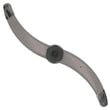
- Spray arms: poor cleaning, weak spray, or clogged jets (see dishwasher spray arm, lower WD22X33499 and dishwasher spray arm, middle WD22X33498)
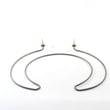
- Heating element: poor drying or cooler wash water (see dishwasher heating element WD05X30818)
- Circulation pump: weak wash action, unusual noise, or intermittent cleaning (see dishwasher circulation pump WD26X23258)
- Drain hose: leaks or drain problems from splits, kinks, or loose connections (see dishwasher drain hose WD24X10062)
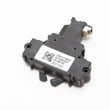
- Door latch and strike: won’t start, stops mid-cycle, or won’t latch securely (see GE dishwasher door latch lock WD21X10490 and dishwasher door latch strike WD13X10071)
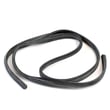
- Tub gasket: water leaking at the door or tub edge (see dishwasher tub gasket WD08X23476)
Quick symptom-to-part guide
| Symptom | Most likely parts to check | What to do first |
|---|---|---|
| Dishes not clean | Spray arms, circulation pump, diverter, filter | Clean spray arm holes and filter area; verify arms spin freely |
| Not drying | Heating element | Confirm heated dry options are selected; avoid touching the element right after a cycle |
| Won’t start | Door latch/strike, control lock setting | Make sure the door closes firmly; check for control lock |
| Not draining | Drain hose, drain path | Check for kinks and clogs; confirm the hose is routed correctly |
| Leaking | Tub gasket, hose connections | Inspect gasket for tears; check clamps and hose seating |
Why it matters
Replacing the right part restores wash pressure, heating, and sealing. It also prevents repeat issues like mineral film and odors; GE recommends periodic interior cleaning with citric acid or a dishwasher cleaner as part of normal care.
Helpful safety and install notes
- Wait at least 20 minutes after a cycle before cleaning inside; the heating element can be hot.
- Don’t operate the dishwasher unless enclosure panels are in place.
- During installation, keep the drain hose from being pinched and make sure the unit is level; details are in the GDF510PSJ5SS installation guide.
Last updated: February 2026





