Installation guide
 Owner’s manual
 Error Codes


How to force reset a KitchenAid dishwasher?
To force reset a KitchenAid dishwasher like model KUDS30IXBL6, we recommend canceling the current cycle and letting the dishwasher run its short drain and self-check sequence; once it finishes, the control typically returns to standby and you can start a new wash cycle. Use the exact button sequence shown in the KUDS30IXBL6 owner's manual.
- Press Cancel/Drain once.
- Close the door (or press Start/Resume, depending on your panel) to begin the drain.
- Wait for the drain and reset to complete (often a few minutes).
- Open the door, then select a new cycle.
- Press Start/Resume and close the door to run.
These steps reset power to the electronic control and clear many “stuck” states.
- Turn OFF the dishwasher breaker for 1 minute.
- Turn the breaker back ON.
- Press Cancel/Drain, then start a new cycle.
- If the unit still will not respond, check for a loose or damaged wire connection at the control area.
| What you see | What it usually means | What to do |
|---|---|---|
| Pump runs and water drains | Cancel/drain is working | Let it finish, then restart |
| Lights change or blink briefly | Control is rebooting | Wait, then choose a cycle |
| No lights, no sound | Power issue or control issue | Check breaker, then wiring |
A forced reset clears a paused cycle, cancels a program that will not advance, and helps the control board recover after a power flicker. It is a fast first step before replacing parts like the control panel or electronic control board.
Last updated: January 2026
What is the average lifespan of a KitchenAid dishwasher?
A KitchenAid undercounter dishwasher like model KUDS30IXBL6 typically lasts 10 to 14 years. Consistent cleaning, correct installation, and good drying practices (including rinse aid use) help you reach the high end of that range; hard water and heavy daily use shorten it.
- Water quality: hard water speeds up mineral buildup on the heater, sump, and spray system.
- Maintenance habits: cleaning filters and checking for debris prevents pump strain.
- Installation quality: proper leveling and centering prevents door rubbing and leaks over time.
- Usage frequency: multiple loads per day increases wear on the motor and drain pump.
- Detergent and rinse aid use: rinse aid improves drying and helps control hard-water deposits.
Use the care and setup steps in the KUDS30IXBL6 installation guide and your use and care instructions.
- Keep the tub and door seals clean; wipe the lower door area regularly.
- Use rinse aid consistently to improve drying and reduce spotting and mineral deposits.
- Load so spray arms rotate freely; avoid blocking the detergent dispenser.
- Check the drain path if you notice standing water; clear food debris before it reaches the pump.
- Periodically inspect racks and wheels; replace worn rack hardware before it damages the rack.
| Part type | What you may notice | Example part for this model |
|---|---|---|
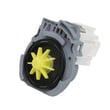
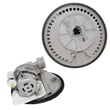
| Drain pump | Water left in bottom, slow draining | Dishwasher drain pump WPW10348269 |
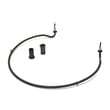
| Heater | Poor drying, cooler wash performance | Dishwasher heater W10703867 |
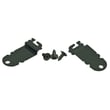
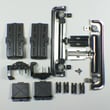
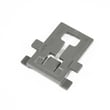
| Rack adjusters | Upper rack won’t stay level, drops on one side | Dishrack adjuster kit (W10712394) - dishwasher rack component by whirlpool W10712394 |
Dishwashers often fail early from preventable issues: mineral buildup, restricted draining, and door alignment problems. Keeping rinse aid filled, maintaining clear drainage, and ensuring the unit stays properly leveled protects high-wear components like the motor, heater, and seals.
Last updated: January 2026
What is the most common problem with KitchenAid dishwashers?
The most common KitchenAid dishwasher problem is poor cleaning (dishes come out dirty), usually caused by restricted water flow from a clogged filter, blocked spray arms, or low water fill. On the KitchenAid KUDS30IXBL6, the next most common issues are draining problems and leaks.
- Dirty dishes or grit left behind: filter or spray arm blockage; weak wash circulation
- Water left in the bottom: drain restriction, drain pump issue, or sink/disposal connection problem
- Won’t start: door not fully latched, power supply issue, or control problem
- Leaks at the front: door seal wear, door alignment, or loose hose connections
- Unusual noise: debris in pump area, worn rack wheels, or wash motor strain
- Confirm the water supply is on and the dishwasher fills early in the cycle.
- Clean the filter area and check spray arms for clogs.
- Verify the door closes tightly and latches.
- Check the drain path for kinks or a high loop; confirm the sink/disposal inlet is clear.
- Run the shortest cycle and confirm there is water in the tub after the first couple minutes (a basic operational check described in the KUDS30IXBL6 installation guide).
If the quick checks do not fix it, these parts are frequent culprits:
| Symptom | Common part to inspect | What it does |
|---|---|---|
| Not draining, standing water | Dishwasher drain pump WPW10348269 | Pumps water out to the drain hose |
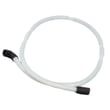
| Slow drain or leaks at drain connection | Dishwasher drain hose 8269144A | Routes wastewater to the sink/disposal |
| Poor drying, lukewarm water | Dishwasher heater W10703867 | Heats water and supports drying |
| Weak wash action, poor cleaning | Dishwasher sump and motor assembly WPW10780877 | Drives wash circulation through spray arms |
Poor cleaning and slow draining usually get worse over time. Catching a clogged filter, restricted drain hose, or a weakening drain pump early helps prevent odors, standing water, and repeat wash cycles.
Last updated: January 2026