 Installation guide
 Owner’s manual


How do I reset my GE He sensor dry dryer?
To reset the control on your GE GTDX400ED0WS electric dryer, we power-cycle it: turn the dryer off, then disconnect power for a few minutes, restore power, and restart a cycle. This clears many temporary control glitches without changing any installation settings.
- Press Off/Cancel (or turn the cycle knob to Off, if your model uses a knob)
- Unplug the dryer, or switch OFF the dryer breaker
- Wait 2 to 5 minutes
- Restore power (plug back in, or switch the breaker ON)
- Select a cycle and press Start
These checks fix the most common Sensor Dry complaints (stopping too soon, running too long, or inconsistent dryness):
- Clean the lint screen before every load; wash it with mild soap and water if you use dryer sheets
- Do not overload; mixed fabric weights can confuse moisture sensing
- Use the correct cycle for the load (cottons vs. delicates)
- Confirm strong airflow at the outside vent hood; poor venting causes long dry times and overheating
- Let the dryer cool 10 to 15 minutes if it shut down mid-cycle (overheat protection can trip)
Your installation instructions call out that the dryer must be exhausted outdoors using 4-inch metal ducting, and that the dryer should be installed where the temperature is above 50°F for proper control operation. Poor venting or a cold install location can make Sensor Dry performance unreliable. See the installation guide.
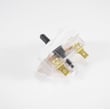
If the dryer heats inconsistently or shuts off from overheating even with good venting, a thermostat can be involved. For this model, common temperature-control parts include:
| Symptom | Common check | Example part for GTDX400ED0WS |
|---|---|---|
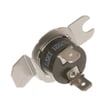
| Overheats or shuts down | High-limit thermostat | Dryer high-limit thermostat WE4M137 |
| No heat or weak heat | Heating circuit and airflow | (See diagnostics in the manual) |
A proper reset plus good airflow helps Sensor Dry work as designed, reduces dry time, and lowers the chance of overheating-related shutdowns.
Last updated: February 2026
What is the lifespan of a GE dryer?
A GE electric dryer like model GTDX400ED0WS typically lasts 13 years. Consistent airflow (proper 4-inch venting), routine lint removal, and avoiding chronic overheating do the most to extend life and protect key parts like thermostats, the motor, and the heating circuit.
Most household dryers land in a fairly tight range; maintenance and venting are the difference-makers.
- Typical dryer lifespan: about 13 years
- Shortens lifespan: restricted exhaust, heavy daily use, frequent overloading
- Extends lifespan: clean venting, correct installation, prompt repair of squeaks or heat issues
| Usage pattern | What we typically see | What to focus on |
|---|---|---|
| Light (few loads/week) | 13 to 15 years | Lint and vent cleaning |
| Average (most households) | About 13 years | Airflow and not overloading |
| Heavy (daily loads) | 8 to 12 years | Venting, bearings, heat controls |
Your GTDX400ED0WS installation guidance is clear that the dryer must exhaust outdoors and use 4-inch metal ducting; long or crushed venting increases dry time, energy use, lint buildup, and reduces dryer life. Use the installation guide to confirm your vent material, diameter, and routing.
- Clean the lint screen every load; wash and dry it monthly to remove residue
- Inspect and clean the full vent run (dryer to wall cap) regularly
- Keep the vent run short with minimal bends; fix kinks and crushed sections
- Do not use flexible plastic duct; use 4-inch rigid metal duct where possible
- Stop using the dryer if it overheats or shuts down repeatedly; correct airflow first
These symptoms often point to wear in the drum support system, airflow system, or heat controls.
- Drying times suddenly increase even with a clean lint screen
- Burning smell or the cabinet feels unusually hot
- Loud squealing, scraping, or thumping as the drum turns
- Intermittent heat or frequent thermal shutdowns
- Drum not turning reliably (motor or drive system strain)
A dryer usually does not “wear out” all at once; it loses efficiency first. Poor airflow forces longer run times, which stresses the heating element, high-limit thermostat, operating thermostat, and drive motor, and that is what shortens lifespan.
Last updated: February 2026
What is the most common problem with a GE dryer?
The most common problem we see with GE electric dryers like model GTDX400ED0WS is poor or no heat, usually tied to airflow restrictions (lint buildup or a crushed vent) that overheat the heater circuit, or a failed heater or thermostat. Noisy operation from worn drum supports is also very common.
- Runs but won’t heat or dries slowly: restricted venting, failed heater, or a thermostat issue
- Stops mid-cycle or overheats: airflow problem, high-limit thermostat opening, or lint blockage
- Squealing or scraping noise: worn drum glides or front bearing
- Thumping or rumbling: drum support wear or an out-of-round load
- Won’t start: door not fully closed, power supply issue, or a control/switch problem
- Clean the lint screen and wash off any fabric-softener film.
- Check the vent path for kinks, crushed duct, or heavy lint buildup.
- Confirm the dryer is exhausted outdoors using 4-inch rigid metal duct (flexible plastic ducting is not recommended for safety and airflow).
- Verify the electrical supply is correct for an electric dryer (a dedicated 120/240V or 120/208V, 30-amp circuit is typical).
- If the dryer is in a cold area, keep the installation temperature above 50°F for proper control operation.
If airflow is good and the problem persists, these model-matched parts are frequent fixes:
| Symptom | Common suspect part | Example part on this model |
|---|---|---|
| No heat / overheating | High-limit thermostat | Dryer high-limit thermostat WE4M137 |
| No heat / weak heat | Heating element | Mica unit WE11M10001 |
| Squealing / scraping | Drum glides or front bearing | Dryer drum front glide pad WE03X37317, GE dryer drum bearing, front WE3M26 |
Most “GE dryer problems” trace back to airflow. A restricted vent makes drying times longer, drives up operating temperatures, and can repeatedly trip safety thermostats. Fixing venting first prevents repeat failures of the heating circuit.
For model-specific venting, electrical, and installation requirements, follow the installation guide.
Last updated: February 2026





