Owner’s manual
 Error Codes


How to find Kenmore 79574053410 Elite fridge model number?
For a Kenmore Elite refrigerator like model 79574053410, the model number is printed on the appliance identification label. Check common label locations inside the fresh food section or freezer, then match the full number exactly (including all digits) to your parts list and owner's manual.
Where to look on the refrigerator
Check these spots first (most common locations):
- Inside the refrigerator compartment on a side wall
- Inside the door area (often on the door frame)
- Behind or near the lower crisper drawers (on the liner wall)
- Inside the freezer compartment on a side wall
- Behind the lower front kick plate or grille area
What the model number label looks like
The label is usually a small sticker or plate that includes:
- Model number (for example, 79574053410)
- Serial number
- Electrical ratings (volts/amps)
- Sometimes a barcode
Tips to avoid ordering the wrong parts
Even one missing digit can point to a different Kenmore Elite refrigerator.
| What to do | Why it helps |
|---|---|
| Copy the model number exactly as printed | Ensures the correct parts diagrams and fit |
| Take a clear photo of the label | Prevents transposed digits |
| Use the model number (not just “Kenmore Elite”) | “Elite” covers many designs |
Why it matters
Kenmore model numbers identify the exact configuration of your bottom-mount refrigerator (doors, dispenser, ice maker, controls). Using the correct model number helps you get the right replacement parts the first time.
Last updated: February 2026
Where is the water filter on a bottom freezer refrigerator?
On the Kenmore Elite 79574053410 bottom-mount refrigerator, the water filter is typically installed in the fresh food (refrigerator) compartment, not in the freezer drawer. For the exact filter location and the correct replacement steps for your configuration, follow the owner's manual.
Common water filter locations on bottom-freezer refrigerators
Most bottom-mount designs place the filter in one of these spots:
- Upper-right or upper-left corner inside the refrigerator compartment
- Along the back wall inside the refrigerator compartment
- At the base grille area (front bottom), depending on the design
- Near the crisper area behind a small cover (less common)
How to confirm you found the filter
Use these quick checks before you buy parts or start disassembly:
- Look for a twist-off cap or push-button filter release
- Check for a small housing labeled “filter” or an indicator light on the control panel
- Verify the filter head has water lines connected behind it
- After reinstalling, flush the system (see below) to remove trapped air
After you replace the filter: flush the system
After replacing the water filter, we recommend flushing 2.5 gallons of water (about 5 minutes) to clear air and contaminants. Do not run it continuously; use 30 seconds ON and 60 seconds OFF cycles.
| Step | What to do | Why |
|---|---|---|
| 1 | Install the new filter fully seated | Prevents leaks and low flow |
| 2 | Dispense 2.5 gallons in cycles | Purges air from the lines |
| 3 | Check flow and taste | Confirms proper filtration |
Why it matters
A correctly located and fully seated water filter helps prevent low dispenser flow, odd taste or odor, and small ice cubes. Replacing the filter about every 6 months (or sooner if flow drops) keeps the water system working as designed.
Last updated: February 2026
Why is my Kenmore 79574053410 Elite refrigerator leaking water out of the bottom?
Water leaking from the bottom of your Kenmore Elite 79574053410 refrigerator is usually caused by a defrost drain that is clogged and overflowing into the base, or a water supply leak from the filter, tubing, or inlet valve. We use the owner's manual to confirm water-line connection points and leak-check steps.
Most common causes (and what to check first)
- Clogged defrost drain: Meltwater can back up and spill into the bottom pan area.
- Loose or leaking water line connection: Check the 1/4-inch tubing connection at the rear water valve.
- Cracked or mis-seated filter: A filter that is not fully seated can drip and run down to the bottom.
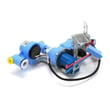
- Leaking inlet valve: The valve can seep or leak at fittings or internally.
- Door gasket air leak causing excess frost: Heavy frost can create more defrost water than the drain can handle.
Quick troubleshooting steps
- Unplug the refrigerator and pull it out far enough to access the back.
- Inspect the rear water connections for moisture; the manual calls out checking for leaks at water line connections after tightening.
- Dry everything, then run the dispenser and watch for fresh drips.
- Check the filter area for wetness; reseat the filter and confirm it locks in.
- Look for ice or debris in the drain area (inside the freezer floor or rear panel area, depending on configuration).
Parts that commonly fix bottom leaks
| Symptom you see | Most likely area | Part to consider |
|---|---|---|
| Water appears after using dispenser/ice | Water supply system | Lg refrigerator water inlet valve AJU72992603 |
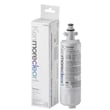
| Slow drip near filter housing | Filter seating or filter | Genuine Kenmore refrigerator water filter 9690 AGF80300801 |
| Puddle returns even with water turned off | Defrost drain path | Drain clearing (no part needed first) |
Why it matters
A bottom leak can damage flooring and also points to airflow or defrost issues that can lead to frost buildup and poor cooling. Fixing the source early helps protect the sealed system and keeps ice maker and dispenser performance consistent.
Last updated: February 2026
What are the common problems with Kenmore 79574053410 Elite refrigerators?
Common problems on the Kenmore Elite 79574053410 bottom-mount refrigerator include warm temperatures from restricted airflow (dirty condenser coil, failed fan, or defrost trouble), frost buildup from a defrost system issue, water leaks from a clogged defrost drain, and ice maker or dispenser failures. For model-specific troubleshooting steps and checks, use the owner's manual.
Most common symptoms and what they usually point to
- Not cooling well (fresh food or freezer): dirty condenser coil, weak compressor, airflow restriction, or a defrost problem
- Frost or ice buildup on the back wall or in the freezer: defrost sensor/heater/control issue causing the evaporator to ice over
- Loud humming, buzzing, or rattling: condenser fan/evaporator fan noise, compressor noise, or vibration from the cabinet/lines
- Water under the refrigerator or inside the fresh food section: clogged defrost drain or water line/valve seepage
- No ice or slow ice production: water filter restriction, inlet valve issue, or ice maker failure
Quick checks we recommend before replacing parts
- Confirm temperature settings and allow 24 hours after any adjustment.
- Clean dust from the condenser area; restricted heat release is a top cause of poor cooling.
- Check door gaskets for gaps, tears, or areas not sealing.
- If you see heavy frost, suspect a defrost system problem (airflow gets blocked by ice).
- For ice and water issues, replace the filter first and verify household water supply is fully on.
Parts that commonly solve these problems (when symptoms match)
| Symptom | Common part to inspect/replace | Example part for this model |
|---|---|---|
| Warm temps, runs a lot | Condenser coil (dirty or damaged) | Refrigerator condenser coil ACG73645004 |
| Frost buildup, warming | Defrost sensor | Refrigerator defrost sensor assembly 6615JB2005R |
| No ice or no water dispense | Water inlet valve | Lg refrigerator water inlet valve AJU72992603 |
| Bad seal, moisture, frost | Door gasket | Refrigerator door gasket, left ADX72930460 and refrigerator door gasket, right ADX72930461 |
| Slow flow, bad taste/odor | Water filter | Genuine Kenmore refrigerator water filter 9690 AGF80300801 |
Why it matters
Cooling and ice maker complaints often share the same root causes: poor airflow (frosted evaporator or blocked vents) and poor heat rejection (dirty condenser coil). Fixing those first prevents food spoilage, reduces compressor run time, and helps the refrigerator hold steady temperatures.
For additional model-family troubleshooting, we also use the Kenmore 795 model bottom freezer refrigerator error codes guide.
Last updated: February 2026
What size is Kenmore refrigerator model 79574053410?
Kenmore Elite refrigerator model 79574053410 is a bottom-mount style refrigerator; the exact exterior width, height, depth (with or without handles), and required installation clearances are listed in the specifications/installation section of the 79574053410 owner's manual.
What measurements to use (and why they differ)
Refrigerator “size” is usually a combination of these measurements; they are not interchangeable:
- Width: cabinet opening fit and door swing clearance
- Height: leveling legs and hinge clearance at the top
- Depth without handles: how far the cabinet projects past counters
- Depth with handles: the true front-to-back projection in your kitchen
- Clearances: airflow space behind, above, and at the sides
How we recommend measuring your space
Measure the space first, then compare to the manual specs for model 79574053410:
- Measure opening width at the front and back (walls are often not perfectly parallel).
- Measure height in multiple spots (floors can slope).
- Measure depth to the front edge of countertops.
- Plan for door swing and drawer pull-out clearance.
- Follow the manual’s ventilation clearance requirements.
Quick reference: which depth should you compare?
| If you are checking… | Compare against… | Why it matters |
|---|---|---|
| Countertop alignment | Depth without handles | Helps estimate how “flush” it will look |
| Walkway clearance | Depth with handles | Handles are often the furthest point |
| Tight alcove install | Required clearances | Prevents overheating and poor cooling |
Why it matters
Depth is the most common surprise. A refrigerator can fit the cabinet opening but still stick out several inches once doors and handles are included; using the exact “with handles” depth from the manual prevents clearance and door-opening problems.
Last updated: February 2026