 Owner’s manual
 Error Codes


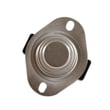
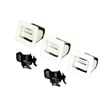
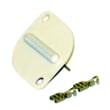
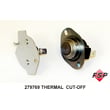
Can I replace a dryer heating element myself?
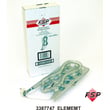
Yes. On the Kenmore 11063912100 electric dryer, replacing the heating element is a common DIY repair if you’re comfortable working around 240-volt wiring. We recommend following the step-by-step access and wiring guidance in the 11063912100 owner's manual and disconnecting power before opening the cabinet.
What you’ll need
- Phillips and flat screwdriver
- 1/4-inch nut driver (common on Kenmore dryer panels)
- Needle-nose pliers
- Work gloves and a phone/camera (to document wire locations)
- Replacement part: dryer heating element WP3387747
Safe, practical DIY steps (high level)
- Disconnect power: Unplug the dryer or switch off the breaker (electric dryers use 240V).
- Access the heater housing: Remove the appropriate panel(s) to reach the heating element area.
- Label wires: Take a clear photo before removing any terminals.
- Swap the element: Move any mounting hardware from the old element to the new one as needed.
- Inspect heat-related safety parts: If the dryer overheated, also check the thermal fuse and thermostats.
- Reassemble and test: Run a timed heat cycle and confirm steady heat and normal airflow.
Parts that are commonly involved
| Symptom | Most common related part | What it affects |
|---|---|---|
| Runs but no heat | Dryer heating element WP3387747 | Heat generation |
| Runs then stops heating or won’t run | Dryer thermal fuse WP3390719 | Safety shutoff |
| Overheats or cycles heat oddly | Dryer operating thermostat WP3387134 | Temperature control |
| Long dry times | Venting and lint screen | Airflow and moisture removal |
Why it matters
A failed heating element can be straightforward to replace, but restricted airflow (lint screen or venting) is a top cause of repeat heat failures. The manual’s troubleshooting guidance also notes that a dryer can appear to run with no heat if one house fuse is blown or a breaker trips on one leg of the 240V supply.
Quick checks before you order parts
- Clean the lint screen and confirm strong airflow at the outside vent hood.
- Verify the dryer is on a proper grounded outlet and the electrical supply is correct.
- Confirm the cycle is not set to Air Dry or Air Fluff.
Last updated: February 2026
How do I tell what model my Kenmore dryer is?
Your Kenmore dryer’s model number is printed on the model and serial number plate. On Kenmore model 11063912100, that plate is typically found in the door opening area; once you have the full model number, we can match the correct parts, diagrams, and specifications.
Where to look for the model number plate
Check these common locations on Kenmore electric dryers:
- Inside the dryer door opening (on the cabinet frame)
- On the back panel of the dryer cabinet
- Along the door opening edge near the lint screen housing
- On the lower front area behind the toe panel (on some builds)
For the exact plate location and how it’s labeled, use the 11063912100 owner's manual.
What to write down (and why)
Record both numbers exactly as shown:
- Model number (example format: 11063912100)
- Serial number (used to identify production run details)
Why it matters
The model number gets you to the right parts list; the serial number helps confirm the correct version when a dryer has multiple design changes.
Quick checklist to avoid ordering the wrong part
Before you shop for parts like a heating element, thermal fuse, or timer, make sure:
- You copied the model number with all digits (no spaces)
- You used the plate, not a number from the control panel or a sticker on the cord
- You matched the model number on your dryer to the parts listing (11063912100)
Common examples of what the model number helps identify
| What you’re fixing | Example part type | Example part on this model page |
|---|---|---|
| No heat | Heating system | Dryer heating element WP3387747 |
| Won’t start or stops | Safety cutoff | Dryer thermal fuse WP3390719 |
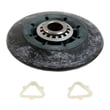
| Loud rumble or squeal | Drum support | Support kit WPW10314173 |
Last updated: February 2026
What are common problems with Kenmore dryers?
Common problems we see with Kenmore electric dryers like model 11063912100 are no heat, long dry times, the drum not turning, and unusual noise. Most of these issues trace back to airflow restrictions (lint buildup or a kinked vent), a blown house fuse or tripped breaker, or worn heating and drum-support parts.
Most common symptoms and what usually causes them
- Dryer runs but won’t heat: a blown thermal fuse, failed heating element, or a thermostat problem; also check for a blown fuse or tripped breaker (electric dryers can run with no heat if one leg is out).
- Long drying times: restricted airflow from a clogged lint screen, blocked exhaust hood, or crushed/kinked vent.
- Drum won’t turn: worn drum support rollers, a failed idler pulley, or a motor issue.
- Loud thumping/squealing/grinding: worn drum rollers, a failing idler pulley, or a damaged blower wheel.
- Won’t start: door not fully closed, controls not set to an ON/running position, or power supply problems.
Quick checks we recommend first (fast, no parts)
- Clean the lint screen before every load.
- Run the dryer 5 to 10 minutes and check strong airflow at the outside exhaust hood.
- Inspect the vent path for crushing, kinks, or heavy lint buildup.
- Confirm the dryer is plugged into a grounded outlet and the door closes firmly.
- Check the home electrical supply: fuses tight/intact or breaker not tripped.
Parts that commonly fix these problems on 11063912100
| Symptom | Common part to check | Example part for this model |
|---|---|---|
| No heat | Heating circuit | Dryer heating element WP3387747 |
| No heat or won’t run (safety open) | Overheat protection | Dryer thermal fuse WP3390719 |
| Thumping or rumbling | Drum support | Support kit WPW10314173 |
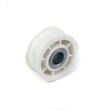
| Squealing or drum not turning smoothly | Belt tension system | Dryer idler pulley 279640 |
Why it matters
Airflow problems do more than slow drying; they can overheat the dryer and trip safety devices like the thermal fuse. Fixing venting and lint buildup first often prevents repeat failures and helps the dryer dry faster.
Where to confirm model-specific steps
For control settings, troubleshooting charts, and venting requirements for Kenmore 11063912100, use the 11063912100 owner's manual.
Last updated: February 2026
What size is a Kenmore Model 11063912100 dryer?
The Kenmore electric dryer model 11063912100 is a 27-inch wide dryer. For the full cabinet dimensions (height and depth) and the space you need for venting and door swing, we use the dimension and clearance diagrams in the 11063912100 owner's manual.
What “27-inch wide” means
A 27-inch wide Kenmore dryer is the standard full-size footprint for many Whirlpool-built Kenmore 110-series dryers. Your actual installation space still needs extra room for airflow, venting, and leveling.
Plan for these common space needs:
- Width: 27 inches (dryer cabinet width)
- Extra space behind dryer: typically needed for the exhaust elbow
- Space in front: enough to fully open the door
- Side clearance: helps reduce vibration and improves airflow
- Level floor: helps the drum tumble correctly
Installation clearances to allow for venting
The manual calls out that most installations need clearance behind the dryer for the exhaust vent and elbow.
| Area | Typical guidance from the manual | Why you need it |
|---|---|---|
| Behind dryer | About 5 1/2 in. for vent with elbow | Prevents crushed venting and poor airflow |
| Sides | Small clearance recommended | Reduces rubbing, noise, and heat buildup |
| Top | Clearance recommended in closets | Helps heat dissipate |
| Front (closet) | Clearance plus door venting | Keeps drying performance consistent |
Why it matters
Dryer “size” is not just the cabinet width. If the vent is kinked or the dryer is squeezed too tightly into a closet, drying times increase and overheating problems become more likely. Correct spacing also makes service tasks like checking the blower housing and heat duct easier.
Where to confirm the exact measurements
- Use the Dryer dimensions diagram in the 11063912100 owner's manual
- Measure your installation path too (doorways, hallways, turns)
- If you are installing in a closet, follow the closet ventilation opening requirements shown in the manual
Last updated: February 2026








