Owner’s manual
 Error Codes



What are the common problems with Kenmore Elite refrigerators?
Common problems on the Kenmore Elite 59676253702 bottom-mount refrigerator are temperature issues (warm fridge or freezer), unusual running or noise, door sealing and closing problems, and ice maker or water supply complaints. Many are caused by airflow restrictions, dirty components, or a failing fan, sensor, or control.
Most common symptoms and what they usually mean
- Not cooling well or uneven temps: blocked air vents, heavy food load, doors opened often, or a defrost/airflow problem.
- Runs a lot: normal with high-efficiency compressors, but worsens with warm room temps or frequent door openings.
- Noisy operation: pulsating or hissing/rattling sounds can be normal; persistent grinding often points to a fan issue.
- Door will not close: shelves/bins out of position, food packages blocking, or a misaligned crisper cover.
- Ice tastes bad or looks gray: new plumbing, old ice sitting too long, food odor transfer, or minerals in the water.
Quick checks we recommend first (before replacing parts)
- Confirm the controls are on and set correctly; see 59676253702 owner's manual.
- After a new install or power interruption, allow 24 hours to reach stable temperatures.
- Make sure air vents are not blocked by packages in the refrigerator or freezer.
- Check that the doors close fully and nothing is preventing a tight seal.
- For ice issues, discard old ice, wash the bin, and wait 24 hours for fresh ice.
Parts that commonly solve these problems on model 59676253702
| Symptom | Common part involved | Example model-matched part |
|---|---|---|
| Warm temps, poor airflow, noise | Evaporator fan system | Refrigerator evaporator fan motor WPW10128551 or refrigerator evaporator fan blade WP2169142 |
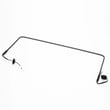
| Frost buildup, warming over time | Defrost system | Refrigerator defrost heater WP12729128 |
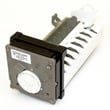
| Ice maker not producing | Ice maker assembly | Refrigerator ice maker D7824706Q |
| Temps swing or act erratic | Sensor/control | Refrigerator temperature sensor 12002355 or refrigerator electronic control board WPW10503278 |
Why it matters
A bottom-mount refrigerator depends on steady airflow between the freezer evaporator and fresh food section. When airflow is restricted or a fan/defrost component fails, you can see warm temperatures, excess run time, moisture, and ice maker complaints.
Last updated: February 2026
What is the average lifespan of a Kenmore Elite refrigerator?
A Kenmore Elite refrigerator like model 59676253702 typically lasts 12 to 15 years. With steady maintenance (cleaning condenser coils, keeping door gaskets sealing, and fixing airflow or defrost issues early), it’s common to reach the upper end of that range.
Typical lifespan and what affects it
Most bottom-mount refrigerators fall into a similar life range, but real-world lifespan depends on how hard the sealed system and controls have to work.
- Dirty condenser coils make the compressor run hotter and longer
- Worn door gaskets let warm air in, increasing run time and frost
- Defrost problems can cause ice buildup and poor cooling
- Frequent door openings and warm kitchens increase workload
- Water and ice maker leaks can create corrosion and electrical issues
Maintenance that adds years (high impact)
We recommend these habits for Kenmore Elite bottom-mount models:
- Vacuum condenser coils and the grille area every 6 to 12 months
- Keep freezer drawers closing fully; avoid overloading that blocks vents
- Check door seal grip with the “paper test” (paper should resist pulling out)
- Keep temperatures stable (about 37°F fresh food, 0°F freezer)
- Follow the cleaning and care schedule in the 59676253702 owner’s manual
“Repair or replace” quick guide
Use age plus symptom severity to decide where to put your money.
| Refrigerator age | If it has this issue | Usual best move |
|---|---|---|
| Under 8 years | Fan noise, minor cooling swings | Repair is usually worth it |
| 8 to 12 years | Repeated icing, warm temps, control issues | Repair if cost is reasonable |
| Over 12 years | Sealed-system symptoms or multiple failures | Compare repair cost vs replacement |
Why it matters
Knowing the expected lifespan helps you plan for parts and service. For example, airflow and defrost repairs (like replacing a failed refrigerator defrost heater WP12729128) can restore normal cooling and reduce compressor strain, which directly impacts how long the refrigerator lasts.
Last updated: February 2026
What model is my Kenmore Elite refrigerator?
Your Kenmore Elite refrigerator’s model number is printed on the rating label inside the fresh food compartment or freezer. For Kenmore bottom-mount units like model 59676253702, the label is typically on an interior side wall, behind the crisper area, or near the kickplate area; confirm the exact location in the 59676253702 owner's manual.
Where to look for the model number label
Check these common spots first (use a flashlight and look for a white or silver sticker/plate):
- Inside the refrigerator compartment on a side wall
- Inside the refrigerator compartment behind or near the lower crisper drawers
- Inside the freezer compartment on a side wall
- Along the door frame when the door is open
- Behind the lower kickplate or toe grille area
What the model number looks like for this refrigerator family
Kenmore bottom-mount model numbers in this series usually start with 596. and may be shown with or without the dot.
| You might see it printed as | It refers to |
|---|---|
| 596.76253702 | Same model number with the dot format |
| 59676253702 | Same model number without the dot |
Tips to avoid ordering the wrong parts
The model number is what we use to match parts like an ice maker, control board, or defrost heater to your exact refrigerator configuration.
- Copy the model number exactly as printed (include the dot if shown)
- Also write down the serial number from the same label
- Take a clear photo of the label before you close the door
- Use the full model number when searching parts (example: 59676253702)
- If the label is damaged, check a second location (fresh food section and freezer)
Why it matters
Kenmore Elite bottom-mount refrigerators often share similar styling across multiple models, but internal components and wiring can differ. Using the exact model number helps ensure the correct fit and proper operation after a repair.
Last updated: February 2026
What size is Kenmore refrigerator model 59676253702?
Kenmore refrigerator model 59676253702 is a 33-inch class bottom-mount refrigerator. For the exact cabinet width, height, and depth (including handles and door swing clearance), we use the measurements listed in the 59676253702 owner's manual.
What “33-inch class” means for fit
Most Kenmore 33-inch class bottom-mount refrigerators are built to fit a standard 33-inch opening, but the actual outside dimensions vary by configuration (handles, hinges, leveling legs).
- Plan on about 33 inches wide overall
- Depth changes depending on handle style and door thickness
- Height can change slightly with leveling legs
- You need extra space for airflow and door swing
Installation clearances to allow (from the manual)
The manual calls out these minimum clearances for ventilation and door operation:
- 1/2 inch space at the top
- 1/2 inch space behind the refrigerator
- If equipped with an ice maker: extra space at the back for the water line
- When next to a fixed wall: 2 1/2 inches minimum on the hinge side for door swing
Quick clearance summary
| Location | Minimum clearance |
|---|---|
| Top | 1/2 in (1.25 cm) |
| Back | 1/2 in (1.25 cm) |
| Hinge side (next to wall) | 2 1/2 in (6.3 cm) |
Why it matters
Getting the size right prevents warm running, poor cooling, and doors that cannot open fully. Proper clearance also helps protect components like the electronic control board and evaporator fan motor from heat buildup caused by restricted airflow.
Last updated: February 2026
Why is my Kenmore Elite refrigerator leaking from the bottom?
A bottom leak on Kenmore Elite model 59676253702 is usually caused by a defrost drain that is clogged or frozen, so meltwater cannot reach the drain pan and instead spills onto the floor. Less often, the leak comes from the water supply system (tubing or inlet valve) or a door seal issue that creates excess condensation.
Quick checks that pinpoint the source
- Water only after defrosting or a lot of frost: defrost drain is clogged or iced over.
- Water near the front corners: door not sealing, warm air intrusion, heavy condensation.
- Water near the back right: water line connection or inlet valve seep.
- Leak only when dispensing water or making ice: inlet valve or tubing issue.
- Ice sheet on freezer floor: drain is blocked and refreezing.
Fix the most common cause: clogged defrost drain
- Unplug the refrigerator.
- Remove the freezer drawer/bins as needed to access the drain area.
- Melt any ice in the drain trough with warm water (not boiling).
- Flush the drain with warm water until it flows freely to the drain pan.
- If the drain tube is restricted or damaged, replace it with the correct part for this model.
Helpful reference: follow access and safety guidance in the 59676253702 owner’s manual.
Water supply leaks (ice maker and dispenser)
If the leak is tied to ice production or water use, focus on the supply line and valve:
- Check the household water connection for slow drips.
- Inspect the valve body and fittings for mineral buildup or seepage.
- Confirm the tubing is fully seated in quick-connect fittings.
If the valve is leaking or not closing fully, the correct replacement is the refrigerator water inlet valve assembly WP2315576.
Common causes and what you’ll see
| Likely cause | Typical symptom | Where the water shows up |
|---|---|---|
| Clogged/iced defrost drain | Ice on freezer floor, intermittent puddles | Bottom of freezer, then onto floor |
| Inlet valve/tubing leak | Leak during ice making or dispensing | Back or under right side |
| Door gasket not sealing | Heavy moisture, sweating, frost | Front edge, corners, under crisper |
Why it matters
A persistent bottom leak can lead to floor damage, recurring ice buildup in the freezer, and temperature swings that affect food safety. Fixing the drain or water supply leak early prevents repeat icing and protects the compressor area from excess moisture.
Last updated: February 2026