Owner’s manual



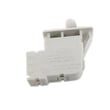
How to tell if Samsung dryer thermal fuse is bad?
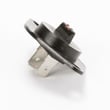
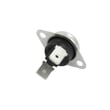
A bad (blown) thermal fuse in your Samsung DV50F9A7GVW dryer typically shows no electrical continuity when tested with a multimeter. If the fuse is blown, the dryer often will not run or will stop heating; replace the fuse and correct the overheating cause (most often restricted venting).
- Unplug the dryer (or switch off the breaker) before accessing internal parts.
- Remove the appropriate panel(s) as shown in the owner's manual.
- Locate the thermal fuse on the blower housing or heater housing (location varies by configuration).
- Pull the wire connectors off the fuse terminals (grip the connector, not the wire).
- Set a multimeter to continuity (beep) or ohms.
- Touch a probe to each terminal:
- Good fuse: beeps or reads close to 0 ohms
- Blown fuse: no beep or reads OL/infinite resistance
A thermal fuse opens when the dryer overheats. These are the most common signs:
- Dryer will not start or stops shortly after starting
- Dryer tumbles but does not heat (some designs)
- Repeated overheating signs such as very hot cabinet or burning smell
- Long dry times leading up to the failure (often from airflow restriction)
Overheating is usually caused by poor airflow. Our Samsung manual troubleshooting guidance emphasizes cleaning the lint filter and exhaust duct, and ensuring the outside hood opens freely.
- Clean the lint filter and check the filter area for buildup
- Inspect the vent run for crushing, kinks, or heavy lint
- Confirm the outside exhaust hood opens and closes freely
- Use 4-inch rigid metal duct where possible
- Inspect and clean ducting at least annually
If your model supports it, run the built-in vent diagnostic described in the owner's manual (Vent Blockage Test). It helps confirm whether the exhaust system is restricted.
If overheating or no-heat symptoms continue after venting is corrected, these parts are commonly checked in the heating circuit:
| Symptom | Common related part | Example part for this model |
|---|---|---|
| Overheats, shuts down | High-limit thermostat | DC47-00017A |
| Poor temperature control, long dry times | Thermistor | DC32-00007A |
A blown thermal fuse is a safety cutoff; replacing it without fixing restricted airflow can cause the new fuse to blow again and can lead to longer dry times and higher energy use.
Last updated: February 2026
How do I reset my Samsung dryer?
To reset your Samsung dryer model DV50F9A7GVW, we recommend a simple power reset: turn the dryer off, disconnect power for about 5 minutes, then restore power and start a cycle. This clears many temporary control glitches; if a problem returns, focus on airflow and sensor-related causes.
- Press Power to turn the dryer off.
- Unplug the dryer (or switch the dryer breaker off).
- Wait 5 minutes.
- Restore power.
- Press Power, select a cycle, and press Start/Pause.
A reset helps with temporary electronic issues, but it will not fix conditions that the dryer keeps detecting (like restricted venting or overheating).
- Clean the lint filter and make sure it seats correctly.
- Check the exhaust duct for crushing, kinks, or heavy lint buildup.
- Run the built-in vent check if your version supports it (the manual describes the Vent Blockage Test procedure).
- If the dryer shuts off mid-cycle or takes too long to dry, treat it as an airflow problem first.
- If the drum will not tumble or you hear squealing or thumping, inspect the belt and drum support components.
| What you notice | What it commonly means | What to check next |
|---|---|---|
| Long dry times, hot cabinet | Airflow restriction | Lint filter, vent duct, outside hood |
| Dryer runs but no/low heat | Heating control or sensing issue | Thermostat, thermistor, gas valve (gas models) |
| Drum not turning | Drive problem | Belt, motor, drum rollers |
| Door won’t start cycle | Safety interlock issue | Door switch |
If troubleshooting points to a failed component, these are common replacements for this Samsung dryer:
- Dryer door switch DC64-00828B (if the dryer will not start when the door is closed)
- Dryer thermistor DC32-00007A (if temperature sensing is erratic)
- Dryer high-limit thermostat DC47-00017A (if the dryer overheats or heat cuts out)
Resetting is a fast first step, but dryers are designed to protect themselves when they sense unsafe temperatures or poor airflow. Fixing venting and lint buildup helps prevent repeat shutdowns, improves drying performance, and reduces wear on parts.
For model-specific button sequences, indicators (like Filter Check or Vent Sensor), and the vent test procedure, follow the DV50F9A7GVW owner's manual.
Last updated: February 2026
How to tell if a Samsung dryer heating element is bad?
If your Samsung DV50F9A7GVW dryer runs but doesn’t dry (or takes much longer than normal), the heating element is a top suspect. We confirm it by checking airflow and venting first, then testing the heater circuit for continuity and checking for a short to the metal housing; use the owner's manual for access and safety guidance.
- Drum tumbles normally but there’s little to no heat
- Dry times suddenly increase even on smaller loads
- Dryer cycles off early because it overheats from restricted airflow
- Burning smell or visible damage on the heater coil (if accessible)
- Repeated heat-related issues after vent cleaning
Poor airflow can mimic a failed heater and can also cause safety devices to open.
- Clean the lint screen and check the lint screen housing for buildup
- Inspect the exhaust duct for kinks, crushing, or heavy lint
- If your model supports it, run the built-in vent diagnostic described in the owner's manual
Your manual notes that proper duct condition reduces drying time and saves energy; a restricted exhaust can also make the heater cycle abnormally and trigger high-limit protection.
Unplug the dryer first. Access the heater terminals, then:
- Continuity test: meter should show continuity across the element terminals
- Resistance check: many dryer elements read in a low-ohms range; a reading of OL or infinite resistance indicates an open element
- Short-to-ground check: test from an element terminal to the metal heater housing; any continuity indicates a grounded element
If the element tests good, we check the temperature sensing and safety parts that control heat.
| What you’re seeing | Common cause | Related part on this model page |
|---|---|---|
| No heat, but dryer runs | Failed temperature sensing | Dryer thermistor DC32-00007A |
| Overheating, shuts heat off | Safety limit opening (often airflow-related) | Dryer high-limit thermostat DC47-00017A |
| Heat is erratic or won’t ignite on gas models | Flame sensing issue | Dryer radiant sensor DC32-00008A |
- You see melted wiring, scorched connectors, or brittle insulation
- The breaker trips when heat turns on
- You’re not comfortable working around 240V circuits
Last updated: February 2026
What is the capacity of the DV50F9A7GVW?
The drum capacity for the Samsung DV50F9A7GVW is listed in the specifications section of the DV50F9A7GVW owner's manual. This model is a large-capacity dryer; use the manual’s capacity value as the correct rating for your exact DV50F9A7GVW/A2-00 configuration.
Use these spots to confirm the exact cubic-feet rating:
- Specifications section in the DV50F9A7GVW owner's manual
- Product information or “specs” pages near the front of the manual
- Model and serial label on the cabinet opening or door area (often lists key specs)
- Cycle chart and load guidance pages (helpful for real-world loading even when capacity is not shown)
Samsung’s load guidance focuses on leaving tumbling room so air can move through the load.
- Large loads: fill the drum to about 3/4 full
- Medium loads: fill the drum to about 1/2 full
- Small loads: 3 to 5 items, not more than about 1/4 full
| Load size | Fill level | Why it helps |
|---|---|---|
| Small | Up to 1/4 | Prevents overdrying and improves airflow |
| Medium | About 1/2 | Balances tumbling and drying time |
| Large | About 3/4 | Avoids packing tight, reduces long dry times |
Capacity affects drying performance, cycle time, and wrinkling. Even with a large-capacity drum, overfilling reduces airflow, which leads to longer dry times and higher heat stress on items.
Last updated: February 2026