Error Codes


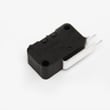
How to fix rubber seal on KitchenAid dishwasher?
On the KitchenAid KDTE254EWH2 dishwasher, a “rubber seal” problem is usually a door gasket that has slipped out of its channel or a lower door seal that is torn or deformed. We fix it by cleaning the sealing surfaces, reseating the seal evenly, and replacing it if it will not stay seated or it leaks.
Quick checks before you start
- Turn off power at the breaker; open the door and let the tub cool.
- Wipe the tub lip and door edge with warm water and mild soap; remove grease and detergent film.
- Look for kinks, gaps, or sections pulled out of the groove.
- Check for dishes or racks preventing the door from closing squarely.
- Inspect the bottom edge for damage; the lower seal is a common leak point.
How to reseat the seal (most common fix)
- Start at the top center and press the gasket into the channel using your fingers.
- Work down both sides in small sections, keeping the gasket relaxed (do not stretch it).
- Close and latch the door firmly for several hours so the gasket “sets” in position.
When replacement is the right fix
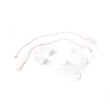
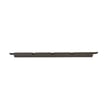
Replace the seal if it is torn, permanently flattened, swollen, or keeps popping out after reseating. If the leak is coming from the bottom corners or along the bottom edge, the lower door seal is often the culprit; for this model, that part is dishwasher door seal, lower W10909089.
Symptom-to-fix guide
| What you see | Likely cause | Best next step |
|---|---|---|
| Drips at bottom corners | Lower seal worn or deformed | Replace lower seal |
| Water along one side | Gasket not seated, door not aligned | Reseat gasket; check racks |
| Door won’t latch tightly | Latch not pulling door in | Inspect/replace dishwasher door latch WPW10653840 |
Why it matters
A properly seated door seal keeps wash pressure inside the tub, prevents cabinet damage from leaks, and helps the dishwasher dry better by maintaining correct airflow and heat.
Last updated: February 2026
What's the average lifespan of a KitchenAid dishwasher?
A KitchenAid dishwasher like model KDTE254EWH2 typically lasts 10 to 14 years. Lifespan depends most on how often it runs, water hardness, and basic upkeep such as keeping the wash system clean and fixing small leaks or draining issues early.
Typical lifespan and what changes it
Most KitchenAid dishwashers fall into the same real-world range, but these factors move the needle:
- Heavy use (multiple loads daily) shortens life compared to 3 to 5 loads per week
- Hard water increases mineral buildup on the heating system and internal passages
- Poor draining strains the drain pump and can leave standing water and odors
- Overloading racks stresses rack adjusters, tines, and spray coverage
- Delayed repairs (leaks, no-fill, no-heat) often lead to bigger failures
Maintenance that helps you reach the high end of the range
These steps are the most effective for extending service life:
- Clean the interior and run a maintenance wash regularly (especially with hard water)
- Keep the spray arms clear of labels, seeds, and broken glass
- Use the right detergent amount; too much can cause residue, too little can reduce cleaning
- Check for slow draining and correct it before it becomes a no-drain problem
- Inspect the door sealing area for debris and wipe it clean
Quick “symptom to part” guide (common wear items)
| Symptom | What it often points to | Example part for KDTE254EWH2 |
|---|---|---|
| Not filling or fills slowly | Water inlet restriction or valve issue | Dishwasher water inlet valve W11175771 |
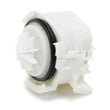
| Not draining | Drain path restriction or weak pump | Dishwasher drain pump WPW10531320 |
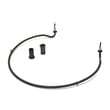
| Poor drying | Heating circuit or heater issue | Element assembly W10703867 |
| Door won’t latch or starts then stops | Latch not engaging | Dishwasher door latch WPW10653840 |
Why it matters
A dishwasher that is maintained and repaired early usually reaches the upper end of the 10 to 14 year range; ignoring fill, drain, or heating problems often turns a small part replacement into a major pump or control issue.
Last updated: February 2026
What is the most common problem with KitchenAid dishwashers?
The most common issues we see on KitchenAid dishwashers like model KDTE254EWH2 are poor cleaning (food left on dishes) and draining problems (water left in the tub). These usually trace back to restricted water flow, a clog in the drain path, or a failing wash or drain component.
Most common symptoms and what they usually mean
- Dishes still dirty: spray arms blocked, filter area dirty, or weak circulation.
- Standing water after the cycle: drain hose restriction, drain pump issue, or sink/disposer connection blockage.
- Not drying well: heater not heating, rinse aid issues, or cycle selection.
- Leaking at the bottom of the door: door seal wear or door not closing evenly.
- Won’t start or stops mid-cycle: latch not sensing closed, control issue, or an error code.
Quick checks you can do first (KDTE254EWH2)
- Cancel the cycle and run a drain; listen for the drain pump.
- Check the sink/disposer inlet where the dishwasher drain connects (common clog point).
- Inspect the drain hose routing for kinks and make sure it has a high loop.
- Clean the sump area and confirm spray arms spin freely.
- If the door feels loose or doesn’t “click” shut, inspect the latch.
Parts that commonly fix these problems
| Problem you notice | Part that often solves it | What it does |
|---|---|---|
| Won’t fill or fills slowly | Dishwasher water inlet valve W11175771 | Controls water entering the dishwasher |
| Won’t drain, water left in tub | Dishwasher drain pump WPW10531320 | Pumps water out to the drain |
| Door won’t latch or cycle won’t start | Dishwasher door latch WPW10653840 | Confirms the door is closed and safe to run |
| Leaks at the bottom of the door | Dishwasher door seal, lower W10909089 | Seals the lower edge of the door |
Error codes can point to the real root cause
If your KDTE254EWH2 is flashing lights or showing a fault pattern, use our KitchenAid microclean he dishwasher error codes guide to match the code to a likely failure (fill, drain, heating, or wash motor related).
Why it matters
Dishwashers depend on correct fill level, strong circulation, and a clear drain path. A small restriction (like a partially clogged hose) can look like a major failure, while a weak pump or inlet valve can quietly reduce performance over time.
Last updated: February 2026