Owner’s manual
 View engine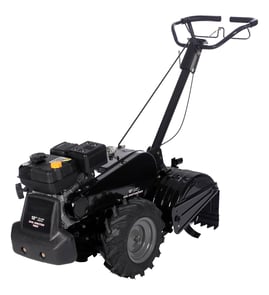


Where is the model number on a Craftsman rear tine tiller?
On the Craftsman rear-tine tiller model 917293480, the model number is printed on the tiller’s model/serial label. On this style of tiller, that label is typically placed on the tine shield/tine guard area or on the main frame where it stays visible but protected.
Common places to check first
- On the tine shield (the guard over the tines)
- On the main frame near the engine mounting area
- Near the belt guard or transmission/drive area
- On the left or right side of the frame rail
- Near the handle support brackets
For diagrams and the exact model identification details used for parts lookup, use the 917293480 owner's manual.
What the label looks like and what to write down
Most Craftsman tiller labels include:
- Model number (for this unit: 917293480)
- A serial number (helps confirm production run)
- Basic engine or emissions information (varies by engine)
Quick checklist
| If you see this | Do this |
|---|---|
| Model number is readable | Record it exactly, including dots or spaces if shown |
| Label is dirty or faded | Wipe gently; use a flashlight at an angle to read embossed print |
| Label is missing | Use the manual’s parts diagrams to match assemblies and confirm fit |
Why it matters
The model number is the fastest way to match the correct Craftsman rear-tine tiller parts, especially for drive components like a belt, clutch cable, or tine hardware that can vary by production version.
Last updated: February 2026
How often should I change the oil in my tiller?
For the Craftsman rear-tine tiller model 917293480, we change the engine oil every 25 hours of operation or at least once a year (even if you do not reach 25 hours). We also check the oil level before starting and after every 5 hours of continuous use; see the 917293480 owner's manual.
Recommended oil-change schedule
Use this as your baseline maintenance plan:
- Before each use: check engine oil level
- After every 5 hours of continuous use: re-check oil level
- Every 25 operating hours: change engine oil
- At least once per year: change engine oil (seasonal maintenance)
- Dirty or dusty conditions: service more often
| Usage pattern | When to change oil | What to do in between |
|---|---|---|
| Regular seasonal use | Every 25 hours | Check level before each start |
| Light use (under 25 hours/year) | Once per year | Check level before each start |
| Heavy use (long sessions) | Every 25 hours | Check level every 5 hours of continuous use |
How we change the oil (quick steps)
Follow the procedure in your manual; these steps match the typical process for this model:
- Park the tiller on a level surface.
- Warm oil drains faster; let the engine run briefly, then shut it off.
- Place a suitable container under the drain.
- Remove the drain plug and tip the tiller forward to drain completely.
- Reinstall and tighten the drain plug; refill with the correct oil type and amount listed in the manual.
Oil type and a key tip for this model
The manual specifies high-quality detergent oil with API service classification SF-SJ. It also notes that multi-viscosity oils (like 5W-30 or 10W-30) can increase oil consumption in warmer temperatures, so we check the oil level more frequently when using them.
Why it matters
Fresh oil protects the engine from wear, overheating, and sludge buildup. Sticking to the 25-hour or annual interval is one of the simplest ways to extend the life of your Craftsman tiller and keep starting and power consistent.
Last updated: February 2026
Are Craftsman rear tine tillers any good?
Yes. Craftsman rear-tine tillers like model 917293480 are built to be strong, practical machines for breaking new ground and working tougher soil; they also require regular maintenance (belt, tines, cable adjustments) to keep performance and durability high. For safe operation and upkeep details, use the 917293480 owner's manual.
What “good” looks like for this tiller
A rear-tine, counter-rotating design is meant to pull itself into the soil and chop it up efficiently, which is why many owners choose it for heavier conditions.
- Counter-rotating tines help bite into hard ground and reduce bouncing
- 17-inch tine width is a solid size for gardens and small plots
- Best results come from multiple shallow passes instead of one deep pass
- Routine checks (bolts, guards, shear pins) prevent avoidable breakdowns
- Proper control-cable tension keeps the drive engaging smoothly
Common issues that affect satisfaction (and how we address them)
Most “not good” experiences come from wear items, incorrect adjustments, or trying to till too deep too fast.
| Symptom | Most common cause | What to check first |
|---|---|---|
| Poor forward drive | Worn or loose belt | Inspect/replace the husqvarna rear-tine tiller drive belt 591372401 |
| Tines do not pull well | Worn/bent tines | Measure tine wear and spacing; replace if needed |
| Drive feels inconsistent | Cable out of adjustment | Adjust clutch cable tension per the manual |
| Excess vibration or noise | Loose hardware | Tighten mounting bolts and fasteners |
Why it matters
A rear-tine tiller is a high-torque machine. When the belt, tines, and clutch cable are in spec, it tills deeper, tracks straighter, and puts less strain on the transmission and operator.
Quick maintenance checklist (best practices)
- Till in passes; do not overload by going too deep too fast
- Keep guards and shields installed before operating
- Check shear pins and mounting bolts regularly
- Inspect tines for sharpness, bending, and excessive wear
- Replace worn drive components before they slip and overheat
Last updated: February 2026
What kind of oil do you use in a Craftsman tiller?
For the Craftsman rear-tine tiller model 917293480, use engine oil that meets API SF through SJ. The manual lists SAE 30 for temperatures above 40°F and SAE 5W-30 or 10W-30 for temperatures below 40°F; oil capacity is 19 oz. Confirm the fill/check procedure in the 917293480 owner's manual.
Oil type and temperature guide
Use the viscosity that matches your typical starting and operating temperature.
- Above 40°F: SAE 30
- Below 40°F: SAE 5W-30 or SAE 10W-30
- Use a clean funnel and pour slowly to prevent overfilling
- Recheck the level after a short wait so oil can settle
| Temperature range | Recommended oil | Why this choice helps |
|---|---|---|
| Above 40°F | SAE 30 | Stable viscosity in warm weather for consistent lubrication |
| Below 40°F | SAE 5W-30 or 10W-30 | Easier cold starts and faster oil flow at startup |
How much oil does it take?
The engine oil capacity for model 917293480 is 19 oz. When topping off, add small amounts and recheck the dipstick so the level stays in the safe range.
Why it matters
Correct oil viscosity and the right fill level protect the engine from accelerated wear, hard starting in cold weather, and overheating under load when you are tilling compacted soil.
Last updated: February 2026
What are the common problems with lawn tillers?
Common problems on a Craftsman rear-tine tiller like model 917293480 include hard starting, poor power, tines not turning, excessive bouncing in hard soil, and drive issues caused by worn belts or out-of-adjustment controls. Regular maintenance and correct tilling depth (about 4 to 6 inches) prevent many failures.
Most common symptoms and what they usually mean
- Engine will not start or runs rough: stale fuel, dirty carburetor, fouled spark plug, or incorrect choke use
- Tines stop turning under load: broken tine shear pin(s) or a drive problem (belt, cable, or linkage)
- Tiller pulls forward or “jumps”: tines catching in hard ground; depth set too deep or ground too dry
- Poor traction or hard to control: leaning on the handle reduces wheel traction; wheel/depth stake setup needs adjustment
- Overheating or strong exhaust smell: running in a confined area; always operate outdoors
Quick checks we recommend first
- Confirm fresh gasoline and the correct starting procedure in the 917293480 owner’s manual.
- Inspect the tine area for jams (vines, long grass, rocks) and clear debris with the engine off.
- Check for broken shear pins if the tines suddenly quit during a jam or overload.
- Look over the drive system for wear or slack.
- Verify safe operation: guards and shields installed, good visibility, and no bystanders nearby.
Parts that commonly solve “no drive” or “tines not turning” complaints
| Symptom | Common cause | Part to inspect/replace |
|---|---|---|
| Tines do not engage | Worn or stretched belt | Husqvarna rear-tine tiller drive belt 591372401 |
| Tines engage intermittently | Cable out of adjustment or frayed | Tiller clutch cable 532110675 |
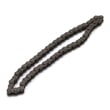
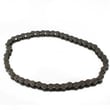
| Grinding or binding in drive | Worn chain or damaged links | Tiller chain, #25-50 532102134 |
Why it matters
A rear-tine tiller can lurch forward if the tines catch in hard ground. Using the right depth, avoiding overly dry soil, and keeping the drive system in good condition helps prevent loss of control and protects the transmission.
Last updated: February 2026
How much does a Craftsman rear tine tiller weigh?
The Craftsman rear-tine tiller model 917293480 typically weighs about 200 lb (assembled, ready-to-run). Use the weight as a planning number for ramps, tie-downs, and storage; confirm handling and transport steps in the 917293480 owner's manual.
Typical weight range for rear-tine tillers
Most rear-tine, counter-rotating-tine tillers in the 6 to 7 HP class land in this range:
| Tiller type | Typical weight | What that means |
|---|---|---|
| Front-tine tiller | 90 to 140 lb | Easier to lift, less traction in hard soil |
| Rear-tine tiller (like 917293480) | 180 to 260 lb | Better traction, usually ramp-load only |
Safe ways to move and load it
- Use a ramp for trucks and trailers; avoid dead-lifting.
- Keep the tiller upright to prevent fuel or oil leaks.
- Tie down at the main frame and handle supports; do not strap across control cables.
- Clean packed soil off the tines and shields; mud adds weight and can shift during transport.
- If you need to reduce rolling resistance, inspect the drive system; a worn belt can also affect how it moves under power (see husqvarna rear-tine tiller drive belt 591372401 if your unit uses that belt).
Why the weight can vary on your machine
- Fuel level in the tank
- Added accessories or counterweights
- Soil packed around the tine area
- Replacement parts that differ from original configuration
Why it matters
Knowing the correct weight helps you choose a ramp and tie-downs with enough capacity, prevents tip-overs, and reduces the chance of bending the handle assembly or damaging the clutch cable during transport.
Last updated: February 2026