Owner’s manual
 View engine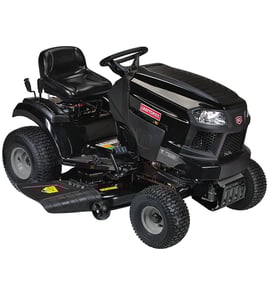





What kind of oil do you use in a Craftsman lawn tractor?
For a Craftsman front-engine lawn tractor like model 917257670, we use 4-cycle engine oil; SAE 5W-30 is the most common all-around choice for reliable lubrication and easier starting across a wide range of temperatures. For the exact viscosity and oil capacity, follow the owner's manual.
Recommended oil type (what to buy)
- Use 4-cycle (4-stroke) engine oil (not 2-cycle oil).
- SAE 5W-30 works well for many riding mower engines in mixed climates.
- If you mow mostly in hot weather, many engines also allow SAE 10W-30.
- If you store and start the tractor in colder weather, 5W-30 typically cranks easier.
- Choose a quality detergent oil that meets common small-engine performance standards.
Quick oil selection guide
| Your typical mowing temps | Common oil choice | Why it helps |
|---|---|---|
| Cool to mild | SAE 5W-30 | Easier starting, good flow when cold |
| Mild to hot | SAE 10W-30 | Good protection in warmer operation |
| Mostly hot | SAE 10W-30 (or manual-specified option) | Helps maintain viscosity at higher temps |
How to avoid the most common oil mistakes
- Check oil with the tractor on level ground.
- Do not overfill; overfilling can cause smoking and leaks.
- Change oil on schedule; dirty oil accelerates engine wear.
- Replace the drain plug seal or damaged hardware if you see seepage.
- Wipe the dipstick clean, reinsert fully, then read the level.
Why it matters
Correct oil viscosity keeps the engine properly lubricated at startup and under load, which reduces wear, helps control operating temperature, and improves long-term reliability.
Last updated: February 2026
What model number is a Craftsman 917257670 lawn mower?
The model number for this Craftsman riding mower is 917257670. On Craftsman equipment, the model number is the best way to match the correct parts list and diagrams, and it is the number you should use when checking the owner's manual for maintenance and specifications.
Where to find the model number on the tractor
Most Craftsman front-engine lawn tractors have the model number on an ID label in one of these common spots:
- Under the seat (seat pan area)
- On the frame near the rear wheels
- Under the hood near the engine compartment
- Along the left or right side of the frame rail
- Near the footrest area
How to confirm you are reading the right number
We recommend using the full model number exactly as printed on the label.
- Look for 917.257670 or 917257670 (both formats refer to the same model)
- Write down the full number before ordering parts
- If the label is dirty, wipe it clean so all digits are visible
- Avoid using engine numbers or deck numbers when searching for parts
Quick ID checklist
| What you see on the label | What it usually means | What to use for parts |
|---|---|---|
| 917257670 (or 917.257670) | Tractor model number | Use this |
| Engine model/type code | Engine identification | Use only for engine-specific service |
| Deck or attachment number | Mower deck/attachment ID | Use only when matching deck parts |
Why it matters
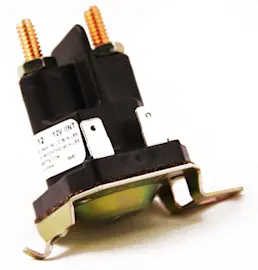
Using the exact model number helps ensure the parts you choose match your tractor’s steering, electrical system, and mower deck configuration. For example, starting and electrical parts such as the lawn tractor ignition switch 532193350 and lawn tractor starter solenoid 582042802 are model-matched to wiring and safety interlock setups.
Last updated: February 2026
What year did Craftsman make the 917257670?
Craftsman model 917257670 was made across a production run rather than in one single year; the exact build year for your specific tractor is determined by the serial number/date code on the tractor’s ID label. Use the steps in the owner's manual to locate the identification information and match it to the manufacturing date.
How to find the build year on your tractor
Look for the model and serial label (often under the seat, on the frame near the rear wheels, or under the hood area). Then use the serial/date code to identify the year.
- Park on a flat surface, set the parking brake, and remove the key
- Lift the seat and check the frame and fender pan area for the ID label
- If not there, check the frame rails near the engine or battery tray
- Write down MODEL 917257670 and the full serial/date code exactly as shown
- Use the date code format described in the owner's manual to determine the year
Common serial number patterns (what to look for)
Craftsman 917-series tractors commonly use a serial/date code that includes a manufacture date (often embedded as numbers representing month/day/year or a similar date sequence). Once you have that code, you can translate it into the exact year.
| What you have | What it tells you | What to do next |
|---|---|---|
| Model number (917257670) | The tractor family/configuration | Use it to pull correct parts diagrams |
| Serial/date code | The specific unit’s build date | Decode it to get the exact year |
| Engine model/type code | Engine’s build info (separate from tractor) | Use for engine-specific tune-up parts |
Why it matters
The build year affects parts fitment on items that change over time, such as the ignition system, steering, and deck drive components. Using the correct serial/date code helps us match the right replacement parts the first time.
Parts that often vary by production date
If you are troubleshooting or ordering, these are common “date-sensitive” areas on riding tractors:
- Starting circuit (for example, lawn tractor starter solenoid 582042802)
- Key switch and wiring (for example, lawn tractor ignition switch 532193350)
- Deck drive and pulleys
- Steering linkage and front axle components
- Belts and idlers
Last updated: February 2026
What are the parts of a tractor engine?
A tractor engine is built from a few core systems: the rotating assembly (crankshaft, pistons, connecting rods), the valve train (camshaft, valves), and the support systems (fuel, ignition, lubrication, cooling, and starting). For Craftsman model 917257670, the exact engine breakdown and diagrams are in the owner's manual.
Main tractor engine parts (what they do)
- Cylinder block and cylinder head: form the combustion chambers and support internal passages
- Pistons and piston rings: compress the air-fuel mix and seal the cylinder walls
- Connecting rods and crankshaft: convert piston motion into rotating power
- Camshaft, lifters, pushrods, rocker arms, valves: open and close intake and exhaust valves
- Gaskets and seals: prevent oil, fuel, and compression leaks
- Lubrication system (oil pump, filter, sump): keeps bearings and cylinder walls protected
- Cooling system (air shrouds/fins or liquid cooling parts): controls operating temperature
Support systems you will troubleshoot most often
On riding lawn tractors, “engine problems” are frequently caused by starting, ignition, or safety circuits rather than internal engine damage.
- Starting circuit: battery, cables, starter, and solenoid (a common no-crank culprit is the lawn tractor starter solenoid 582042802)
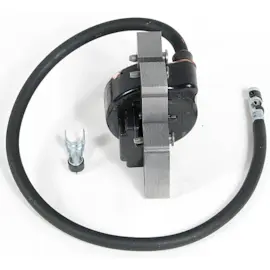
- Ignition: key switch, wiring, ignition module, spark plug (a worn or failed switch can be the lawn tractor ignition switch 532193350)
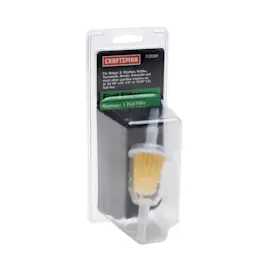
- Fuel and air: fuel line/filter, carburetor, air filter, choke linkage
- Safety interlocks: seat switch, brake/clutch switch, PTO switch (can prevent cranking or spark)
Quick symptom-to-system guide
| Symptom | Most likely system | Common checks |
|---|---|---|
| Clicks but won’t crank | Starting circuit | Battery charge, cable connections, solenoid |
| Cranks but won’t start | Fuel/ignition | Fresh fuel, spark, air filter, choke |
| Starts then dies when brake released | Safety interlock | Brake switch, seat switch, wiring |
Why it matters
Knowing which “engine part group” matches your symptom helps you avoid replacing internal parts (like pistons or crankshaft) when the real issue is a switch, solenoid, wiring, or basic tune-up item.
Last updated: February 2026