Owner’s manual
 Error Codes



Which is better, top mount or bottom mount refrigerator?
A bottom-mount refrigerator like Ikea model 90462157B is usually better for everyday convenience because fresh-food items sit at eye level, while a top-mount is often simpler and can cost less to run and repair. The best choice depends on how you use the refrigerator daily.
| Feature | Top-mount (freezer on top) | Bottom-mount (freezer on bottom) |
|---|---|---|
| Everyday access | More bending for fresh food | Less bending for fresh food |
| Freezer access | Easier to reach | More bending for freezer |
| Organization | Often simpler layout | Often better drawer and basket access |
| Typical ownership costs | Often lower | Often higher (more features) |
- You use the refrigerator section more than the freezer
- You want easier access to drawers and freezer baskets (common on bottom-mount designs)
- You prefer better day-to-day organization for fresh foods
- You have mobility or back concerns and want less bending
For model 90462157B, the manual emphasizes positioning the unit so drawers and freezer baskets can fully open, which is a practical advantage of many bottom-mount layouts. See the 90462157B owner's manual.
- You want a straightforward design with fewer features to maintain
- You prioritize lower upfront cost and often lower repair complexity
- You use the freezer frequently and want it at chest or eye level
- Kitchen clearance: Bottom-mount units need enough room for the freezer drawer to pull out fully.
- Ventilation and placement: Proper airflow matters for any style; avoid blocking the toe grille and keep recommended clearances.
- Temperature environment: Many refrigerators are designed to operate within a normal indoor range; avoid extreme hot or cold installation locations.
Choosing the right mount style reduces daily strain, improves food visibility (which can cut waste), and helps you avoid door and drawer issues caused by tight clearances or poor leveling.
Last updated: January 2026
What is the bottom part of a refrigerator called?
The bottom front area of an Ikea refrigerator like model 90462157B is commonly called the toe grille (or kick plate). Behind and underneath that area is the machine compartment, where key cooling components such as the compressor and condenser parts are located; keeping that area clear helps the refrigerator cool properly.
- Toe grille / kick plate: The vented cover at the lower front.
- Machine compartment: The lower rear or lower area that houses cooling-system components.
- Compressor compartment: Another name for the machine compartment (focused on the compressor).
- Drain pan: A pan underneath that can collect defrost water on some designs.
Your 90462157B documentation specifically calls out the toe grille and warns not to block it because airflow is essential for proper operation. For placement clearances and access, use the 90462157B owner's manual.
| Term | Where it is | What it does |
|---|---|---|
| Toe grille | Lower front | Lets air flow in and out; covers the opening |
| Machine compartment | Lower area (often rear) | Houses compressor and other cooling components |
| Compressor | In machine compartment | Pumps refrigerant to move heat out of the cabinet |
If the toe grille area is blocked (dust buildup, boxes, pet hair), airflow drops and the compressor has to work harder. That can lead to warmer temperatures, longer run times, and more noise.
- Keep the toe grille vents clear and unobstructed.
- Vacuum dust from the grille area periodically.
- Make sure the refrigerator is level so doors seal tightly.
- Leave recommended clearance around the cabinet for airflow.
- If you suspect a cooling issue, check for airflow first before replacing parts.
Last updated: January 2026
Is there a fan on the bottom of the refrigerator?
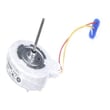
Yes. The Ikea bottom-mount refrigerator model 90462157B uses a condenser fan that moves air through the condenser area near the compressor, which is typically in the lower rear or bottom compartment. The 90462157B owner's manual also lists condenser-fan sound as a normal operating sound.
This refrigerator uses multiple fans to manage airflow and cooling:
- Condenser fan: pushes air across the condenser and compressor area (lower section)
- Evaporator fan: circulates cold air through the fresh food and freezer compartments
- Ice maker fan (if equipped): can run during ice production and dispensing
Use these checks before assuming a failure:
- Listen for a steady airflow or “whoosh” from the lower rear when the compressor is running
- Keep the toe grille clear; the manual notes airflow at the lower front is essential
- Verify the refrigerator has ventilation clearance so heat can escape
- If the unit cools normally but feels warm underneath, the condenser fan may still be operating as designed
- If cooling is weak and the compressor runs constantly, check for blocked airflow or a fan problem
| What you notice | What it often means | What we recommend |
|---|---|---|
| Airflow sound from the lower area | Condenser fan running normally | Keep vents and toe grille clear |
| Little or no airflow plus poor cooling | Airflow blockage or condenser fan issue | Inspect for dust, obstructions; service if needed |
| Rattling or buzzing | Fan blade contacting debris or a worn motor | Inspect fan area; replace damaged parts |
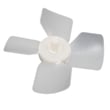
If you are troubleshooting a fan noise inside the cabinet, a damaged blade can also cause vibration; the refrigerator evaporator fan blade 5308000010 is a listed part for this model.
The condenser fan removes heat from the sealed system. When airflow is restricted (blocked toe grille, dust buildup, or a failed fan), the refrigerator can run longer, cool poorly, and sound louder.
Last updated: January 2026