 Installation guide
 Owner’s manual




Are all dishwashers 55cm deep?
No. Dishwashers are not all 55 cm deep; depth varies by style (built-in, integrated, portable) and by brand. For your Bosch dishwasher model SHX3AR55UC, use the installation cutout and depth requirements in the installation guide to confirm the exact fit.
Typical dishwasher depths (what to expect)
Most dishwashers fall into a few common depth ranges; the key is whether you are measuring the cabinet opening, the dishwasher cabinet, or the depth including the door/handle.
- Built-in (standard 24-inch class): often around 55 to 60 cm cabinet depth
- Fully integrated models: commonly designed around a 55 cm cabinet depth, but not universal
- Freestanding/portable models: can be deeper due to top and rear clearances
- Depth with door open: always much larger and matters for aisle clearance
How to measure depth the right way
Use these checks before ordering parts or planning an install:
- Measure cabinet opening depth from the back wall to the front of the cabinet face
- Check for baseboard/toe-kick interference at the bottom front
- Confirm water line, drain hose, and power routing space behind the unit
- If you have a panel-ready door, allow for panel thickness and door swing
Quick reference: common “standard” sizes
| Dishwasher type | Typical width | Typical depth target | Notes |
|---|---|---|---|
| Built-in (24-inch class) | ~60 cm | ~55 to 60 cm | Most common in U.S. kitchens |
| Slimline | ~45 cm | ~55 to 60 cm | Often used in smaller kitchens |
| Portable | ~60 cm | ~60+ cm | May need extra rear clearance |
Why it matters
Depth is the dimension that most often causes fit problems: even a few centimeters can prevent the dishwasher from sitting flush, can pinch the drain hose, or can keep the door from opening smoothly. The SHX3AR55UC installation guide gives the exact cutout and clearance requirements for this Bosch model.
Last updated: January 2026
What's the most common problem with a Bosch dishwasher?
For Bosch dishwashers like model SHX3AR55UC, the most common service issue is a heating problem (water not heating or cycles running unusually long). This often traces to the heater circuit, which can involve the control board, heater, or sensors; use the SHX3AR55UC owner's manual to confirm the symptoms and indicators for your exact unit.
What you’ll typically notice
- Cycle time seems to run much longer than normal
- Dishes come out cool and still wet (poor drying)
- Detergent does not dissolve well
- The dishwasher stops mid-cycle or appears to “stall”
- An error code related to heating or temperature appears (model-dependent)
Quick checks before replacing parts
- Reset power: Turn off the breaker for 5 minutes, then restore power and try a normal cycle.
- Verify incoming water temperature: Most dishwashers perform best with hot water at the sink (typically around 120°F).
- Clean filters and spray arms: Restricted flow can reduce heating performance and cleaning.
- Check for error codes: Use the Bosch dishwasher error codes reference to match the display code to a likely cause.
- Confirm the door is latching: A weak latch can interrupt heating and wash action; if the door will not reliably latch, the dishwasher door lock 00630783 is a common suspect.
Parts that are commonly involved (by symptom)
| Symptom | Common area to inspect | Example part for SHX3AR55UC |
|---|---|---|
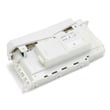
| Long cycles, poor drying | Heater circuit or control | Dishwasher electronic control board 00705047 |
| Not filling well, no hot wash | Water supply and fill | Dishwasher water inlet valve 00622058 |
| Heating-related errors, inconsistent results | Water clarity/temperature feedback | Dishwasher turbidity sensor 00611323 |
Why it matters
When the dishwasher cannot heat water correctly, it affects cleaning, drying, and cycle timing. Fixing the root cause prevents repeat problems and helps protect the circulation system from running excessively long.
Last updated: January 2026
How do I prevent the Bosch E25 error in the future?
To help prevent a Bosch E25 error on your SHX3AR55UC dishwasher, we focus on keeping the drain path clear: clean the filters regularly, remove debris from the sump area, and make sure the drain hose is routed correctly so the dishwasher can pump water out freely.
What E25 usually means
E25 commonly points to a drain problem (restricted flow or a blockage) that keeps water from leaving the tub fast enough.
Prevention checklist (do these routinely)
- Clean the filter assembly and rinse it with warm water; scrub off grease and food film.
- Check the sump area under the filters for glass, labels, bones, or twist ties.
- Run hot water at the sink for 30 to 60 seconds before starting a cycle to reduce grease buildup.
- Use the right detergent amount; too much can create residue that traps debris.
- Keep the drain hose from kinking, crushing, or sagging into a low spot.
- If you have a garbage disposal, make sure the disposal inlet is clear and the knockout plug was removed during installation.
Parts that often solve repeat E25 issues
If cleaning and hose routing do not stop the error from returning, a weak drain system component is a common next cause.
| Symptom you notice | Most likely area | Example part for SHX3AR55UC |
|---|---|---|
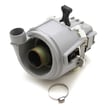
| Hums but drains slowly or not at all | Drain pump or blockage at pump | Dishwasher drain pump 00611332 |
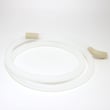
| Drains sometimes, then errors | Drain hose routing or partial clog | Dishwasher drain hose 00668108 |
| Water backs up or drains very slowly | Drain hose restriction or air gap/disposal issue | Dishwasher drain hose 00645149 |
Why it matters
Preventing E25 is mostly about protecting the drain pump and keeping wash water from sitting in the tub. A clear drain path improves cleaning results, reduces odors, and helps the dishwasher finish cycles normally.
For model-specific filter removal, drain hose routing, and maintenance intervals, follow the SHX3AR55UC manual. For installation details that affect draining (high loop, air gap, disposal connection), use the SHX3AR55UC installation guide.
Last updated: January 2026
How can I force my Bosch dishwasher to drain?
To force-drain a Bosch dishwasher like model SHX3AR55UC, cancel the cycle so the unit switches to its drain routine, then clear any standing water from the sump area if needed. For the exact button sequence for your control panel, follow the SHX3AR55UC owner's manual.
Quick ways to force a drain
- Cancel the cycle: Press and hold the Cancel/Drain function (or the Start button used for cancel) until the dishwasher begins draining.
- Wait for the drain routine to finish: Most drain-outs run for roughly 1 to 2 minutes.
- Reset power if the controls are unresponsive: Turn the dishwasher off at the breaker for 1 minute, restore power, then try cancel/drain again.
- Remove water manually if needed: If the drain routine runs but water remains, bail out water and check the sump for debris.
If it still will not drain (most common causes)
A forced drain will fail if the dishwasher cannot move water through the drain path.
- Food debris blocking the sump or filter area
- A kinked, clogged, or incorrectly routed drain hose (high loop/air gap issues)
- A jammed or failed drain pump
- A control or door-latch issue preventing the drain routine from running
Parts that commonly fix a no-drain problem
| Symptom | What to check first | Common part for SHX3AR55UC |
|---|---|---|
| Hums but does not move water | Pump impeller jam, debris in sump | Dishwasher drain pump 00611332 |
| Drains slowly or backs up | Kink/clog, routing, connection to disposer | Dishwasher drain hose 00668108 |
| Won’t start drain routine | Door not latching, cycle won’t cancel | Dishwasher door lock 00630783 |
Why it matters
Standing water can cause odors, poor cleaning, and can overwork the drain pump. Forcing a drain is a good first step, but clearing the filter and drain path prevents repeat clogs.
Helpful DIY reference
- Use dishwasher not draining video for a step-by-step checklist (filters, hose routing, pump checks).
Last updated: January 2026





