Installation guide
 Owner’s manual
 Error Codes


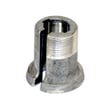
How do I reset the lid lock on my whirlpool washer?
On the Whirlpool LSR7300PQ0 washer, a “lid lock” issue is usually resolved by resetting the control and confirming the lid switch is closing properly: unplug the washer for 5 minutes, then close the lid and restart the cycle as shown in the LSR7300PQ0 owner's manual.
Quick reset steps (most common)
- Push in the cycle control knob to stop the washer.
- Unplug the washer for 5 minutes.
- Plug it back in.
- Close the lid firmly (the washer will not agitate or spin with the lid open).
- Pull out the cycle control knob to restart.
If it still will not run: check the lid switch
This model uses a lid switch to prove the lid is closed. If the switch is loose, broken, or not being pressed by the lid, the washer can act like the “lock” is stuck.
- Open and close the lid a few times to make sure it seats fully.
- Listen for a distinct click when the lid closes.
- If the washer will fill but will not agitate or spin, the lid switch circuit is a top suspect.
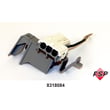
If the switch is failing, replacing the washer lid switch assembly WP8318084 is the standard fix.
What to expect after a reset
| What you see | What it usually means | What to do |
|---|---|---|
| Washer restarts normally | Temporary control interruption | Keep using normally |
| Won’t agitate or spin with lid closed | Lid switch not closing | Inspect lid strike area; replace switch if needed |
| Intermittent stopping mid-cycle | Loose lid switch connection or worn switch | Recheck mounting and wiring; replace switch |
Why it matters
The lid switch is a safety device. If it does not signal “lid closed,” the LSR7300PQ0 prevents agitation and spin to reduce the risk of injury and water splash.
Last updated: January 2026
How do I fix a low flow error on my washing machine?
A low-flow (LF/F8E1-style) fill problem on a Whirlpool LSR7300PQ0 usually means the washer is not getting enough water fast enough. We fix it by confirming both faucets are fully open, correcting hose issues, and clearing debris that can clog the inlet valve screens.
Quick checks first (most common fixes)
- Turn both hot and cold faucets fully on.
- Straighten any kinks; rotate the hose to remove twists and improve flow.
- Make sure the hose couplings are snug, then tighten about two-thirds of a turn with pliers (do not overtighten).
- Run water through each hose into a bucket to flush grit that can clog the inlet valve screens.
- Check for leaks at the faucets and at the washer inlet connections.
Clean and confirm the water supply
Low flow is often caused by restricted supply at the wall valves, clogged hose screens, or sediment in the plumbing.
What we recommend doing
- Shut off both faucets.
- Remove the inlet hoses from the washer.
- Inspect and clean any debris from the small screens at the washer inlet valve ports.
- Flush the hoses and water lines into a bucket, then reconnect.
If the washer fills normally after this, the issue was a restriction, not an electrical problem.
Parts that commonly cause low fill
If supply and screens are clean but filling is still slow or inconsistent, the inlet valve can be sticking or restricted internally.
| Symptom | Most likely cause | What to check next |
|---|---|---|
| Slow fill on both hot and cold | Supply restriction or inlet valve issue | Screens, then inlet valve |
| Slow fill on one temperature | One side of inlet valve restricted | Hot vs. cold hose and valve side |
| Intermittent fill | Debris shifting in screens/valve | Recheck screens, consider valve replacement |
Relevant model part: washer inlet valve 285805.
Why it matters
Low water flow can cause long cycle times, poor cleaning, and repeated fill interruptions. Fixing the restriction early also helps protect internal components like the timer and water-level system.
For hose routing, connection steps, and leak checks, follow the LSR7300PQ0 installation guide.
Last updated: January 2026
What is the capacity of the Whirlpool model LSR7300PQ0?
The Whirlpool LSR7300PQ0 is a classic top-load, direct-drive washer; its tub capacity is typically in the 3.2 to 3.5 cu. ft. range (not 4.8 cu. ft.). For the exact rated capacity for your specific unit, check the specifications section in the LSR7300PQ0 owner's manual.
How we recommend confirming capacity
Capacity is often listed as “tub capacity” or “basket volume” in the specs. We recommend:
- Check the model and serial label under the washer lid to confirm you have LSR7300PQ0
- Look in the specs/features pages of the LSR7300PQ0 owner's manual
- Compare your washer’s size to typical top-load direct-drive units (27-inch wide cabinets)
- Avoid using capacity numbers from newer high-efficiency models; they are not comparable
Typical capacity comparison (helps avoid mix-ups)
| Washer type | Typical capacity range | Notes |
|---|---|---|
| Direct-drive top load (like LSR7300PQ0) | 3.2 to 3.5 cu. ft. | Traditional agitator design |
| Modern HE top load (no tall agitator or low-profile) | 4.0 to 5.5 cu. ft. | Larger basket, different wash action |
Why it matters
Capacity affects load size, detergent amount, and cycle performance. If you size loads based on an inflated capacity, you can overload the basket, which leads to poor cleaning, out-of-balance spin, and extra wear on drive components.
Last updated: January 2026
How much does it cost to replace a washing machine pump?
For a Whirlpool LSR7300PQ0 washer, replacing the drain pump typically costs $150 to $350 total (parts plus labor). If you do the repair yourself, the pump part is usually $25 to $75, plus any hoses or clamps needed.
Typical cost breakdown
- DIY parts only: $25 to $75 for the pump, plus $0 to $20 for clamps or hoses
- Service call/diagnostic: commonly $80 to $150 (often applied to the repair)
- Labor to replace pump: commonly $100 to $250
- Total professional repair: commonly $150 to $350
| Scenario | What you pay for | Typical total |
|---|---|---|
| DIY replacement | Pump + small supplies | $25 to $95 |
| Pro repair (best case) | Service call + labor + pump | $150 to $250 |
| Pro repair (higher end) | Extra diagnosis + labor + pump | $250 to $350 |
What changes the price most
- Drain pump access time: top-load direct-drive designs are often quicker than front-load designs
- Extra problems found: a clog, damaged drain hose, or a failing motor coupling can add cost
- After-hours or same-day service: usually increases labor charges
- Water damage cleanup: not part of the pump replacement but can add expense
Quick checks before replacing the pump
We recommend ruling out simple issues first because a clog can mimic a bad pump.
- Unplug the washer and check the drain hose for kinks or blockage
- Confirm the standpipe or laundry tub is not backing up
- Listen during drain: a loud hum with no draining often points to a jammed or failed pump
- If the washer will not drain or spin, check the lid switch function (many Whirlpool top-loaders will not drain/spin with an open lid switch)
Parts that commonly relate to “won’t drain”
Why it matters
A weak or leaking drain pump can leave water in the tub, cause slow draining, and lead to spin problems. Catching it early helps prevent belt, clutch, or gearcase strain and reduces the chance of a bigger repair.
For model-specific safety steps and access details, follow the LSR7300PQ0 installation guide and the LSR7300PQ0 owner's manual.
Last updated: January 2026