 Error Codes


How do I find out the model of my dishwasher?
For Kenmore undercounter dishwasher model 66517795790, the model number is printed on a rating label inside the door area. Open the door and check the inner frame around the tub opening; the label is usually on the left or right side edge.
Where to look (most common spots)
- Along the left or right inner door frame (around the tub opening)
- On the top edge of the door (visible when the door is open)
- On the side edge of the door itself
- Just inside the tub opening on the cabinet frame
- Near the control area, sometimes on the underside of the control panel lip
What the label looks like
The label typically includes:
- Model number (for example, 66517795790)
- Serial number
- Electrical ratings (volts/amps)
- Brand name (Kenmore)
If the print is hard to read, use a flashlight and wipe the label gently with a damp cloth, then dry it.
Why it matters
The model number is the fastest way to match the correct replacement parts for your dishwasher, especially fit-critical items like a door seal, inlet valve, or spray arm.
Common parts that depend on the exact model
| Part type | Example for this model | What it affects |
|---|---|---|
| Door sealing | Dishwasher door seal WPW10509257 | Leaks at the bottom or sides of the door |
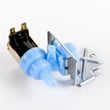
| Water fill | Inlet valve W10844024 | No fill, slow fill, or fill errors |
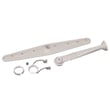
| Washing action | Spray arm 675808 | Poor cleaning, no spray, or uneven wash |
Last updated: January 2026
What is the life expectancy of a Kenmore dishwasher?
A Kenmore dishwasher typically lasts 10 to 15 years with normal household use and basic maintenance. For Kenmore model 66517795790, keeping wash performance strong (good water flow, proper draining, and a tight door seal) is what most often determines whether it reaches the upper end of that range.
What affects lifespan the most
- Water quality and temperature: hard water and low water temperature increase detergent buildup and strain cleaning performance.
- How often you run it: multiple loads per day shortens overall service life compared to a few loads per week.
- Cleaning and clog prevention: keeping the sump area and spray paths clear reduces pump and motor wear.
- Door sealing and leaks: stopping small leaks early helps prevent corrosion and electrical issues.
- Loading habits: overloading can block spray arms and cause chronic poor cleaning.
Maintenance that helps you reach 10 to 15 years
- Run hot water at the sink before starting a cycle so the dishwasher fills with hotter water.
- Use the right detergent amount; too much can leave residue, too little can reduce cleaning.
- Check that the lower spray arm spins freely and is not blocked; replace a worn arm if needed (see spray arm 675808).
- If you see drips at the door, inspect and replace the perimeter seal (see dishwasher door seal WPW10509257).
- If the unit is not filling properly, test the water supply and consider the fill valve as a common wear item.
Common “end-of-life” symptoms vs. fixable issues
| Symptom | Often fixable? | Common next step |
|---|---|---|
| Leaking at the door | Yes | Inspect/replace door seal, check door alignment |
| Poor cleaning, gritty dishes | Yes | Clear spray arm holes, verify spray arm rotation |
| Won’t fill or fills slowly | Yes | Check supply, screen, inlet valve |
| Loud grinding during wash | Sometimes | Inspect pump area, impeller, motor condition |
Why it matters
Dishwashers usually fail gradually. Addressing early signs like minor leaks, weak spray, or slow filling can prevent bigger failures (pump motor damage, corrosion, or repeated no-drain problems) and extend the usable life of your Kenmore dishwasher.
Last updated: January 2026
How do you do a hard reset on a Kenmore dishwasher?
For Kenmore dishwasher model 66517795790, a “hard reset” usually means clearing the control by cutting power briefly, then restarting a cycle. If the dishwasher is unresponsive, power-cycling is the most reliable reset method and often restores normal keypad operation.
Quick hard reset steps (power reset)
- Turn the dishwasher OFF at the breaker (or unplug it if accessible).
- Wait 2 to 5 minutes.
- Restore power.
- Wait about 30 seconds for the control to boot.
- Start a normal wash cycle and listen for the fill.
If the buttons still do not respond
Many Kenmore dishwashers also have a keypad sequence that cancels a stuck cycle, but the exact keys vary by control panel. Try these common options:
- Press Cancel/Drain once, then close the door and wait 1 to 2 minutes.
- If your panel has Heated Dry and High Temp, press them in alternating order (for example: Heated Dry, High Temp, Heated Dry, High Temp), then close the door and wait.
- If the dishwasher drains but will not start, check for a door-latch issue; a weak latch can prevent the control from running a cycle.
Parts that commonly affect “won’t start” after a reset
If resets do not help, a failed safety or fill component is often the real cause.
| Symptom after reset | What to check | Related part for this model |
|---|---|---|
| No lights or dead panel | House power, breaker, wiring | (No specific control part listed here) |
| Lights on, won’t run | Door not latching | Dishwasher door latch WP3380854 |
| Runs but won’t fill | Water supply, float stuck, inlet valve | Inlet valve W10844024 |
| Stops and drains unexpectedly | Float stuck up, overfill protection | Dishwasher float assembly WP3376397 |
Why it matters
A true “hard reset” clears a confused control state, but it will not fix a mechanical problem like a door that will not latch, a stuck float, or a failed inlet valve. Matching the symptom to the right check saves time and prevents repeat shutdowns.
Last updated: January 2026
What are common problems with Kenmore dishwashers?
Common problems on Kenmore undercounter dishwashers like model 66517795790 include poor cleaning, not draining, leaking at the door, and racks that do not glide smoothly. Many issues come down to a clogged spray system, a worn seal, or a water fill or drain problem.
Most common symptoms (and what they usually point to)
- Dishes come out dirty: clogged spray arm holes, blocked filter area, low water fill, or loading issues
- Dishwasher will not drain: drain hose restriction, sink/disposer blockage, or a drain path clog
- Water leaking from the door: worn or misaligned door seal, debris on the sealing surface, door not latching fully
- Racks stick or fall off track: worn rack track/rail, damaged rack wheels, bent rack frame
- Burning smell: plastic item contacting the heater, debris on the heater, or a failing motor component
Quick checks we recommend before replacing parts
- Confirm the water supply is on and the fill is strong (weak fill often causes poor wash results).
- Clean the spray arms by rinsing and clearing mineral buildup from the jet holes.
- Check the drain path: look for kinks in the hose and clogs at the sink connection.
- Inspect the door sealing surface: wipe the tub lip and seal area; food debris can cause leaks.
- Run hot water at the sink for 30 to 60 seconds before starting a cycle to improve wash performance.
Parts that commonly solve these problems on model 66517795790
| Symptom | Common part to inspect | What it affects |
|---|---|---|
| Leaking at door | Dishwasher door seal WPW10509257 | Keeps water from escaping around the door |
| Poor cleaning | Spray arm 675808 | Delivers wash water to dishes |
| Not filling or fills slowly | Inlet valve W10844024 | Controls water entering the dishwasher |
| Not draining or drains poorly | Dishwasher drain hose WP3374077 | Carries water out to the sink/drain |
Why it matters
Catching the root cause early helps prevent repeat problems like chronic leaks (cabinet damage risk), recurring poor cleaning (detergent waste), and overheating odors (items contacting the heater). A few basic inspections often narrow the issue to one system: fill, wash, drain, or door seal.
Last updated: January 2026







