 Installation guide
 Owner’s manual


What is the rough opening for a GE dishwasher?
For the GE dishwasher model PDW7880N10SS, we install it in a standard built-in opening that is at least 24 inches wide, 24 inches deep, and about 34-1/2 inches high (floor to underside of the countertop). We recommend measuring your cabinet opening before installation and comparing it to the installation guide.
Rough opening and clearance requirements
Use these minimums when planning the enclosure:
- Depth: 24 inches minimum
- Width: 24 inches minimum
- Height: approximately 34-1/2 inches (floor to underside of countertop)
- Corner installs: allow 2 inches minimum clearance to adjacent cabinet, wall, or appliance
- Drain hose routing: keep total drain hose length 10 feet or less for proper drainage
Quick reference table
| Measurement | Minimum for PDW7880N10SS | Where to measure |
|---|---|---|
| Opening width | 24 in. | Inside cabinet walls |
| Opening depth | 24 in. | Front of cabinet to back wall |
| Opening height | ~34-1/2 in. | Floor to underside of countertop |
Why it matters
A dishwasher that is squeezed into a too-small opening can rub the cabinet frame, sit out of level, or pinch the drain hose and wiring. Getting the rough opening right helps prevent leaks, poor draining, and door alignment problems.
Installation tips we use in the field
- Confirm the cabinets are square and plumb and the floor is even.
- Make sure the dishwasher is fully enclosed on the top, sides, and back.
- Check that the door opens and closes freely without catching the cabinet frame.
- Plan electrical routing so the connection point at the right front of the dishwasher is accessible.
Last updated: February 2026
What is the most common problem with a GE dishwasher?
The most common GE dishwasher problems are not draining and not starting. On the GE PDW7880N10SS, we start by checking simple causes first: a clogged filter or sump area, a stuck float, or a door latch that is not fully seated (the control can respond but the unit will not fill or run). See the owner's manual for model-specific checks and cycle options.
Most common symptoms and what they usually point to
- Water left in the bottom: restricted filter/sump, drain hose restriction, or a failing drain pump
- Has power but will not run: door not fully latched, control lock, or a power interruption
- Stops early or acts “glitchy”: needs a control reboot (power reset)
- Poor drying: low incoming water temperature, rinse aid empty, or heat-dry option not selected
Quick checks we recommend first (fast, no parts)
- Confirm the door is firmly closed and latched. The manual notes that a door latch not properly seated can prevent filling.
- Check the water supply valve under the sink is fully on. If the dishwasher never fills, a closed valve is a common cause.
- Reboot the control: turn power off at the breaker or wall switch for 30 seconds, then turn it back on.
- Clean the filtration area: remove debris from the filter/sump area so the pump can move water.
- Verify drying settings: use Heat Dry and keep rinse aid filled for better results.
Parts that commonly solve these problems on PDW7880N10SS
If the quick checks do not fix it, these parts on our list match common failure points:
| Symptom | Part to check | Why it matters |
|---|---|---|
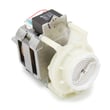
| Not draining | Dishwasher drain pump WD26X10025 | Pushes water out; a weak or jammed pump leaves standing water |
| Not cleaning well | Dishwasher filter WD12X10109 | A clogged filter reduces wash pressure and recirculation |
| Overfilling or won’t start due to “flood” condition | Dishwasher float assembly WD12X10047 | A stuck float can signal the dishwasher to stop filling/running |
| Leaks at the door/tub edge | Dishwasher tub gasket WD08X10018 | A worn gasket can let water escape during wash |
Why it matters
Drain and start issues often look like “major failures,” but they are frequently caused by a latch, float, filter restriction, or a single component such as the drain pump. Checking these first prevents repeat problems and protects the pump and motor from strain.
Last updated: February 2026
What is the difference between a regular GE and GE PDW7880N10SS?
GE PDW7880N10SS is a specific GE dishwasher model (part of the PDW7000 series referenced in the documentation), while “regular GE” usually means GE’s standard dishwasher lines in general. The real differences come down to the exact series and features on the model you own; we use the owner's manual to match controls, options, and operating behavior to PDW7880N10SS.
What “regular GE” vs a specific model number means
When someone says “regular GE,” they are usually not naming a model. A model number like PDW7880N10SS identifies:
- The exact control panel and cycle options
- The correct replacement parts list (spray arms, filters, pumps, racks)
- Installation requirements (mounting, toe panel removal, wiring)
- Troubleshooting steps and any model-specific error behavior
Common differences you may notice between GE dishwasher lines
Even within GE, dishwashers can vary by series. Typical differences include:
- Controls and settings: button layout, lock features, cycle selections
- Drying performance: heated dry options and cycle design
- Noise level: insulation and pump design can change sound levels
- Rack layout: adjustability, roller style, and silverware basket design
- Service parts: different filters, spray arms, and motor assemblies
Quick comparison
| Item | “Regular GE” (generic) | GE PDW7880N10SS (specific) |
|---|---|---|
| Identification | Brand only | Exact model number |
| Parts lookup | Not precise | Exact match for ordering parts |
| Troubleshooting | General steps | Steps aligned to this series and controls |
| Installation details | Varies by model | Follow the model’s instructions |
Why it matters
Using the exact model number prevents wrong-part orders and speeds up troubleshooting. For example, if you are chasing poor cleaning or drainage, the correct filter and pump parts for PDW7880N10SS matter, such as the dishwasher filter WD12X10109 or the dishwasher drain pump WD26X10025.
Last updated: February 2026
Is GE PDW7880N10SS considered high end?
GE PDW7880N10SS is a GE Profile PDW7000-series dishwasher, which sits in GE’s more premium tier compared with basic GE dishwashers. In practical terms, it is considered “higher-end” within the GE lineup because it is built and priced as a step-up model, with stronger feature sets and longer coverage on certain components.
How we classify “high end” for this model
We treat “high end” as a combination of series positioning, build features, and long-term component coverage.
- Series tier: PDW7000 series is GE Profile (step-up line)
- Ownership experience: typically quieter operation and more cycle options than entry models
- Serviceability: parts support is strong, with common wear items available
- Warranty signals: longer coverage on select components is typical of premium tiers (check your paperwork for exact terms)
For model-specific details like cycles, options, and control features, use the PDW7880N10SS owner’s manual.
What “high end” means (and what it does not)
“High end” can mean different things depending on whether you compare within GE or across all brands.
| Comparison | Where PDW7880N10SS typically lands | What to expect |
|---|---|---|
| Within GE dishwashers | Upper tier (Profile) | More features than base models |
| Across the whole market | Premium, not ultra-luxury | Strong performance without boutique pricing |
Why it matters
If you are deciding whether to repair or replace, a Profile-tier dishwasher is usually worth repairing when the issue is a common wear part (filters, spray components, door seals) rather than a major electrical or motor failure.
Parts that commonly affect performance
If cleaning or draining performance is slipping, these are frequent culprits on many GE dishwashers:
- Clogged or damaged filters
- Spray arm blockage or wear
- Door seal leaks that reduce wash pressure
- Drain pump issues that leave standing water
If you are troubleshooting wash performance, the dishwasher not cleaning dishes video is a solid starting point.
Last updated: February 2026





