Installation guide
 Owner’s manual


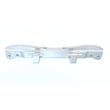
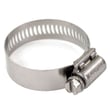
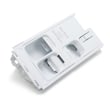

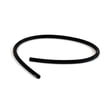
What is the life expectancy of a Whirlpool washing machine?
A Whirlpool washing machine typically lasts 10 to 14 years. For your Whirlpool WFW87HEDW0 front-load washer, consistent care (proper loading, correct detergent, and routine cleaning) is what most directly determines whether you land closer to 10 years or push beyond it; see the WFW87HEDW0 owner's manual for model-specific care guidance.
What affects lifespan the most
- Overloading (extra strain on the tub, shocks, and drive system)
- Detergent choice and amount (HE detergent, measured correctly)
- Moisture left in the door boot (can lead to odor, residue, and leaks over time)
- Installation quality (level floor, stable base, correct clearances)
- Drain and fill health (slow draining or restricted water flow increases wear)
Quick maintenance routine (high impact)
- Wipe the door boot dry after laundry day; leave the door slightly open to air out.
- Run a monthly cleaning cycle (or hot cycle) to reduce residue.
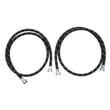
- Check fill hoses for bulges or cracking; replace as needed.
- Keep the washer level; re-check leveling if vibration increases.
- Address slow draining early; a struggling pump works harder than it should.
Common wear items and what they do
| Part | What it impacts | Typical “replace when” signs |
|---|---|---|
| Drain pump | Draining and spin completion | Won’t drain, grinding, intermittent draining |
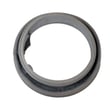
| Door bellow (boot) | Leak prevention at the door | Water at front, tears, persistent odor |
| Shock absorbers | Vibration control | Excessive shaking, banging, walking |
| Door lock | Safe locking and cycle start | Door won’t lock, won’t start, stops mid-cycle |
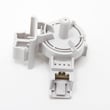
If you are seeing drain-related symptoms, the washer drain pump WPW10605427 is a common fix for this model when the pump is failing.
Why it matters
A front-load washer like the WFW87HEDW0 is built for efficiency, but it depends on good airflow, correct detergent use, and a stable installation. Small habits (drying the bellow, keeping it level, fixing drain issues early) prevent the most common “life-shortening” failures.
Last updated: February 2026
What is the most common problem with Whirlpool washers?
On the Whirlpool WFW87HEDW0 front-load washer, the most common day-to-day problems are drain and spin issues caused by excess suds (too much or non-HE detergent), drain hose installation problems, or a restriction in the drain system; vibration from an unbalanced load or leveling is also very common. See the WFW87HEDW0 owner's manual for the exact troubleshooting steps and display codes.
Most common symptoms we see (and what they usually mean)
- Washer not draining or clothes still wet: suds slowdown, drain hose issue, or a drain restriction
- “Sud” or suds reduction routine: too much detergent or non-HE detergent
- Water supply errors: faucets off, kinked hoses, or clogged inlet screens
- Washer “walking” or shaking: feet not locked, washer not level, or load too tightly packed
- Door won’t lock or unlock: door not fully closed, load shifted, or a door lock problem
Quick checks that fix the majority of calls
- Use HE detergent only and measure carefully (oversudsing can stop draining and spinning).
- Confirm both hot and cold faucets are fully on and hoses are not kinked.
- Check the inlet valve screens for debris.
- Verify the drain hose is installed correctly (not shoved too far into the standpipe).
- Rebalance the load; avoid washing single heavy items by themselves.
- Level the washer and tighten the leveling leg jam nuts; use a plywood base if the floor flexes.
Common causes and the most likely parts
| Symptom | Most likely cause | Part that often resolves it |
|---|---|---|
| Won’t drain, ends with wet load | Drain restriction or failing pump | Washer drain pump WPW10605427 |
| Excessive vibration or banging | Unbalanced load or worn damping | Washer shock absorber W11415987 |
| Door won’t lock/unlock reliably | Door latch/lock failure | Washer door lock WPW10443885 |
Why it matters
Drain, spin, and vibration problems can look like “the washer is broken,” but they are often setup or usage issues (HE detergent, hose routing, leveling). Fixing those first prevents repeat error codes, long cycle times, and unnecessary part replacement.
Last updated: February 2026
How to find model number on Whirlpool front load washer?
On the Whirlpool WFW87HEDW0 front-load washer, the model number is printed on the appliance’s rating label. The most common spot is the door opening area (door jamb) after you open the washer door; it may also be on the cabinet near the bottom or behind the control panel.
Where to look first (fastest checks)
- Open the door and check the door jamb and the area just inside the opening
- Look along the front cabinet frame near the bottom edge
- Check the back of the control panel area (some labels are placed there)
- Inspect the side of the main cabinet near the lower front corner
What you should write down
We recommend recording these exactly as shown on the label:
- Model number (for this page, it is WFW87HEDW0)
- Serial number
- Purchase date (helpful for service and parts matching)
| Item | What it’s used for | Example format |
|---|---|---|
| Model number | Ensures diagrams and parts match your washer | WFW87HEDW0 |
| Serial number | Identifies production details for service | Letters and numbers |
| Purchase date | Speeds up support and warranty conversations | Month/day/year |
Why it matters
Using the exact model number prevents ordering the wrong Whirlpool parts (like a door lock, drain pump, or bellow) that can look similar but mount differently or use different connectors. For model-specific label locations and identification details, use the WFW87HEDW0 owner’s manual.
Last updated: February 2026
Are Whirlpool washer parts interchangeable?
For Whirlpool washer model WFW87HEDW0, parts are only interchangeable when the replacement is the factory specified part for that exact model and component. Even if two Whirlpool washers look similar, using the wrong drain pump, door lock, or valve can cause leaks, error codes, or poor performance.
What “interchangeable” really means
Whirlpool commonly uses shared designs across model families, but fit and function still depend on the model’s engineering changes, wiring, and mounting points. We follow the model-based match because the manual recommends using FSP (Factory Specified Parts) for correct fit and operation.
- Match parts by model number (WFW87HEDW0), not by appearance
- Use the exact part ID listed for the component
- Confirm electrical connectors and hose ports match your original part
- Avoid “universal” substitutes for critical items (drain, fill, door lock)
- Check installation requirements and safety notes in the documentation
Examples of parts that are not safely “swap-and-go”
These components often vary by revision, even within Whirlpool front-load platforms:
| Component | What can differ | What to match |
|---|---|---|
| Drain pump | Housing shape, outlet angle, connector | Part ID and mounting style |
| Door lock | Latch geometry, wiring, sensing | Part ID and harness plug |
| Water inlet valve | Flow rate, coil specs, port layout | Part ID and hose routing |
| Door boot (bellow) | Drain ports, vent shape, clamp fit | Part ID and clamp type |
Model-matched parts for WFW87HEDW0 (common examples)
If you are replacing one of these, stick with the model-matched listing:
- Washer drain pump WPW10605427
- Washer door lock WPW10443885
- Washer water inlet valve WPW10435242
- Washer bellow W11106747
Why it matters
A mismatched part can create small alignment issues that turn into big problems: door leaks, long drain times, repeated lock errors, or vibration. Using the correct model-matched part protects wash performance and helps the repair go smoothly.
For diagrams, part locations, and service-safe handling steps, use the WFW87HEDW0 owner's manual.
Last updated: February 2026
What does F1 and E3 mean on a Whirlpool washer?
On the Whirlpool WFW87HEDW0 washer, an F1/E3-style display is treated as a system error. We clear it first, then focus on the most common causes for this symptom set: excessive suds, a drain problem, or a control-related fault. Use the steps in the WFW87HEDW0 owner's manual to reset and retest.
What to do first (fast checks)
- Touch POWER once to clear the code, then restart the cycle (this is the standard first step for system error codes).
- If you see Sud (excess suds), let the washer finish the suds-reduction routine.
- Confirm you are using HE detergent and not over-dosing.
- Run DRAIN & SPIN (with Extra Rinse if available) to clear suds and standing water.
- Check the drain hose installation; it should not be shoved too far down the standpipe (a common cause of drain issues).
What the code usually points to
Because Whirlpool displays can vary by series, we treat F1/E3 as a “stop and diagnose” code and narrow it down by symptoms.
| What you notice | Most likely area | What we check next |
|---|---|---|
| Tub won’t drain, clothes still wet | Drain system | Pump, hose, clogs, standpipe depth |
| Lots of foam, long cycle times | Detergent/suds | HE detergent amount, run rinse/drain |
| Code returns immediately after reset | Control or sensing | Power reset, then service-level diagnosis |
If it is not draining (most common)
A drain restriction or weak pump can trigger repeated errors and leave loads wet.
- Inspect the drain path for coins, lint, socks, or a kinked hose.
- Listen for the pump during drain; a loud hum with little water movement often indicates a blockage.
- If the pump is noisy, seized, or leaking, replacement is a common fix: washer drain pump WPW10605427.
Why it matters
On an HE front-load washer like the WFW87HEDW0, suds and drain performance are tightly linked. Too many suds can slow draining, extend cycle time, and cause the control to stop the cycle and post an error.
Helpful reference
For additional Whirlpool washer code patterns and what they mean across similar platforms, use: Whirlpool duet high efficiency front load washer error codes.
Last updated: February 2026