Owner’s manual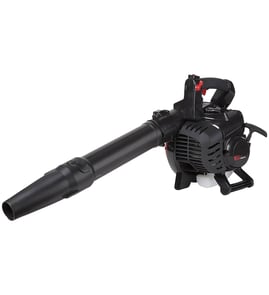

What is the life expectancy of a gas leaf blower?
A gas leaf blower typically lasts about 8 to 10 years with normal homeowner use and routine maintenance. For the Craftsman 360796900 2-cycle backpack air blower, consistent fuel mixing, air filter care, and tune-ups are what most directly determine whether it reaches (or exceeds) that range; see the 360796900 operator's manual for the maintenance schedule.
Typical life expectancy (what to expect)
Most gas, 2-cycle backpack blowers fall into these ranges:
| Use pattern | Typical life expectancy | What usually ends it |
|---|---|---|
| Occasional seasonal use | 10+ years | Fuel system varnish, cracked fuel lines |
| Regular homeowner use | 8 to 10 years | Carburetor wear, compression loss |
| Heavy frequent use | 5 to 7 years | Heat, vibration, intake dust damage |
What makes a gas blower last longer
We see the longest life when these basics are done consistently:
- Mix fuel correctly for a 2-cycle engine; the 360796900 uses a 40:1 gas-to-oil mix.
- Use fresh regular unleaded gasoline and a high-quality 2-cycle air-cooled engine oil.
- Keep the air filter clean so dust does not score the cylinder.
- Replace the spark plug on schedule and keep the muffler area clear of debris.
- Store it properly; do not leave fuel sitting in the tank for long periods.
Quick maintenance checklist (seasonal)
Use this as a simple routine before and after leaf season:
- Inspect and clean the air filter cover area.
- Check for loose clamps, cracked tubes, and air leaks.
- Verify throttle and on-off switch operation.
- Look for fuel seepage around the tank cap and lines.
- Run the engine briefly to confirm smooth idle and acceleration.
Why it matters
A 2-cycle backpack blower’s engine life is strongly tied to lubrication and cooling. The correct 40:1 fuel mix and a clean air filter reduce overheating and internal wear, which are the most common reasons gas blowers lose power and become hard to start.
Last updated: January 2026
What oil do I mix with gas for my leaf blower?
For the Craftsman backpack air blower model 360796900, we mix regular unleaded gasoline with a high-quality 2-cycle air-cooled engine oil at a 40:1 fuel-to-oil ratio (gas:oil). Premix in an approved fuel can; do not pour straight gas into the tank.
Correct mix ratio for model 360796900
Use this chart as a quick measuring guide:
| Gasoline amount | 2-cycle oil amount | Mix ratio |
|---|---|---|
| 1 gallon | 3.2 fl oz | 40:1 |
| 2.5 gallons | 8.0 fl oz | 40:1 |
What oil to use (and what to avoid)
Use oil labeled for 2-cycle, air-cooled engines.
- Use high-quality 2-cycle air-cooled engine oil
- Use fresh regular unleaded gasoline
- Do not use automotive oils
- Do not use marine or boat oils
- Avoid old fuel; stale gas causes hard starting and poor performance
For the exact wording and fuel mixture chart, follow the Craftsman 360796900 owner’s manual.
Mixing steps we recommend
- Start with a clean, approved gas can.
- Pour in the measured 2-cycle oil first.
- Add the measured gasoline.
- Cap the can and shake to fully blend.
- Fill the blower’s fuel tank and tighten the fuel cap.
Why it matters
A 2-cycle engine depends on the oil mixed into the fuel to lubricate bearings and other moving parts. Too little oil, or the wrong oil type, can cause overheating, poor performance, heavy wear, and engine seizure.
Fuel storage tip (important for small engines)
Alcohol-blended fuels can attract moisture and contribute to fuel separation during storage. If you will store the blower for 30 days or longer, we drain the tank and run the engine until it stops, or use a fuel stabilizer as directed in the manual.
Last updated: January 2026
How do I find the model number on my 360796900?
On the Craftsman backpack air blower model 360796900, the model and serial number are printed to the left of the fuel cap. We recommend writing down both numbers and your purchase date for parts lookup and service records; see the [360796900 operator's manual].
Where to look on the blower
Check these spots in order (most common first):
- Left of the fuel cap (model and serial number location for this unit)
- On a decal/label on the blower housing or frame near the fuel tank
- Near the engine cover area if the label has been relocated during service
What to record (and why)
Write down the information exactly as shown on the label.
- Model number (used to match diagrams and parts lists)
- Serial number (helps identify production run details)
- Date of purchase (useful for your records)
| Item | Example format | Used for |
|---|---|---|
| Model number | 360.796900 or 360796900 | Correct parts and diagrams |
| Serial number | Letters/numbers | Identifying the specific unit |
| Purchase date | MM/DD/YYYY | Maintenance and records |
Why it matters
Small differences between similar Craftsman blowers can change which fuel system, starter, or ignition parts fit. Using the exact model number from the label helps ensure you get the right parts the first time.
Last updated: March 2026