Owner’s manual
 Error Codes

What's the life expectancy of a refrigerator freezer?
A refrigerator freezer typically lasts 10 to 15 years; for a Whirlpool side-by-side like GSS30C7EYY00, about 12 years is a solid average. Regular maintenance (airflow, clean coils, good door sealing) is what most often determines whether you land closer to 10 or 15.
Typical lifespan by refrigerator type
| Refrigerator type | Typical life expectancy |
|---|---|
| Top-freezer | 12 to 16 years |
| Side-by-side (like GSS30C7EYY00) | 10 to 15 years |
| French door | 9 to 14 years |
| Built-in | 20 to 25 years |
What helps your GSS30C7EYY00 last longer
- Keep condenser coils clean and maintain airflow around the cabinet
- Keep door gaskets clean so the doors seal tightly
- Avoid overpacking; blocked vents cause warm spots and longer run times
- Replace filters on schedule to reduce strain and odors
- Fix small issues early (noisy fan, slow ice production, water leaks)
Quick maintenance checklist (simple, high impact)
- Monthly: wipe door gaskets; confirm doors close on their own
- Every 3 to 6 months: clean condenser coils (more often with pets)
- As needed: replace the air filter if odors linger (see refrigerator air filter W10311524)
- Anytime you notice warm temps: check for frost buildup and listen for the evaporator fan
Why it matters
Most “end of life” refrigerator failures are really efficiency problems first: longer run times, temperature swings, and ice maker or dispenser issues. Keeping seals tight, airflow clear, and filters fresh reduces compressor workload and helps you get the full expected lifespan.
For model-specific care and cleaning intervals, follow the GSS30C7EYY00 owner's manual.
Last updated: February 2026
What would cause a whirlpool ice maker not to make ice?
On a Whirlpool GSS30C7EYY00 side-by-side refrigerator, an ice maker usually stops making ice because water is not reaching the ice maker, the freezer is not cold enough, or ice production is being shut off by a switch or blockage. Start with the simplest checks in the GSS30C7EYY00 owner's manual.
Quick checks we recommend first
- Confirm the ice maker is turned ON (bail arm or switch in the ON position).
- Make sure the freezer is set cold enough (target 0°F; ice makers struggle above about 10°F).
- Verify the household water supply valve is fully open.
- Check for a kinked water line behind the refrigerator.
- Dump old ice and look for clumps that can jam the mechanism.
Most common causes (and what to do)
| Symptom | Likely cause | What we do next |
|---|---|---|
| No ice at all, dispenser water also weak | Restricted filter or supply | Replace filter, then purge air and retest |
| No ice, dispenser water OK | Ice maker not cycling or fill issue | Check shutoff arm, then test fill tube for freezing |
| Small/hollow cubes | Low water flow | Check supply pressure, filter, and valve |
| Ice maker clicks but no fill | Valve not opening | Diagnose the refrigerator water inlet valve WPW10341320 or refrigerator water inlet valve WPW10238100 |
Parts that commonly fix “no ice” on this model
- Water inlet valve: controls water flow to the ice maker; a failed valve can stop fills (refrigerator water inlet valve WPW10341320 or refrigerator water inlet valve WPW10238100).
- Ice maker assembly: if it will not cycle or harvest, replacement is often the fix (refrigerator ice maker assembly WPW10251076).
Why it matters
An ice maker needs two things to work consistently: cold freezer temperatures and steady water flow. When either one drops (warm freezer, restricted filter, weak valve), the ice maker pauses, makes poor cubes, or stops completely.
Helpful DIY guidance
Use our step-by-step troubleshooting in common refrigerator ice maker problems and solutions to narrow the issue by symptom before replacing parts.
Last updated: February 2026
What is the difference between a refrigerator and a refrigeration?
A refrigerator is the Whirlpool appliance (like model GSS30C7EYY00) that keeps food cold in your kitchen; refrigeration is the cooling process or technology the appliance uses to remove heat and maintain safe temperatures.
Quick definitions
- Refrigerator (the product): The insulated cabinet with a compressor, evaporator, fans, controls, and doors.
- Refrigeration (the process): The cycle of moving heat from inside the cabinet to the room (using refrigerant, pressure changes, and airflow).
- Refrigerator system (inside the product): The sealed system plus controls that make refrigeration happen.
How the refrigeration process works (in plain terms)
Most household refrigerators, including Whirlpool side-by-side models, cool by:
- Compressing refrigerant to raise its pressure and temperature
- Releasing heat at the condenser (outside the food compartments)
- Expanding refrigerant to drop its temperature
- Absorbing heat at the evaporator (inside the freezer area)
- Circulating cold air with an evaporator fan to cool both sections
Common “refrigeration” parts vs “refrigerator” parts
| Term you see | What it usually means | Example on this model page |
|---|---|---|
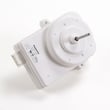
| Refrigerator part | A replaceable component in the appliance | Refrigerator evaporator fan motor WP2315549 |
| Refrigeration component | Often refers to sealed-system or cooling-cycle items | Drier tube, compressor, refrigerant path |
| Control component | Manages temperatures and defrost | Refrigerator electronic control board W10898445 |
Why it matters
Knowing the difference helps you troubleshoot correctly. If the refrigerator is warm, the issue could be airflow (fan, frost buildup), controls, or the sealed refrigeration system. Your GSS30C7EYY00 owner's manual is the best place to confirm normal operation, temperature settings, and basic checks.
Last updated: February 2026
How do I run diagnostics on my Whirlpool ice maker?
On Whirlpool model GSS30C7EYY00, ice maker diagnostics are typically started from the dispenser control panel using a specific button sequence, then you step through individual tests (sensor checks, harvest, fill, and related cooling/airflow checks). Use the exact sequence and test list in the GSS30C7EYY00 owner's manual.
Before you start
- Confirm the ice maker is turned ON and the freezer is cold (target 0°F).
- Make sure the ice bin is seated fully and not jammed.
- Check the water supply valve is open and the water line is not kinked.
- If the dispenser is unresponsive, power-cycle the refrigerator for 2 minutes.
- If you recently changed a filter or shut off water, purge air from the water system first.
Common ways Whirlpool ice maker diagnostics are entered
Whirlpool uses a few common patterns across side-by-side models; your exact button names can vary.
| What you see on the panel | What it usually means | What to do next |
|---|---|---|
| A flashing test number or “01” | You are in service/diagnostic mode | Use the “next” button to advance tests |
| “02” or a failed indicator | A condition was not met (sensor state, switch, or component response) | Re-run the test after correcting the cause |
| No response | Wrong sequence or control is locked | Unlock controls, then try again |
What to test first (fast isolation)
- Ice maker harvest test: Confirms the module can cycle.
- Water fill test: Confirms the valve can energize and water can flow.
- Ice level sensing: Confirms the bin level optics or sensing circuit.
- Airflow checks: Poor freezer airflow can stop ice production.
If the fill test fails but the dispenser water is also weak or intermittent, the Refrigerator water inlet valve WPW10341320 is a common suspect.
Why it matters
Diagnostics help us separate a water supply problem (valve, frozen fill tube, low pressure) from a cooling/airflow problem (freezer temperature, evaporator fan) so you replace fewer parts and restore ice production faster.
Related DIY help
- Use Whirlpool refrigerator error codes to interpret any service indicators shown during testing.
Last updated: February 2026