Error Codes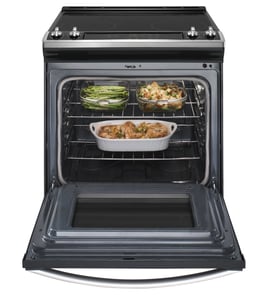

How do I find the model number on my WWWEW?
For your Kelvinator WWWEW electric freestanding range, the model number is printed on the appliance’s rating label. On most freestanding electric ranges, that label is easiest to spot around the oven door opening or on the storage drawer frame.
Where to look on a Kelvinator freestanding electric range
Check these common label locations (in order):
- Open the oven door; look along the door frame, front frame, or the rim of the oven opening
- Pull out the bottom storage drawer; look on the drawer frame, side rail, or behind the drawer front
- Look on the back panel of the range (you may need a flashlight)
- Check the lower side panel near the front (inside edge)
What you should write down
Use the label to capture the exact identifiers needed for parts lookup.
- Model number: WWWEW (copy it exactly)
- Serial number: helps match production run and revisions
- Electrical rating: volts/amps (useful for diagnosing heating and wiring issues)
Quick ID checklist
| Item | What it looks like | Why we need it |
|---|---|---|
| Model number | Letters and numbers (example: WWWEW) | Matches the correct parts diagrams |
| Serial number | Longer string, often includes date code | Helps confirm version changes |
| Rating info | 120/240V, amps | Helps with safe electrical troubleshooting |
Why it matters
Kelvinator ranges can have multiple versions that look similar. Using the exact model number from the rating label prevents ordering the wrong bake element, surface element, control switch, or wiring harness.
If the label is hard to read
- Wipe gently with a damp cloth; do not scrub off printing
- Use a phone camera zoom and good lighting
- If the label is damaged, search by the clearest partial model text using how to find your appliance model number (and what it means for parts)
Last updated: March 2026
What are the most common issues with WWWEW?
For the Kelvinator WWWEW electric freestanding range, the most common problems are heating issues (oven or surface burner not heating), temperature control problems, and power or wiring faults. These usually trace to a failed heating element, burner receptacle, infinite switch, thermostat/sensor, or a loose/burned wire connection.
Most common symptoms and likely causes
- Oven not heating or heats unevenly: bake element or broil element failure, wiring issue
- Surface element not working: infinite switch, burner receptacle, element connection problem
- Oven temperature too hot or too cool: thermostat/temperature sensor out of range, control calibration issue
- Range completely dead: tripped breaker, terminal block cord connection issue, internal burned wire
- Burning smell or intermittent operation: overheated receptacle, loose spade connector, damaged harness
Quick checks we recommend (safe and practical)
- Confirm power: most electric ranges need a solid 240V supply; reset the double breaker fully.
- Look for obvious heat damage: check the power cord area and rear access panel for browned wires or melted connectors.
- Isolate the problem:
- Only one surface burner fails: focus on that burner’s switch/receptacle.
- Oven bakes poorly but broil works: focus on the bake circuit.
- Test components correctly (with power disconnected): use a multimeter for continuity/ohms.
What to test first (by symptom)
| Symptom | First parts/areas to test | What you’re looking for |
|---|---|---|
| Oven won’t bake | Bake element, wiring | No continuity, burned terminals |
| One surface burner dead | Infinite switch, receptacle | Open circuit, heat damage |
| Temps inaccurate | Sensor/thermostat | Resistance out of typical range |
| Dead range | Terminal block, cord, breaker | Loose/burned connection |
Why it matters
Heating and wiring problems on an electric range can escalate quickly; a loose connection can overheat and damage the terminal block, harness, or switches. Catching the root cause early helps restore safe, consistent cooking performance.
Helpful DIY guidance
- How to use a multimeter to test electrical parts video
- How to tell if a fuse is blown
- How to repair broken or damaged wires video
Last updated: March 2026
What is the average lifespan of WWWEW?
A Kelvinator electric freestanding range like model WWWEW typically lasts 13 years with normal household use. Lifespan depends most on how often you cook, power quality, and whether heating and wiring issues are corrected early.
Typical lifespan for an electric range
Most electric ranges fall into a narrow lifespan window; WWWEW fits this category.
- Average: 13 years
- Common range: 10 to 15 years
- Often replaced early when: oven won’t heat, burners won’t regulate, or wiring/terminal blocks overheat
- Often lasts longer when: spills are cleaned quickly and electrical connections stay tight
| Appliance type | Typical lifespan | What usually ends it first |
|---|---|---|
| Electric freestanding range (like WWWEW) | 13 years | Bake/broil heating failures, control issues, wiring damage |
What shortens or extends lifespan
These are the biggest real-world factors we see with electric ranges.
- High-heat cooking habits (frequent self-clean cycles, long broils)
- Spills and boilovers that seep into switches, receptacles, or the control area
- Loose power cord connections at the terminal block (can cause heat damage)
- Worn surface element receptacles that arc or intermittently cut out
- Delayed repairs after the first symptom (slow preheat, uneven baking, burner cycling oddly)
Quick checks that help you decide: repair vs replace
Use these practical checkpoints to judge whether WWWEW is near end-of-life.
- If the range is under 10 years and the issue is isolated (one burner or one oven function), repair is usually worthwhile.
- If it is 10 to 15 years, base the decision on overall condition (wiring, oven temperature stability, and parts availability).
- If you see burn marks, melted wiring, or a hot electrical smell, stop using the range until it’s inspected.
Why it matters
Knowing the expected 13-year lifespan helps you plan: you can prioritize safety-related fixes (wiring and power connections) and avoid repeated downtime from heating or control problems.
For help confirming the exact model number on the ID tag before ordering parts, use how to find your appliance model number (and what it means for parts).
Last updated: March 2026