Installation guide
 Owner’s manual
 Error Codes


Where to find model number on Kenmore side by side refrigerator?
On your Kenmore side-by-side refrigerator model 10652299100, we find the model and serial number label on the inside wall of the refrigerator (fresh food) compartment. Open the fresh food door and look along the interior side wall for the rating label. For a diagram and exact label location, use the owner's manual.
Quick steps to locate the model tag
- Open the fresh food (refrigerator) door, not the freezer door.
- Look on the inside wall of the refrigerator compartment.
- Check the side walls first; then scan near the crisper area.
- Wipe the area with a damp cloth if the print is hard to read.
- Record both the model number and serial number for parts lookup.
What the label typically includes
| Item on label | What it’s used for | Example for this unit |
|---|---|---|
| Model number | Matching the correct parts list | 10652299100 |
| Serial number | Identifying production details | Varies by unit |
| Purchase date (you add this) | Warranty and service records | Your date |
Why it matters
We use the full model number to match the correct Kenmore parts diagrams and compatible replacement parts (for example, a water filter, ice maker components, or door gasket). Even small model-number differences can change which parts fit.
Last updated: February 2026
What causes a side-by-side refrigerator to stop cooling?
A Kenmore 10652299100 side-by-side refrigerator usually stops cooling because power is interrupted, the controls are set to OFF or need a reset, airflow is blocked at the vents, or the unit is in an automatic defrost cycle. Start with the simplest checks in the owner's manual.
Quick checks (fastest fixes first)
- Confirm the power cord is fully plugged into a grounded 3-prong outlet.
- Check the home fuse or circuit breaker; reset or replace if tripped.
- Make sure the refrigerator and freezer controls are not set to OFF.
- Wait 30 minutes and recheck; the refrigerator regularly runs an automatic defrost cycle.
- Clear packages away from air vents in both compartments so cold air can circulate.
- Limit door openings and make sure doors close fully.
Reset the controls (digital control models)
If your 10652299100 has digital controls and it is not cooling, we reset it by turning the unit OFF and then ON again (this is a control reset, not unplugging). Then we give it time to stabilize and cool.
What to listen for (helps narrow the cause)
Some sounds are normal and indicate key components are running:
- A fan sound from the evaporator fan circulating air
- A compressor sound that can be high-pitched or pulsating
- A condenser fan pushing air over the condenser
- Water dripping or sizzling during defrost
Common causes and what they point to
| Symptom | Most likely cause | What we do first |
|---|---|---|
| No lights, no sound | Power issue | Outlet, breaker, cord seating |
| Freezer cold, fridge warm | Blocked vents or airflow issue | Clear vents; check diffuser area |
| Temps warm after loading groceries | Normal recovery time | Wait several hours |
| Cooling stops then returns | Defrost cycle | Recheck after 30 minutes |
Why it matters
A no-cool condition can spoil food quickly, and blocked airflow can make the compressor and fans run longer than necessary. Simple steps like restoring power, resetting controls, and clearing vents often restore normal cooling without parts replacement.
Last updated: February 2026
How to tell if a Kenmore refrigerator compressor is bad?
If your Kenmore 10652299100 side-by-side refrigerator is warm and you hear repeated clicking, loud buzzing, or unusual pulsating sounds without steady cooling, the compressor or its start components are likely failing. Confirm by checking airflow, condenser cleanliness, and basic resets in the owner's manual before moving to electrical testing.
Quick signs the compressor (or start circuit) is the problem
- Refrigerator and freezer temperatures keep rising even though the unit has power
- Repeated clicking every few minutes (overload protector cycling)
- Compressor is very hot to the touch and shuts off quickly
- Compressor hums briefly but does not stay running
- Fans run (evaporator and/or condenser), but cooling is still weak or absent
- You notice new, louder operating sounds (pulsating or high-pitched) compared to normal operation
Rule out common non-compressor causes first
Many “bad compressor” symptoms are caused by airflow, control, or defrost issues. We check these first because they are faster and cheaper to fix.
- Make sure air vents inside the compartments are not blocked by food packages
- Verify the temperature controls are set correctly for room conditions
- If your model has digital controls, turn the unit OFF then ON to reset (as described in the manual)
- Clean dust from the condenser area so heat can dissipate properly
- Listen for normal operating sounds; some gurgling, sizzling during defrost, and fan noise is expected
What you can test safely at home (no meters)
| What you check | What it suggests |
|---|---|
| Fans running but no cooling | Possible sealed-system/compressor issue, or a defrost/airflow problem |
| Clicking every few minutes | Start device/overload cycling; compressor may be locked or struggling |
| Doors not sealing well | Warm air infiltration can mimic compressor failure |
| Heavy frost on freezer back wall | Defrost problem can block airflow and stop cooling |
When parts and service come into play
Compressor diagnosis often requires electrical checks (start device, windings resistance, amp draw) and sealed-system evaluation. If testing confirms a failed compressor, the replacement part for this model is the refrigerator compressor W10309990.
Why it matters
A compressor that cannot start or cannot run efficiently will prevent the sealed refrigeration system from moving heat out of the cabinet. That leads to unsafe food temperatures and can also cause repeated cycling that stresses electrical components.
Last updated: February 2026
What are the most common problems with Kenmore refrigerators?
The most common issues we see with Kenmore refrigerators like model 10652299100 are cooling problems, ice maker or dispenser troubles, water leaks, frost buildup, and moisture inside the fresh food section. Many of these start with airflow restrictions, water supply issues, or worn door sealing parts; the troubleshooting steps in the owner's manual help pinpoint the cause.
Common problems and what usually causes them
- Not cooling or weak cooling: blocked air vents, dirty condenser area, evaporator fan issues, or control settings needing a reset
- Ice maker not making ice: water supply shutoff closed, kinked water line, clogged filter, or ice maker component failure
- Water leaking (inside or at dispenser): kinked tubing, loose connections, clogged/incorrectly installed filter, or dispenser chute issues
- Excess frost: door not sealing, frequent door openings, or defrost system problems
- Moisture buildup inside: humid room air, doors opened often, blocked vents, or poorly wrapped food
- Noisy operation: fan blade interference, condenser fan wear, or airflow restrictions
Quick checks we recommend first (fast, no parts)
- Confirm airflow: keep packages away from vents; blocked vents can cause warm temps and moisture.
- Check control settings: if your unit has digital controls, turning the unit OFF then ON can reset the controls.
- Look for water supply problems: verify the shutoff valve is open and the home water line is not kinked.
- Inspect the dispenser area: use only ice made by the current ice maker; clear any cubes stuck in the chute.
- Reduce humidity sources: limit door openings and keep food tightly wrapped.
When a part is commonly involved
| Symptom | Commonly involved area | Example part for this model |
|---|---|---|
| Slow water flow, poor ice production | Filter or filter housing | Refrigerator water filter EDR5RXD1 or refrigerator water filter housing WP2186443 |
| Ice maker not producing | Ice maker assembly | Refrigerator ice maker WPW10190961 |
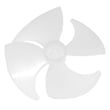
| Warm temps, weak airflow | Air diffuser or fan components | Refrigerator air diffuser WP2216112 or refrigerator evaporator fan blade WP2169142 |
Why it matters
Cooling, ice, and leak complaints often share the same root causes: restricted air circulation or restricted water flow. Fixing those basics first prevents food spoilage, reduces frost and moisture, and helps the compressor and fans run more efficiently.
Last updated: February 2026