Owner’s manual
 Error Codes


Does the NE59J3421SS have a self-cleaning feature?
Yes. The Samsung NE59J3421SS electric range includes a self-cleaning oven cycle (often labeled Self Clean on the control panel). Use the steps and safety notes in the NE59J3421SS owner's manual to choose the right clean time and let the door lock complete the cycle.
How self-clean works on this range
Self-clean uses very high heat to burn off baked-on residue; after the cycle, you wipe out the remaining ash once the oven is fully cool.
Before you start, we recommend:
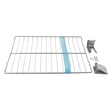
- Remove oven racks, foil, and any cookware from the oven cavity.
- Wipe up heavy spills (especially sugary spills) so they do not bake onto the porcelain.
- Make sure the kitchen is ventilated; some smoke or odor is normal.
- Keep the oven door closed; the door lock must engage for the cycle to run.
- Plan time for cool-down; the door stays locked until it is safe to open.
Quick decision guide: self-clean vs. manual cleaning
| Cleaning method | Best for | What to expect |
|---|---|---|
| Self-clean cycle | Heavy baked-on grease | High heat, longer total time, door locks |
| Manual cleaning | Light soil, quick touch-ups | Faster, no high-heat cycle |
If self-clean will not start
These are the most common causes on Samsung electric ranges:
- The oven door is not fully closed, so the lock switch does not register.
- A delayed start or timer setting is preventing immediate operation.
- The control is in a locked mode (control lock).
- A fault code is present; check the display and follow Samsung freestanding electric range error codes.
Why it matters
Using the correct self-clean settings helps protect the door gasket, racks, and oven finish while still removing tough residue. It also reduces nuisance issues like a cycle that will not start because the door lock sequence was interrupted.
Last updated: February 2026
How do I clear the error code on my Samsung stove?
Most error codes on a Samsung electric range like model NE59J3421SS clear after you stop the fault and reset power. Turn the range off, wait 1 to 3 minutes, then restore power and confirm the code is gone; if it returns, troubleshoot the specific code.
Safe reset steps (works for many Samsung range error codes)
- Press Cancel/Off to stop cooking.
- If the oven is hot, let it cool and keep the door closed.
- Turn OFF the range at the household breaker for 1 to 3 minutes.
- Turn the breaker ON and wait for the control to reboot.
- If the clock is flashing, set it using the steps in the NE59J3421SS owner's manual.
If the code comes back right away
That means the control is still seeing a problem. Use the code itself to guide the next check.
- Look up the code meaning in Samsung freestanding electric range error codes.
- If the oven is not heating or heats erratically, a failed sensor or heating circuit is common.
- If the cooktop element acts up (won’t heat, stuck on, or cycles wrong), the surface element switch or element can be involved.
Common “what to check next” by symptom
| Symptom after reset | Most likely area | Example part for NE59J3421SS |
|---|---|---|
| Oven temperature is way off | Oven temperature sensing | Oven temperature sensor DG32-00002B |
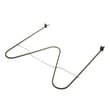
| Oven won’t heat in Bake | Bake heating circuit | Bake element DG47-00038B |
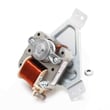
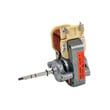
| Convection fan not running | Convection fan motor | Convection fan motor assembly DG96-00110E |
Why it matters
Clearing the code without fixing the cause usually brings the error back and can lead to poor baking results, long preheat times, or the oven shutting down mid-cycle. A quick reset is a good first step, but the repeat code tells you where to focus.
Last updated: February 2026
Is the NE59J3421SS a freestanding range?
Yes. The Samsung NE59J3421SS is a freestanding electric range, meaning it’s designed to stand on its own between cabinets and finish cleanly at the sides and back without needing built-in trim.
How to confirm it on your appliance
We recommend checking the product description and installation clearances listed in the NE59J3421SS owner's manual. Those details match how freestanding ranges are positioned and vented in a standard kitchen cutout.
- Look for “freestanding range” in the model description section
- Verify required side and rear clearances to cabinets and walls
- Confirm anti-tip bracket requirements (common on freestanding ranges)
- Check electrical supply requirements (typically a 240V range circuit)
Freestanding vs slide-in: quick comparison
| Feature | Freestanding range (NE59J3421SS) | Slide-in range |
|---|---|---|
| Sides/back finished | Yes | Often not fully finished |
| Fits between cabinets | Yes | Yes |
| Overhang/lip at cooktop | Common | Often designed to overlap countertop |
| Typical install | Standard opening | More precise countertop fit |
Why it matters
Freestanding vs slide-in affects fit, countertop gaps, and installation parts such as the anti-tip bracket and rear clearance. Confirming the configuration helps you avoid ordering the wrong trim pieces or planning the wrong cutout.
Last updated: February 2026