Owner’s manual
 Error Codes


What is the capacity of LFXC24726S?
The LG LFXC24726S has a total capacity of 23.7 cubic feet. For model-specific specs and feature details, we recommend confirming the rating information in the LFXC24726S manual.
What “total capacity” means
Total capacity is the combined storage volume of both compartments.
- Includes the fresh food (refrigerator) section and the bottom freezer
- Measured in cubic feet (cu. ft.)
- Used to compare overall storage size between similar French door refrigerators
- Does not reflect usable space lost to shelves, bins, ice maker, or air ducts
Quick spec summary
| Spec | Value |
|---|---|
| Model | LFXC24726S |
| Total capacity | 23.7 cu. ft. |
| Refrigerator style | Counter-depth French door with bottom freezer |
Why it matters
Capacity helps you estimate how much food the refrigerator can hold and whether it fits your household needs. It is also useful when comparing counter-depth models, which often trade depth for a more built-in look.
Last updated: January 2026
What is the warranty on LFXC24726S?
For the LG LFXC24726S refrigerator, the limited warranty coverage shown in the model’s documentation includes: 1 year parts and labor for the refrigerator/freezer, 5 years parts and labor for the sealed system, and 5 years parts and labor for the compressor (with linear/inverter compressor parts-only coverage for years 6 through 10). See the LFXC24726S manual for the full warranty terms and exclusions.
Warranty coverage at a glance
- Refrigerator/freezer: 1 year parts and labor
- Sealed system (condenser, dryer, connecting tube, evaporator): 5 years parts and labor
- Compressor: 5 years parts and labor
- Linear/inverter compressor (additional): years 6–10 parts only (labor not included)
What “sealed system” and “compressor” mean
These terms matter because they affect what repairs may be covered and for how long.
| Warranty term | What it typically includes | Example related part (if needed) |
|---|---|---|
| Sealed system | Refrigeration tubing and heat-exchange components that contain refrigerant | Refrigerator condenser coil ACG73645004 |
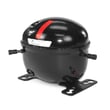
| Compressor | The pump that circulates refrigerant through the sealed system | Refrigerator compressor TCA38091801 |
Why it matters
Warranty coverage can change what you pay out of pocket. For example, a compressor issue in years 6–10 may still have parts coverage (linear/inverter), but labor can be your responsibility.
Last updated: January 2026
Why is my LG refrigerator leaking from the bottom?
If your LG LFXC24726S is leaking from the bottom, the most common causes are a clogged or frozen defrost drain, a leak in the ice maker or water supply line, or a drain pan that’s out of position or damaged. Use the LFXC24726S owner’s manual for safe access and component locations.
Quick checks we recommend first
- Unplug the refrigerator before removing panels or reaching near wiring.
- Check for water under the crisper drawers; this often points to a defrost drain clog.
- Look for ice buildup on the freezer floor; it can melt and run out the front.
- Inspect the rear water line connection and tubing for drips or kinks.
- If you use the ice maker, check the ice room and fill area for water trails.
Most likely causes (and what to do)
| What you notice | Most likely cause | What to do next |
|---|---|---|
| Water inside fresh-food section, then leaking out | Defrost drain clogged/frozen | Clear the drain opening and confirm water flows to the drain tube |
| Leak happens during ice making or dispensing | Water line or ice maker leak | Inspect fittings, tubing, and the ice maker fill area |
| Water appears under the unit near the center | Drain pan shifted/cracked | Re-seat the pan; replace if damaged |
Parts that commonly relate to bottom leaks on this model
If inspection points to a drain issue or ice-system leak, these model-compatible parts can be relevant:
- Refrigerator drain tube 5251JA3003D (carries defrost water to the drain pan)
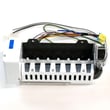
- LG refrigerator ice maker AEQ73130004 (ice maker assembly; leaks can show up as bottom puddles)
Why it matters
Bottom leaks can damage flooring and lead to ice buildup, odors, and airflow problems that affect cooling performance. Catching a drain or water-line issue early helps prevent repeat leaks.
Last updated: January 2026
What is the most common problem with an LG refrigerator?
For the LG LFXC24726S, we can’t identify one single “most common” failure from model-specific information alone. In real-world service, the most frequent complaint across refrigerators is “not cooling well,” so we start with the model’s basic cooling checks in the LFXC24726S manual.
What to check first on LG LFXC24726S
- Make sure the display is not showing “OFF” (Demo/Display Mode disables cooling).
- Confirm set temperatures: 37°F refrigerator and 0°F freezer (default settings).
- Check that air vents aren’t blocked by food packages.
- Verify doors close fully and gaskets seal all the way around.
- Clean dust from the condenser cover and vents.
Common symptoms and what they often indicate
| What you notice | What it often points to | What we do next |
|---|---|---|
| Refrigerator warm, freezer OK | Airflow issue between sections | Check vents and listen for fan operation |
| Both sections warm | Heat not being removed | Clean condenser area; then diagnose cooling system |
| Frost buildup, temps swing | Defrost system issue | Inspect defrost components and airflow |
| Weak ice production | Water supply, filter, or ice compartment sealing | Check water pressure, filter age, ice door closure |
Parts that can be involved (only after diagnosis)
We don’t recommend replacing parts based on symptoms alone, but these components can be involved when troubleshooting cooling or frost problems:
- Refrigerator compressor TCA38091801 (drives the sealed cooling system)
- Refrigerator defrost sensor assembly 6615JB2005R (helps control defrost to prevent frost blocking airflow)
- Refrigerator condenser coil ACG73645004 (releases heat; performance drops if airflow is restricted)
Why it matters
Cooling complaints can come from simple causes (Demo Mode, blocked vents, dirty condenser, door leaks) or more complex ones (defrost or sealed-system problems). Starting with the basics helps protect food and avoids unnecessary repairs.
Last updated: January 2026