Installation guide
 Owner’s manual
 Error Codes


How to replace door gasket on a Whirlpool dishwasher?
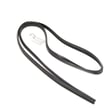
To replace the door gasket on your Whirlpool GU2300XTVQ0 dishwasher, we pull the old gasket straight out of the channel around the tub opening, then press the new gasket in evenly. The shaped lip on the gasket faces toward the center of the tub for a proper seal.
Before you start (safety and prep)
- Turn off power at the breaker; do not work around live wiring.
- Let the dishwasher cool if it recently ran a heated dry cycle.
- Open the door and inspect the tub rim for cracks, dents, or heavy buildup.
- Clean the gasket channel with a damp cloth; remove detergent film and debris.
- Avoid pushing down on the open door; it can stress hinges and cause injury.
Steps to replace the door gasket
- Open the door fully and locate the gasket seated in the tub channel.
- Starting at a top corner, grip the gasket and pull it out of the channel all the way around.
- Dry the channel, then start installing the new gasket at the top center.
- Press the gasket into the channel a few inches at a time, working evenly down both sides.
- Make sure the gasket’s formed lip is oriented toward the tub interior (toward the center).
- Close the door gently and check for uniform contact all the way around.
Fit and leak check tips
- If the door feels unusually tight at first, run a short cycle and recheck seating.
- If you still see drips at the bottom corners, re-seat the gasket in that area and confirm it is not twisted.
- If leaking continues, inspect the door alignment and tub edge; a worn seal is not the only cause.
Common symptoms and likely causes
| Symptom | Most common cause | What to do next |
|---|---|---|
| Drips at corners | Gasket not fully seated | Press gasket deeper into channel at corners |
| Leak along one side | Gasket twisted or reversed | Reinstall with lip facing tub center |
| Door won’t latch easily | Gasket bunched at top | Re-seat starting at top center |
Why it matters
A correctly installed door gasket keeps wash water inside the tub, protects the floor and cabinets, and helps the dishwasher maintain proper wash pressure and drying performance.
For model-specific diagrams and placement details, follow the steps in the GU2300XTVQ0 installation guide.
Last updated: February 2026
What model is my Whirlpool dishwasher?
Your Whirlpool dishwasher’s model number is printed on the model and serial label inside the tub, near the door opening. On the Whirlpool GU2300XTVQ0, look along the right-hand or left-hand side of the dishwasher interior near the door.
Where to find the model tag (fast checklist)
- Open the dishwasher door fully.
- Look on the inner tub frame near the door opening.
- Check the right-hand side first, then the left-hand side.
- Find the label that lists Model and Serial.
- Write the model number exactly as shown (letters and numbers).
- Use that exact model number when ordering parts like a control board, drain pump, or door seal.
What the label typically shows
| Label item | What it’s used for | Example for this page |
|---|---|---|
| Model number | Matching the correct parts list | GU2300XTVQ0 |
| Serial number | Identifying production details for service | Varies by unit |
Why it matters
We use the model number to match your dishwasher to the correct Whirlpool parts diagrams and compatible replacement parts. Even small model-number differences can change fitment for items like the dishwasher electronic control board WPW10285179 or the dishwasher door seal W10542314.
Tip: confirm before you order
If the label is hard to read, compare the characters carefully (for example, 0 vs O, 1 vs I). For additional location details and model/serial formatting, check the GU2300XTVQ0 owner’s manual.
Last updated: February 2026
What is the most common problem with Whirlpool dishwashers?
For Whirlpool dishwashers like model GU2300XTVQ0, the most common problem we see is not draining (water left in the bottom after the cycle). In many cases, the fix is a clogged drain path, a dirty air gap (if installed), or a failing drain component.
Quick checks for a Whirlpool dishwasher that won’t drain
- Cancel the cycle and let the unit try a drain again.
- Check and clean the drain air gap (if your sink setup has one); Whirlpool specifically calls this out when draining is poor.
- Inspect the drain hose routing for kinks, crushing, or a low loop issue.
- Clear the sink/disposer inlet where the dishwasher drain connects (common blockage point).
- If the dishwasher stops mid-cycle, confirm the door is fully closed and latched.
What “not draining” usually points to
| Symptom | Most likely cause | What to do next |
|---|---|---|
| Standing water after cycle | Clog in hose/air gap/disposer inlet | Clean the drain path and air gap first |
| Hums but won’t drain | Drain pump jammed or failed | Check pump area for debris; replace pump if needed |
| Drains slowly | Partial restriction or weak pump | Verify hose routing; consider pump replacement |
| Stops during cycle | Power issue, overload reset, door not latched | Check breaker/fuse; retry after a few minutes |
Parts that commonly solve draining problems
If cleaning the drain path does not restore normal draining, these model-compatible parts are common fixes:
- Dishwasher drain pump WPW10348269 (failed or weak pump)
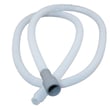
- Dishwasher drain hose 8269144A (kinked, split, restricted, or incorrectly routed)
- Fuse W10258275 (if the dishwasher won’t run or repeatedly stops due to an electrical issue)
Why it matters
A dishwasher that doesn’t drain can redeposit dirty water onto dishes, cause odors, and make cycles seem like they “don’t finish.” Fixing the drain path early also helps prevent strain on the pump and motor.
For model-specific troubleshooting steps and indicator behavior, follow the GU2300XTVQ0 owner’s manual.
Last updated: February 2026
Can I replace dishwasher parts myself?
Yes, many parts on your Whirlpool GU2300XTVQ0 dishwasher are DIY-replaceable if you’re comfortable working safely with water and electricity. We recommend using the safety and access steps in the GU2300XTVQ0 installation guide and confirming operation after the repair.
What you can safely do yourself
Many common fixes are straightforward and mostly involve basic hand tools.
- Clean and inspect the drain path (filter area, hose routing, air gap if you have one)
- Replace simple, accessible parts like a door seal or rack stops
- Diagnose “won’t start” basics (door fully latched, breaker not tripped, water turned on)
- Perform a post-repair check cycle to confirm the tub fills and the unit runs
Safety steps we follow before any repair
Dishwashers combine electricity, sharp edges, and water. Use these steps every time.
- Disconnect power at the breaker or unplug the dishwasher
- Turn off the water supply valve before opening any water line
- Avoid extension cords and keep the power cord from touching the motor or lower tub area
- Do not operate the dishwasher until it is completely installed (tip-over risk)
- After reassembly, run the shortest cycle and verify water enters the bottom of the tub
DIY difficulty guide (common GU2300XTVQ0 repairs)
| Repair type | Typical difficulty | What it usually involves |
|---|---|---|
| Door leak at perimeter | Easy | Replacing the door seal, cleaning mating surfaces |
| Not draining | Medium | Checking hose/air gap, inspecting pump area |
| No heat or poor drying | Medium | Testing and replacing the heating circuit |
| Dead or erratic controls | Hard | Electrical testing, control replacement, wiring checks |
If you’re troubleshooting a no-heat complaint, the dishwasher heating element W10518394 is a common wear item to test and replace.
Why it matters
A correct DIY repair saves time and cost, but safe power and water shutoff prevents shocks, leaks, and repeat failures. Following the installation and operation checks also helps confirm the dishwasher is working properly before you put it back into daily use.
Last updated: February 2026