Error Codes


How to identify a Kenmore washer model?
Your Kenmore washer model number is printed on the appliance’s model and serial tag. On Kenmore model 11082872820, you’ll typically find that tag under the lid (top-load) or around the cabinet opening; once you have the full number, we can match the correct washer parts and diagrams.
Where to look on the washer
Check these common locations first:
- Under the lid, along the rim of the tub opening
- On the underside of the lid itself
- On the back panel near the power cord exit
- Along the rear edge of the control console
- Inside the cabinet on a side wall (visible when the lid is open)
What the model number looks like (and why it matters)
Kenmore washer model numbers are often numeric and commonly start with 110. Using the complete model number (not just “110”) prevents ordering the wrong items like a water pump, lid switch, or motor coupling.
| What you see | What it means | What to do |
|---|---|---|
| 11082872820 | Full model number | Use this to look up exact parts |
| 110.82872820 (with a dot) | Same model, different label format | Ignore the dot; use all digits |
| Partial number (example: 1108287) | Incomplete | Recheck the tag and write every digit |
Tips to record it correctly
- Copy every digit in order; do not drop leading zeros
- Take a clear photo of the tag before ordering
- If the tag is worn, use a flashlight and view from an angle
- Match parts by model number first, then confirm by part name
Why it matters
Kenmore 110-series washers share many similar-looking components, but small design changes affect fit and function. The correct model number helps us select the right replacement part, such as the coupling 285753A or switch W10820036.
Last updated: February 2026
What is the average lifespan of a Kenmore washer?
A Kenmore washer typically lasts 10 to 15 years. For Kenmore model 11082872820, reaching the high end of that range usually comes down to load size, water quality, and keeping key wear items in good shape so the washer can agitate, drain, and spin correctly.
Typical lifespan and what changes it
Most washers land in the 10 to 15 year window, but these factors move the needle:
- Overloading (stresses the drive system and suspension)
- Frequent heavy cycles (more wear on clutch and motor coupling)
- Hard water (can shorten the life of valves and internal seals)
- Poor draining (extra strain on the pump and drive components)
- Out-of-balance spinning (wears suspension and basket drive parts)
Parts that commonly affect “end of life” symptoms
If your washer still fills but won’t wash or spin well, these model-compatible parts are common culprits:
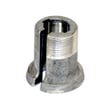
- Agitator dog 80040 (worn dogs cause weak or no agitation)
- Coupling 285753A (broken coupling can stop agitation and spin)
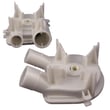
- Water pump WP3363394 (drain problems, slow drain, or no drain)
- Clutch 285785 (spin issues, burning smell, weak spin)
Quick “repair vs. replace” guide
Use this as a practical decision check when the washer is aging.
| What you’re seeing | Most likely area | Usually worth repairing? |
|---|---|---|
| Won’t agitate but motor runs | Agitator drive or coupling | Often yes |
| Won’t drain or drains slowly | Drain pump or hose restriction | Often yes |
| Won’t spin or spins weakly | Clutch, coupling, suspension | Depends on total wear |
| Loud grinding or major leaks | Gear case, tub seal/bearing area | Often no |
Why it matters
A washer can “technically run” past 10 years but still clean poorly or leave clothes too wet. Catching early wear (agitation, draining, spinning) helps you avoid secondary damage to the basket, drive block, and motor.
If you’re troubleshooting a specific symptom (no spin, no drain, shaking), our Kenmore 110 vmax top load washer error codes resource can help narrow the cause faster.
Last updated: February 2026
How do I troubleshoot my 11082872820?
For your Kenmore washer model 11082872820, start troubleshooting by matching the symptom (no drain, no spin, no agitation, leaks, or excessive vibration) to the most likely system involved. Then do quick checks first, and move to targeted part-level diagnosis using common failure patterns.
Quick safety and reset steps
- Unplug the washer for 1 minute, then plug it back in.
- Turn off both water supply valves before inspecting hoses or the inlet valve.
- If the tub is full of water, bail out water as needed before tipping or moving the washer.
- Use a flashlight; avoid running the washer with panels removed.
Symptom-based checks (most common)
- Won’t drain or drains slowly: Check the drain hose for kinks and clogs; then suspect the pump.
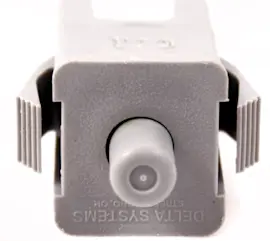
- Won’t spin: Confirm the lid closes firmly; a failed lid switch can stop spin.
- Won’t agitate or weak agitation: Worn agitator dogs or a stripped agitator cam are common.
- Loud during spin or burning smell: Look for a slipping clutch or a failing motor coupling.
- Leaking from center or tub area: Inspect tub gasket and center post seal areas.
- Shakes or bangs: Level the washer, redistribute loads; inspect suspension springs.
Parts that commonly solve these problems
Use these model-matched parts when the symptom points to them:
| Symptom | What to check first | Common replacement part |
|---|---|---|
| No drain/slow drain | Drain hose, pump impeller | Water pump WP3363394 |
| No spin | Lid closes, switch clicks | Switch W10820036 |
| Weak/no agitation | Agitator top “ratchets” | Agitator dog 80040 |
| Grinding/slipping in spin | Clutch dust, poor spin | Clutch 285785 |
| Shaking/banging | Leveling, springs stretched | Washer suspension spring WP63907 |
Why it matters
Troubleshooting by symptom prevents unnecessary part swaps and helps protect major components like the drive motor, transmission, and basket drive. Catching a drain or spin issue early also reduces the risk of water damage and repeat failures.
When to stop and get help
- You see active sparking, smoke, or a strong electrical odor.
- The washer trips the breaker repeatedly.
- The tub will not stop spinning when the control is off.
Last updated: March 2026