 Error Codes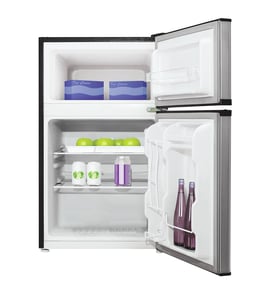

How do I know what model Kenmore refrigerator I have?
To identify your Kenmore refrigerator model, look for the model and serial number on the appliance ID label, then match that model number when you search parts and diagrams. For Kenmore compact refrigerator model 56491495100, the model number is the key detail that ensures you get compatible replacement parts.
Where to find the model number label
Check these common locations on Kenmore refrigerators (including compact models):
- Inside the fresh food compartment on a side wall
- On the ceiling of the fresh food compartment
- Behind or near the crisper drawer area
- Along the door frame when the door is open
- Behind the lower front kick plate (if your unit has one)
- On the back exterior panel near the power cord
What to write down (and why)
Record both numbers exactly as shown on the label:
- Model number: identifies the design and parts list
- Serial number: helps confirm production details when parts changed during a run
- Brand: Kenmore (useful when searching)
Quick guide: model vs. serial
| Item on label | What it’s used for | Example format |
|---|---|---|
| Model number | Finding the correct parts diagrams and replacement parts | 56491495100 |
| Serial number | Narrowing down version changes and manufacturing run | Letters and numbers |
Why it matters
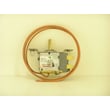
Kenmore refrigerators often have multiple versions that look similar, but use different components (thermostat, door gasket, compressor start device, shelves, or hinges). Using the exact model number prevents ordering a part that does not fit.
Helpful next step
If the label is hard to read, take a clear photo and compare it to the typical label locations in how to find your appliance model number (and what it means for parts).
Last updated: February 2026
How to tell if a Kenmore refrigerator compressor is bad?
On a Kenmore 56491495100 compact refrigerator, a “bad compressor” usually shows up as poor cooling with the compressor either not starting (often a repeated click) or running but not moving heat (lines stay room temperature). Before condemning the compressor, we check airflow, condenser cleanliness, and the start device.
Quick symptoms that point toward a compressor problem
- Fridge and freezer are warm even though the unit has power
- Repeated clicking every few minutes (compressor tries to start, then stops)
- Compressor runs almost nonstop but temperatures do not improve
- Compressor shell is very hot to the touch after running (use caution)
- Little to no vibration or sound from the compressor when it should be running
What to check first (common look-alikes)
Many “compressor” complaints are actually caused by a simpler issue that prevents heat from leaving the system.
- Condenser coils: Clean dust and pet hair; restricted coils can cause overheating and poor cooling.
- Condenser fan (if equipped): Make sure it runs when the compressor runs.
- Evaporator fan (inside): If it is not running, cold air will not circulate.
- Door gasket and door closing: Air leaks can mimic a weak compressor.
- Defrost issue: Heavy frost on the back wall or evaporator can block airflow.
Basic electrical checks (power off)
If you are comfortable using a meter, these checks help separate a failed compressor from a failed start component.
- Unplug the refrigerator.
- Inspect the compressor start device area for burnt smell, rattling pieces, or discoloration.
- Use a multimeter to check compressor winding continuity and check for a short to ground.
Helpful reference: how to use a multimeter to test electrical parts video
What the results usually mean
| What you observe | Most likely cause | Next step |
|---|---|---|
| Clicks, will not start, start device looks/smells burnt | Start relay/overload issue | Test/replace start components first |
| Runs but no cooling, condenser line not warming | Sealed system or compressor not pumping | Professional sealed-system diagnosis |
| Very hot compressor, shuts off on overload | Dirty coils, bad fan, or failing compressor | Fix airflow/cleaning, then retest |
Why it matters
A compressor is the heart of the sealed system; misdiagnosing it can lead to unnecessary cost. Ruling out airflow, fans, and start components first is the fastest way to get your Kenmore compact refrigerator cooling again.
Last updated: February 2026
How to tell cubic feet of Kenmore refrigerator by model number?
For Kenmore model 56491495100 (a compact refrigerator), the model number by itself typically does not directly state the exact cubic-foot capacity. The most reliable way is to calculate capacity from the usable interior dimensions (width x height x depth) and convert cubic inches to cubic feet.
How to estimate cubic feet (quick method)
Measure the inside of the fresh-food compartment (not the outside cabinet). Then use this formula:
- Measure interior width, height, and depth in inches
- Multiply:
W x H x D = cubic inches - Divide by 1728 to convert to cubic feet
- Subtract space taken by fixed features (evaporator cover, shelves, light housing) for a more realistic “usable” estimate
Example calculation
| Measurement | Inches | Notes |
|---|---|---|
| Interior width | 18 | Wall-to-wall at the widest point |
| Interior height | 24 | Floor to underside of top liner |
| Interior depth | 16 | Back wall to inside of door seal |
| Estimated capacity | (18x24x16)/1728 = 4.0 cu. ft. | Before subtracting obstructions |
Model-number tips that sometimes help (Kenmore)
Kenmore capacity clues are inconsistent across product lines, but these checks can still help:
- Look for a rating label inside the cabinet; it sometimes lists capacity directly
- If the model number has a prefix (for example, 253., 106., 596.), that prefix often indicates the original manufacturer family, not the size
- Compact refrigerators are commonly in the 1.7 to 4.5 cu. ft. range, depending on freezer compartment style and interior layout
Why it matters
Cubic feet affects what fits (beverage cans, meal prep containers), how quickly the unit recovers temperature after door openings, and which shelves, bins, and door racks are likely to match your layout when replacing parts.
Helpful related guide
If you are double-checking the model tag before ordering shelves or door bins, use: how to find your appliance model number (and what it means for parts).
Last updated: February 2026
Can you still get parts for Kenmore refrigerators?
Yes. We still help customers get replacement parts for Kenmore refrigerators, including compact models like Kenmore 56491495100. The key is matching the exact model number so you get parts that fit your refrigerator’s configuration (door style, controls, and cooling system).
How to find the right Kenmore part
Use your refrigerator’s model number first, then narrow by the part category you need.
- Confirm the model number on the rating label inside the fresh food compartment
- Search by the full model number (for this unit: 56491495100)
- Identify the symptom (not cooling, leaking, noisy, frost buildup) before choosing parts
- Match by part category (door parts, cooling system, electrical, shelving)
- Compare photos and descriptions to your original part before ordering
For help locating the label and understanding what the numbers mean, use how to find your appliance model number (and what it means for parts).
Common Kenmore refrigerator parts people replace
Even without a model-specific parts list shown here, these are the most frequently replaced items on Kenmore compact refrigerators:
| Symptom | Common part area to check | What it affects |
|---|---|---|
| Not cooling well | Thermostat/control, compressor start components | Temperature control and startup |
| Frost buildup | Door gasket, defrost components (if equipped) | Air leaks and defrost performance |
| Water on floor | Drain path, drip pan, door seal | Condensation and defrost drainage |
| Loud buzzing/clicking | Start device, condenser fan (if equipped) | Compressor starting and airflow |
Before you order: quick checks that prevent wrong parts
- Unplug the refrigerator and inspect the door gasket for gaps or tears
- Clean dust from condenser coils (if accessible) to improve cooling
- Listen for the compressor trying to start (clicking can point to start components)
- Verify the interior light and controls respond normally
Why it matters
Kenmore used multiple suppliers over the years, so two refrigerators that look similar can use different shelves, gaskets, controls, or electrical components. Using the exact model number (like 56491495100) is the fastest way to get the correct fit.
Last updated: February 2026
What are the common problems with Kenmore 56491495100 Elite refrigerators?
Kenmore model 56491495100 is a compact refrigerator; it is not an “Elite” full-size platform. The most common problems on compact units like this are weak cooling, frost or ice buildup, unusual noises, and water leaks, usually tied to airflow, door sealing, or defrost drainage.
Common symptoms and likely causes
- Not cooling enough: dirty condenser coils, blocked airflow, warm room location, or weak door seal
- Frost or ice on the back wall: door gasket leak, frequent door openings, or thermostat/control issues
- Freezer section cold but fresh food warm (if applicable): airflow blocked by frost or a fan issue (some compacts use natural convection)
- Clicking or buzzing: compressor start device cycling, unit not level, or tubing/drip pan vibration
- Water pooling inside or underneath: clogged/iced drain channel (on models with defrost drain) or high humidity causing excess condensation
Quick checks we recommend first
- Set the temperature to mid-range and allow 24 hours to stabilize.
- Clean the condenser coils (rear or underneath); dust is a top cause of poor cooling.
- Verify door sealing with the paper test; the paper should drag when you pull it out.
- Confirm airflow clearance: keep vents and the rear wall area inside the cabinet unobstructed.
- Level the refrigerator so the door closes firmly and the drain path works correctly.
Symptom-to-fix guide
| Symptom | What to check first | What usually fixes it |
|---|---|---|
| Warm cabinet | Coils, door seal, clearance | Coil cleaning, leveling, improve ventilation |
| Heavy frost | Door seal, door habits | Reseat/replace gasket, reduce openings |
| Water under unit | Level, condensation, drain path | Leveling, clear drain (if equipped) |
| Repeated clicking | Start device behavior | Electrical testing, replace failed start components |
Why it matters
Compact refrigerators have smaller compressors and tighter airflow paths; a little dust on coils or a small door-seal gap quickly causes temperature swings and longer run times.
Helpful DIY reference
For safe electrical troubleshooting (fans, start components, thermostats), use: how to use a multimeter to test electrical parts video.
Last updated: February 2026





