Owner’s manual
 Error Codes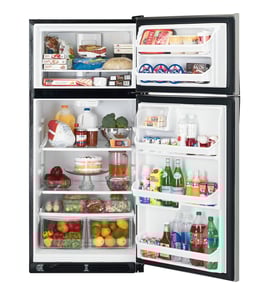


What is the upper part of a fridge called?
On a Kenmore 79569292902 top-mount refrigerator, the upper compartment is the freezer compartment (often just called the freezer). It’s the section designed to keep foods frozen and it also supplies cold air that helps cool the fresh food section below.
What the freezer does in a top-mount refrigerator
In this style of refrigerator, the freezer is more than storage for frozen food; it’s also part of the cooling system.
- Cold air is produced in the freezer area and circulates through freezer vents
- Some of that cold air is directed into the refrigerator section through an air vent
- The freezer control typically adjusts how much cold air moves from freezer to refrigerator
- The refrigerator control acts like the main thermostat for the whole appliance
- Keeping vents clear helps both sections hold steady temperatures
For the exact control locations and recommended settings for your model, use the owner's manual.
Common names you may see
You’ll see a few terms used interchangeably in manuals and parts diagrams.
| What people call it | What it means | Where it is |
|---|---|---|
| Freezer | Freezer compartment | Upper section on a top-mount unit |
| Fresh food section | Refrigerator compartment | Lower section |
| Freezer vent / air vent | Air passage between sections | Typically at the top of the refrigerator section |
Why it matters
Knowing the correct name helps when you’re troubleshooting cooling issues or ordering parts. For example, if the refrigerator section is warm but the freezer is cold, the issue is often related to airflow (vents, damper area, or frost buildup) rather than the compressor.
Last updated: February 2026
What are the common problems with Kenmore Elite refrigerators?
Common problems we see on Kenmore Elite refrigerators like model 79569292902 include warm temperatures from airflow or defrost issues, water leaks from a clogged defrost drain, doors not sealing or closing correctly, and noisy operation from fan or compressor-related components. Use the owner's manual troubleshooting charts to match symptoms to the right fix.
Most common symptoms and what they usually point to
- Not cooling well (fresh food or freezer too warm): blocked air vents, dirty condenser coils, control settings off, evaporator fan or compressor issues
- Frost buildup or ice on the back wall: defrost system problem causing airflow restriction
- Water under the refrigerator or inside the fridge: defrost drain restriction; the drain tube can be the root cause (see refrigerator drain tube 5251JA3003D)
- Doors won’t close or seal: cabinet not level, food packages blocking, gasket sticking or worn
- Loud humming, clicking, or rattling: condenser fan, evaporator fan, compressor start device, or compressor
Quick checks we recommend first (no parts needed)
- Confirm temperature settings and wait 24 hours between adjustments (the manual recommends this).
- Check door closure: push doors firmly shut; make sure bins and shelves are fully seated.
- Clean condenser coils: dirty coils make the compressor run longer and cool poorly.
- Look for blocked vents: move food away from air outlets.
- Inspect for leaks: check for ice or debris around the drain opening and drain trough.
Symptom-to-fix guide
| Symptom | Most likely cause | What to do next |
|---|---|---|
| Fridge warm, freezer OK | Airflow/damper issue | Check vent blockage; consider damper components like refrigerator motor support damper 5040JA2009B |
| Water pooling | Clogged drain | Clear drain; replace drain components if damaged (example: refrigerator drain tube 5251JA3003D) |
| Doors not closing | Leveling, obstructions, gasket | Level unit; clear packages; clean gasket sealing surfaces |
| Runs “all the time” | Warm room, dirty coils, frequent openings | Clean coils; reduce door openings; allow up to 24 hours after plug-in |
Why it matters
Most “not cooling” and “leaking” complaints start with airflow, door sealing, or a restricted drain. Fixing those basics early helps prevent food spoilage, excess frost, and compressor overwork.
Last updated: February 2026
What are the disadvantages of a top mount fridge?
A top-mount refrigerator like Kenmore model 79569292902 puts the freezer on top and the fresh-food section below, so the biggest drawbacks are more bending to reach everyday items, fewer convenience features on many models, and organization that can feel tighter than bottom-freezer designs. For model-specific features and layout, use the owner's manual.
Common disadvantages (what most owners notice)
- Less convenient fresh-food access: you bend more often for produce, drinks, and leftovers.
- Freezer organization can be basic: fewer pull-out drawers and dividers on many top-mount units.
- Fewer premium features: many top-mount fridges do not include an external water or ice dispenser.
- Airflow is easier to block: overpacking can block vents and cause uneven temperatures.
- Odors can transfer between sections: because air circulates between freezer and refrigerator, smells can move if food is not wrapped well.
What to do to minimize the downsides
We recommend these practical habits for the 79569292902 style of top-freezer refrigerator:
- Keep frequently used items at eye level in the refrigerator section.
- Leave space around interior vents; do not pack food tightly against vent openings.
- Group similar foods together and adjust shelves to reduce door-open time.
- Wrap strong-smelling foods and clean both compartments if odors develop.
- Maintain proper clearance around the cabinet for airflow (many units need about 2 inches).
Quick comparison: top mount vs bottom freezer
| Feature | Top mount (like 79569292902) | Bottom freezer |
|---|---|---|
| Fresh-food access | Lower, more bending | Higher, easier access |
| Freezer access | Eye level | Lower, often drawer-style |
| Typical features | More basic | More “premium” options |
| Cost/complexity | Often lower/simpler | Often higher/more complex |
Why it matters
Most “performance” complaints with top-mount fridges come from organization and airflow, not the sealed system. When vents are blocked, airflow between sections is interrupted and temperatures and moisture control can suffer, so loading habits make a noticeable difference.
Last updated: February 2026
What do Kenmore model numbers look like?
Kenmore model numbers are typically a 3-digit prefix followed by a longer string of numbers; the prefix helps identify who built the appliance. For example, your Kenmore refrigerator model 79569292902 starts with 795, which is commonly used on LG-built Kenmore refrigerators; use the full model number when looking up parts and the owner's manual.
What the numbers usually mean
Most Kenmore model numbers follow a predictable pattern:
- First 3 digits (prefix): identifies the manufacturing source (who built it)
- Next digits: the base model family
- Last digits: version details such as feature set, finish, or production variation
This matters because parts like a control board, sensor, or door gasket can vary by manufacturer and revision.
Where to find the model and serial number on this refrigerator
On Kenmore top-mount refrigerators like model 79569292902, the model and serial number label is typically located:
- Inside the refrigerator compartment
- On the right-hand side wall
- On an identification label (often near the crisper area)
If the label is hard to read, copy the number exactly as printed; even one missing digit can pull the wrong parts list.
Quick examples (what to look for)
| What you see | What it tells you | What to do next |
|---|---|---|
| 3-digit prefix (example: 795) | Builder prefix used for parts matching | Use the full model number for lookup |
| Longer full model (example: 79569292902) | Exact configuration for your refrigerator | Match parts by model, not by appearance |
| Serial number | Production run info | Keep it for service and part verification |
Why it matters for parts and troubleshooting
Using the correct model number helps us match the right Kenmore refrigerator parts the first time, especially for model-specific items such as the refrigerator electronic control board, refrigerator temperature sensor, and freezer door gasket.
Last updated: February 2026
What is the life expectancy of a Kenmore refrigerator freezer?
Most Kenmore top-mount refrigerators like model 79569292902 last 12 to 15 years with normal household use. Keeping the condenser area clean, maintaining good airflow around the cabinet, and fixing small issues early helps you reach the full expected lifespan; see the maintenance guidance in the owner's manual.
Typical lifespan and what affects it
A refrigerator’s service life depends most on heat removal, door sealing, and how hard the compressor has to work.
- Ventilation: Leave space around the refrigerator so heat can escape.
- Condenser cleanliness: Dust and pet hair make the system run hotter and longer.
- Door gasket condition: Air leaks cause longer run times and temperature swings.
- Defrost and drain health: Clogs can lead to ice buildup and water issues.
- Temperature settings: Over-cold settings increase compressor runtime.
Quick maintenance checklist (best ROI)
Use this schedule to keep a top-mount refrigerator running efficiently.
| Task | How often | Why it helps |
|---|---|---|
| Vacuum/brush condenser area | Every 6 to 12 months | Reduces compressor heat and runtime |
| Clean and inspect door gaskets | Every 3 months | Prevents warm air leaks and frost |
| Confirm door closes on its own | Monthly | Avoids accidental door gaps |
| Clear the defrost drain if you see puddles | As needed | Prevents water under/inside the unit |
If you’re seeing water pooling or recurring ice buildup, replacing a worn drain component such as the refrigerator drain tube 5251JA3003D is a common fix on many top-mount designs.
Signs your refrigerator is nearing end of life
These symptoms often show up more frequently as the sealed system and controls age:
- Compressor runs almost constantly and temperatures still drift
- Repeated warm refrigerator section with a cold freezer (airflow/defrost issues)
- Loud clicking or hard-start symptoms at the compressor
- Heavy frost buildup returning soon after defrosting
- Door won’t stay aligned or seal consistently
Why it matters
A refrigerator that is running hot, leaking air, or struggling to defrost uses more electricity and puts extra wear on key components like the compressor and control board. Simple upkeep and timely part replacement can add years of dependable cooling.
Last updated: February 2026