Installation guide
 Owner’s manual
 Error Codes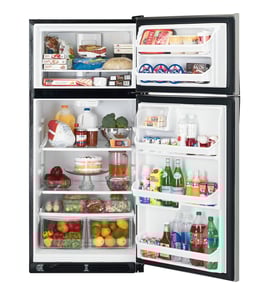



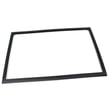
How many cubic feet is a Kenmore upright freezer model 25360502614?
Kenmore model 25360502614 is a top-mount refrigerator, not an upright freezer; its exact cubic-foot capacity is listed in the product specifications section of the 25360502614 owner's manual. If you need upright-freezer capacity, match the capacity to the correct freezer model number on its rating plate.
How to find the correct capacity for your exact appliance
Use these quick checks so you get the right cubic-foot rating for the unit you actually own:
- Confirm the appliance type: top-mount refrigerator vs. upright freezer
- Locate the model and serial tag (usually inside the fresh-food compartment on a side wall)
- Write the full model number exactly as shown (all digits matter)
- Check the specifications section in the manual for “capacity” or “total volume”
- If you have a different model than 25360502614, use that model’s manual instead
Why the model number matters (and what may be causing the mix-up)
Kenmore model numbers in the 253 family cover multiple refrigeration products. A top-mount refrigerator and an upright freezer can look similar in listings, but their capacities and parts are not interchangeable.
Quick comparison
| Item | Kenmore 25360502614 | Upright freezer (different model) |
|---|---|---|
| Appliance type | Top-mount refrigerator | Upright freezer |
| Where to confirm capacity | Manual specifications | Manual specifications |
| Parts compatibility | Refrigerator parts | Freezer parts |
Why it matters
Capacity affects food storage planning, energy expectations, and choosing correct replacement parts (for example, door bins, gaskets, and shelving). Using the correct model number prevents ordering the wrong Kenmore refrigerator parts.
Last updated: January 2026
What are the most common issues with 25360502614?
The most common issues we see with the Kenmore 25360502614 top-mount refrigerator are warm temperatures from poor airflow or defrost problems, frost buildup in the freezer, door sealing issues that cause sweating and temperature swings, and ice maker or interior light problems. Use the owner's manual for model-specific checks and settings.
Common symptoms and what they usually point to
- Refrigerator warm, freezer OK: restricted airflow, evaporator fan issue, iced-over evaporator
- Freezer warm, refrigerator warm: sealed system or compressor start components, dirty condenser area
- Heavy frost on back freezer panel: defrost heater or defrost thermostat problem
- Water on floor or inside: clogged/iced defrost drain, door left ajar, gasket not sealing
- No ice (if equipped): ice maker off, fill issue, frozen fill tube, water supply problem
- Light out: bulb failed or door switch issue
Quick checks we recommend first
- Confirm controls are set correctly and vents are not blocked by food packages.
- Listen for the freezer fan; it should run when the compressor is running and the door switch is closed.
- Check for a solid frost sheet on the freezer rear panel (a strong defrost-system clue).
- Inspect door gaskets for gaps, tears, or areas that do not grip paper when the door is closed.
- If you have an ice maker, verify the shutoff arm is down and the freezer is at 0°F.
Parts that commonly solve these problems on this model
| Symptom | Common fix | Example part on this model |
|---|---|---|
| Frost buildup, warm temps | Restore defrost heat | Refrigerator defrost heater 242044008 |
| Frost buildup, defrost not cycling | Replace defrost thermostat | Refrigerator defrost bi-metal thermostat 5303918634 |
| Warm temps, poor airflow/noisy fan | Replace evaporator fan motor | Refrigerator evaporator fan motor 242077705 |
| Moisture, warm spots, doors not closing well | Replace door gasket | Frigidaire refrigerator door gasket (white) 242193206 or frigidaire refrigerator door gasket (black) 242193212 |
| No ice (if equipped) | Replace ice maker assembly | Refrigerator ice maker IM116000 |
Why it matters
Temperature and frost issues usually get worse quickly; catching airflow, defrost, or door-seal problems early helps protect food and prevents excessive ice buildup that can strain the evaporator fan and cooling system.
Last updated: March 2026
What is the average lifespan of a Kenmore refrigerator?
Most Kenmore refrigerators, including top-mount models like 25360502614, typically last 12 to 15 years with normal household use. Regular maintenance (especially keeping airflow clear and doors sealing tightly) is what most often determines whether you land closer to 12 years or push beyond 15.
What affects lifespan the most
- Condenser cleanliness: Dust buildup makes the compressor work harder and run hotter.
- Door gasket condition: Air leaks cause longer run times and temperature swings.
- Evaporator fan performance: Weak airflow can lead to warm fridge temps and frost issues.
- Temperature settings: Over-cold settings can increase run time and wear.
- Usage habits: Frequent door openings and overpacking reduce cooling efficiency.
Quick maintenance checklist (high impact)
- Vacuum coils and the area underneath/behind the refrigerator every 6 to 12 months.
- Confirm the doors close on their own and sit level; adjust leveling legs if needed.
- Clean and inspect the door gaskets; replace if torn, hardened, or no longer sealing.
- Keep vents inside the fresh food and freezer sections unblocked.
- Use the care and maintenance schedule in the 25360502614 owner's manual.
Common “wear items” vs. long-life components
| Item type | Examples | Typical outcome |
|---|---|---|
| Wear items | Light bulbs, gaskets, bins | Often replaced during the refrigerator’s life |
| Cooling system parts | Compressor, evaporator, sealed system | Usually last many years; repairs can be more involved |
If you’re troubleshooting cooling performance (which can shorten lifespan if ignored), the evaporator fan motor is a common service part on many top-mount designs; for this model, see refrigerator evaporator fan motor 242077705.
Why it matters
A refrigerator that runs longer than it should (from dirty coils, air leaks, or poor airflow) puts extra stress on the compressor and cooling system. Fixing efficiency problems early is the most reliable way to extend service life.
Last updated: January 2026