 Error Codes



How to lower wheels on Kenmore refrigerator?
To lower the front wheels (leveling legs) on your Kenmore refrigerator model 59662912200, turn the front leveling screw counterclockwise. The screw does not back out; it stays in place and simply raises or lowers the front of the refrigerator for proper leveling.
Where the adjustment is and what it does
On most Kenmore bottom-mount refrigerators, the front leveling screws are behind the toe grille (kick plate) at the bottom front.
- Remove the toe grille (usually snaps off or uses a couple screws)
- Locate the left and right front leveling screws/feet
- Turn counterclockwise to lower the front (extend the feet)
- Turn clockwise to raise the front (retract the feet)
- Adjust both sides a little at a time to keep the cabinet even
Quick leveling checklist (best results)
- Empty heavy items from the doors so the cabinet is easier to adjust
- Use a bubble level on a shelf (front-to-back and side-to-side)
- Aim for the refrigerator to be slightly higher in front so doors self-close
- Reinstall the toe grille after leveling
Common symptoms and what they usually mean
| Symptom | What to check | Typical fix |
|---|---|---|
| Doors swing open or do not self-close | Front is too low | Lower the wheels/extend feet (counterclockwise) |
| Doors rub or cabinet looks twisted | Side-to-side not level | Adjust left vs right leveling screw |
| Unit rocks when you push a corner | Feet not firmly on floor | Extend feet until solid contact |
Why it matters
Proper leveling helps the doors seal correctly, reduces warm air leaks that cause frost, and can prevent water puddles from defrost drainage issues.
If you are also seeing leaks or puddles after leveling, use our guide: how to get rid of refrigerator puddles.
Last updated: February 2026
How to tell what model Kenmore refrigerator?
To tell what model Kenmore refrigerator you have, we look for the model number on the appliance’s ID tag, then match that number to the correct parts list. For Kenmore model 59662912200, the model number format is all digits and is typically printed inside the fresh food section.
Where to find the model number tag
Check these common locations on Kenmore refrigerators:
- Inside the refrigerator compartment on the left or right side wall
- On the ceiling of the fresh food compartment near the light housing
- Behind or beside the crisper drawers (you may need to slide a drawer out)
- Along the door frame (open the refrigerator door and look around the perimeter)
- Near the bottom front, behind the toe grille or kick plate
What the model number looks like (and what to write down)
Record the model number exactly as shown on the tag. Also write down the serial number because it helps confirm production details when ordering parts.
| What to capture | Example | Why it matters |
|---|---|---|
| Model number | 59662912200 | Ensures you get the correct Kenmore parts breakdown |
| Serial number | (varies) | Helps confirm the correct revision/version |
| Type | Bottom-mount refrigerator | Narrows parts categories (ice maker, door gasket, drawers) |
Quick tips to avoid ordering the wrong parts
These steps prevent the most common mix-ups:
- Use the full model number, not just the first 3 digits
- Don’t use numbers printed on the ice maker, compressor, or shelves as the refrigerator model
- If the tag is hard to read, take a clear photo and zoom in
- Match the part to the symptom (ice issues, light issues, door sealing, etc.)
Why it matters
Kenmore model numbers determine the exact fit and electrical compatibility for parts like an ice maker, door gasket, or light bulb. Using the correct model number helps you avoid returns and gets your refrigerator back to proper cooling faster.
Common parts people replace after identifying the model
If you are troubleshooting, these model-matched parts are often involved:
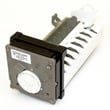
- Refrigerator ice maker D7824706Q
- Refrigerator freezer door gasket WPW10436247
- Bulb replcmt W11447232
Last updated: February 2026
What are the most common problems with Kenmore refrigerators?
The most common issues we see on Kenmore refrigerators like model 59662912200 are cooling problems, ice maker and water system failures, leaks, frost buildup, and unusual noises. Many of these start with airflow restrictions, dirty condenser coils, or worn sealing and switching parts.
Most common problems (and what they usually point to)
- Not cooling or warm temperatures: dirty condenser coils, failed evaporator fan, or a compressor start problem
- Freezer cold but fridge warm: blocked air vents, iced-over evaporator, or weak evaporator fan
- Ice maker not making ice: water supply issue, frozen fill tube, or a failed ice maker module (see refrigerator ice maker D7824706Q)
- Water leaking or puddles: clogged defrost drain, cracked water line, or door not sealing
- Excessive frost: door left ajar, bad gasket, or defrost system trouble
- Noisy operation: fan blade hitting ice, worn fan motor, or items vibrating against the cabinet
Quick checks we recommend first
- Confirm temperatures: set refrigerator to about 37°F and freezer to about 0°F.
- Check airflow: make sure vents inside the fresh food section are not blocked by food packages.
- Clean condenser coils: dust buildup underneath or behind the unit commonly causes poor cooling.
- Listen for fans: you should typically hear a fan run when the compressor is running.
- Inspect door sealing: look for gaps, rips, or areas where the gasket is not gripping.
Symptoms and likely causes (fast reference)
| Symptom | Most likely cause | What to do next |
|---|---|---|
| Fridge warm, freezer warm | condenser coils dirty, compressor/start issue | clean coils; if still warm, check start components and compressor |
| Freezer OK, fridge warm | airflow blockage, evaporator fan issue | clear vents; check for fan operation and frost buildup |
| Ice maker stopped | water supply/fill issue, ice maker failure | verify water supply; consider replacing refrigerator ice maker D7824706Q |
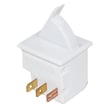
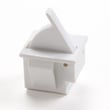
| Light not working | door switch or bulb issue | check the door switch and bulb (see refrigerator switch W11396033) |
| Door not sealing well | gasket worn or deformed | clean gasket; if torn or hardened, replace (see refrigerator freezer door gasket WPW10436247) |
Why it matters
Cooling, ice production, and leak issues often get worse quickly. Catching a dirty coil, airflow blockage, or a failing switch early can prevent food spoilage, ice buildup, and unnecessary strain on the compressor.
Helpful DIY reference
If your refrigerator displays an error code, use Kenmore 111 model bottom freezer refrigerator error codes to match the code to the most likely failure area and next steps.
Last updated: February 2026
What is the bottom part of a refrigerator called?
The “bottom part” of a refrigerator is usually the machine compartment, which houses key cooling components like the compressor, condenser, and drip tray. On Kenmore model 59662912200, this is typically the area behind the lower rear access panel.
What you’ll find in the bottom (machine) compartment
Most bottom-mount refrigerators group the heat-making and heat-removing parts down low for airflow and service access:
- Compressor: pumps refrigerant through the sealed system
- Condenser: releases heat from the refrigerant (often a coil or condenser assembly)
- Condenser fan (if equipped): moves air across the condenser
- Drip tray: catches defrost water so it can evaporate
- Start components (relay/overload/capacitor): help the compressor start and run
Parts on this model that relate to the “bottom section”
If you’re troubleshooting noise, warm temps, or water under the unit, these model-matched parts are commonly involved:
| Symptom you notice | Bottom-area part often involved | Example part for 59662912200 |
|---|---|---|
| Clicking, humming, or no cooling | Compressor start components or compressor | Refrigerator compressor W10160407, refrigerator overload WP12555902 |
| Heat buildup, poor cooling | Condenser area needs cleaning or repair | Condenser, e 67006133 |
| Water collecting underneath | Drain/drip system issue | Tray, drip e W11337775 |
Why it matters
Knowing the correct name helps you diagnose problems faster. For example, a “hot bottom” is often normal because the condenser and compressor reject heat there, but loud clicking or repeated start attempts points to start components or airflow issues.
Quick checks we recommend
- Unplug the refrigerator before removing any rear access panel.
- Vacuum dust from the lower rear area (dust buildup reduces cooling efficiency).
- Listen for repeated clicking every few minutes (often a start issue).
- Check for water in or around the drip tray area.
- Make sure the unit has a few inches of clearance for airflow.
For step-by-step troubleshooting, use our DIY guide: how to fix your evaporator cooling fan.
Last updated: February 2026





