 Installation guide
 Owner’s manual
 Error Codes





What is the most common problem with a GE dishwasher?
On the GE GDF650SMJ2ES dishwasher, the most common issue customers report is the dishwasher won’t start or won’t run a cycle. In most cases, the cause is a power interruption, a door that is not fully latched, or a control lock or start-sequence issue described in the GDF650SMJ2ES owner’s manual.
Quick checks we recommend first
- Confirm the circuit breaker is on (or replace a blown fuse).
- If your installation uses a wall switch for dishwasher power, make sure it is on.
- Close the door firmly until it latches; then start the cycle again.
- Check whether the control panel is locked and unlock it if needed.
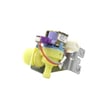
- Make sure the water valve under the sink is turned on.
- If the display indicates a leak detected condition, stop using the dishwasher and arrange service.
Common “won’t run” causes and what they look like
| Symptom | Most likely cause | What to do next |
|---|---|---|
| No lights, no response | Power issue (breaker, switch) | Restore power, then retry Start |
| Lights on, won’t start | Door not latched | Inspect latch alignment and close firmly |
| Starts then stops quickly | Leak detection triggered | Check for water under unit; arrange service |
| Runs but cleans poorly | Spray arm or circulation issue | Check for clogs, loading issues, and spray arm movement |
When it points to a part
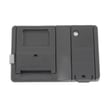
If the door closes but the dishwasher still will not start, a worn latch can be the culprit. For this model, the door latch assembly is a common suspect: GE dishwasher door latch lock WD21X10490.
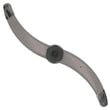
Other frequent performance complaints (not cleaning, not draining, not drying) can also trace back to blocked filters, incorrect detergent, or wash system parts such as the circulation pump, heating element, or spray arms.
Why it matters
A dishwasher that won’t start is often a simple power or latch issue; fixing that first prevents unnecessary part replacement and gets your GE GDF650SMJ2ES back to normal operation faster.
For display messages and troubleshooting steps, we also use the GE electronic dishwasher error codes reference.
Last updated: January 2026
What is the average life expectancy of a GE dishwasher?
A GE dishwasher like model GDF650SMJ2ES typically lasts about 10 years with normal household use. Regular cleaning, correct detergent use, and fixing small issues early (like poor draining or weak spray) help you reach that lifespan.
What affects dishwasher lifespan most
- Hard water and mineral buildup; scale can reduce heating and wash performance
- Cleaning habits; keeping filters and spray arms clear prevents strain on the circulation system
- Drying and heating performance; weak heat can leave moisture and residue behind
- Door sealing and latching; leaks and slamming wear parts faster
- Installation quality; a stable, correctly installed unit is easier to service and less likely to be damaged
Maintenance checklist (simple, high impact)
- Run a monthly cleaning cycle using a dishwasher cleaner (or the method described in the GDF650SMJ2ES owner's manual).
- Inspect and rinse the filter area and sump for food debris.
- Check spray arms for clogged holes and remove buildup.
- Use rinse aid if you see spotting or poor drying.
- Keep the door gasket clean and wipe the control panel with a lightly damp cloth.
Common “wear items” and what they do
| Part | What you’ll notice when it’s failing | Why it matters |
|---|---|---|
| Heating element | Dishes stay wet, cooler wash results | Heat supports drying and helps break down soils |
| Spray arm | Poor cleaning, food left on dishes | Water pressure and coverage drop |
| Door latch | Won’t start or stops mid-cycle | The dishwasher must sense a locked door |
If you’re troubleshooting cleaning or drying issues on this model, the Dishwasher not cleaning dishes video and Dishwasher not drying dishes video are good starting points.
Why it matters
Knowing the typical 10-year lifespan helps you decide whether to repair (often worth it for a single failed part) or plan for replacement when multiple systems are wearing out.
Last updated: January 2026
Can a clogged drain cause an FTD error?
Yes. On the GE GDF650SMJ2ES dishwasher, a clogged drain path can trigger an FTD-style “not draining” condition because the tub must empty correctly between steps in the cycle. If water is left standing, the dishwasher can stop and show a drain-related fault.
What to check first (fast, no parts)
- Cancel the cycle by pressing and holding START for about 3 seconds so the unit begins to drain.
- Open the door and confirm whether the tub actually drained.
- Check the air gap (if your installation has one) and clean it.
- If the dishwasher drains into a disposer, run the disposer and confirm the disposer plug was removed.
- Inspect the drain hose for kinks or pinches behind or under the dishwasher.
- Confirm your sink drains normally; a slow sink often points to a household drain restriction.
Drain system checkpoints for this model
A drain restriction can be in the plumbing, the hose routing, or the dishwasher’s drain components.
| Symptom you see | Most likely area | What to do next |
|---|---|---|
| Water standing in tub after cancel/drain | Air gap or drain line restriction | Clean air gap, check hose routing, verify disposer connection |
| Dishwasher hums but drains slowly | Partial blockage in hose or pump area | Check hose for clogs; inspect pump inlet for debris |
| No drain action at all | Drain pump or control issue | Check for obstructions first; then test drain pump circuit |
When a part is commonly involved
If the drain path and hose routing are clear but the dishwasher still will not pump out, the drain pump is a common next suspect on this model.
- Consider inspecting the dishwasher drain pump WD19X25187 if the unit will not evacuate water during a cancel/drain.
Why it matters
FTD and other drain-related faults often happen because the dishwasher expects the tub to be empty before moving to the next step. Restoring normal draining prevents cycle interruptions, standing water odors, and poor cleaning.
For model-specific drain routing and checks (high drain loop, air gap guidance, and cancel/drain steps), follow the GDF650SMJ2ES installation guide.
Last updated: January 2026
How to do a hard reset on a GE dishwasher?
On the GE GDF650SMJ2ES dishwasher, the most reliable “hard reset” is to cancel the current cycle (press and hold Start for 3 seconds, then close the door so it drains) and then restart the dishwasher. This clears the active cycle and reboots normal operation.
Reset options for GDF650SMJ2ES
- Cancel and drain (recommended reset): Press and hold Start for 3 seconds, then close the door so the dishwasher drains.
- Pause and resume: Slowly open the door to pause; to resume, press Start and close the door within 4 seconds.
- Power reset (if the controls are frozen): Turn the dishwasher power OFF at the breaker (or wall switch if your installation uses one), wait about 1 minute, then restore power.
For the exact button sequence and timing, follow the GDF650SMJ2ES owner's manual.
Step-by-step: cancel cycle reset
- Press and hold Start for 3 seconds.
- Close the door.
- Wait for the unit to drain and the cycle light to turn off.
- Select your cycle and press Start, then close the door within 4 seconds.
If it still will not run after resetting
Check these common causes first:
- House breaker tripped or fuse blown
- Wall switch (if used) is OFF
- Door not fully latched (a bad latch can prevent starting)
- Control panel lock is enabled
- Water supply valve under the sink is turned OFF
If the door will not latch consistently, the GE dishwasher door latch lock WD21X10490 is the model-matched latch component to inspect.
Quick comparison: cancel vs power reset
| Reset method | What it does | When to use it |
|---|---|---|
| Cancel and drain (hold Start 3 sec) | Ends the current cycle and drains | Stuck mid-cycle, wrong cycle selected |
| Power reset (breaker or switch) | Reboots the control electronics | Frozen keypad, unresponsive display |
Why it matters
A proper reset prevents partial cycles, standing water, and false “won’t start” symptoms. On this GE dishwasher, closing the door after canceling is important because the unit drains as part of the reset.
Last updated: January 2026





