Owner’s manual


What would cause a dryer drum not to turn?
On the Sears 110C87562601 dryer, a drum that will not turn is usually caused by a broken or slipped drive belt, a seized drum support roller, a failed idler pulley, or a bad drive motor. Start by confirming the dryer has full power and the door is fully closed, then inspect the drive system.
Quick checks first (no disassembly)
- Unplug the dryer before any inspection or repair.
- Make sure the door is firmly closed; the dryer will not run correctly if the door switch is not engaged.
- Check your home electrical supply; many electric dryers use two fuses or breakers, and one tripped breaker can cause odd symptoms.
- Try a Timed Dry heated cycle and press Start firmly (hold about 1 second on many models).
- If you hear the motor run but the drum does not move, the belt or drum support system is the most likely issue.
Most common mechanical causes
- Broken drive belt: motor runs, drum stays still; sometimes you can spin the drum by hand with little resistance.
- Worn drum support rollers: loud thumping or squealing, drum hard to turn; a seized roller can stop rotation.
- Bad idler pulley: belt loses tension, squealing, belt may slip or break.
- Failed drive motor: humming, overheating smell, or no movement even with a good belt and free drum.
Parts that commonly fix a no-spin problem
| Symptom | What it points to | Common part to check |
|---|---|---|
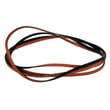
| Motor runs, drum does not | Belt slipped/broken | Drum support and belt system (often serviced as a kit) |
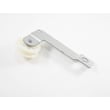
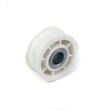
| Squeal, then no tumble | Idler pulley failure | Dryer idler pulley 279640 |
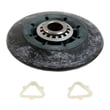
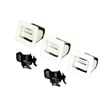
| Thump/squeal, drum hard to turn | Roller seized/worn | Support WPW10314173 |
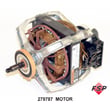
| No movement and motor issue suspected | Motor failure | Drive motor 279787 |
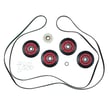
For many tumble issues, replacing the wear items together prevents repeat breakdowns; the dryer repair kit 4392067 is designed for that type of overhaul.
Why it matters
A drum that will not turn is not just a convenience problem; continued attempts to run the dryer can damage the belt path, overheat the motor, and increase wear on the drum support system.
For model-specific disassembly steps and safety guidance, follow the owner's manual.
Last updated: February 2026
What is the cubic foot of my Kenmore dryer model 110C87562601?
The capacity (cubic feet) for Sears Canada dryer model 110C87562601 is not listed in the manual excerpt we have for this model. Most full-size 27-inch electric dryers in this style are typically about 6.5 to 7.5 cu. ft.; check the specifications section in your owner's manual for the exact number.
How to find the exact capacity for model 110C87562601
Look for a “Specifications”, “Dimensions”, or “Features” section in the manual; capacity is often shown as drum volume (cu. ft.) or as a “super capacity” style description.
- Check the first few pages and any “Product features” section
- Look for a spec table that lists drum size or capacity
- If the manual lists only dimensions, use those for fit planning (capacity may not be stated)
- If you are comparing dryers, match by drum size and venting requirements, not just cu. ft.
Why capacity matters (and when it does not)
Capacity helps you estimate load size and drying time, but airflow and heat control often matter more for real-world performance. If loads are taking too long, focus on venting and temperature control first.
| What you are trying to do | Capacity helps most when | Also check first |
|---|---|---|
| Compare two dryers | You dry bulky items often | Cycle options and moisture sensing |
| Reduce dry time | Loads are consistently very large | Vent restriction, lint buildup |
| Fix “no heat” or weak heat | Rarely | Heating circuit parts and airflow |
If you are asking because of heating or long dry times
For this model family, common causes are a restricted exhaust vent, a failed heating component, or a temperature-sensing issue.
- Clean the lint screen and confirm strong airflow at the outside vent hood
- Inspect and clean the vent duct for lint buildup and crushed sections
- If the dryer runs but does not heat, test the thermal cut-off and related safety devices
- If heat is erratic or cycles off too soon, the temperature sensor can be involved
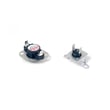
If you need parts commonly tied to heat complaints, we often see customers replace the dryer thermal cut-off fuse kit 279973 and, when needed, the dryer thermistor WP8577274.
Last updated: February 2026
Is it worth replacing a belt on a dryer?
Yes. For Sears model 110C87562601, replacing a worn or broken dryer belt is usually worth it because the repair is typically low-cost and restores normal drum tumbling, which can extend the dryer’s usable life without replacing the whole appliance. See the owner's manual for model-specific access and safety notes.
When belt replacement makes sense
In most cases, a belt is a wear item, not a sign the entire dryer is failing. It’s especially worth doing when the dryer still heats and runs but the drum will not tumble.
- The motor runs but the drum does not turn
- You hear the motor running with a steady hum, but no tumbling
- The drum turns by hand too easily (belt likely broken or off)
- The dryer recently started squealing or thumping (often rollers or idler, not just the belt)
- The dryer is otherwise drying normally (airflow and heat are good)
Parts commonly replaced with the belt (and why)
A belt job often overlaps with other drum-support parts. If you already have the cabinet open, replacing worn support components helps prevent repeat teardown.
| Symptom you notice | Common wear area | Example part on this model page |
|---|---|---|
| Squealing, rumbling, thumping | Drum support rollers | Support WPW10314173 |
| Chirping, belt slack, poor tension | Idler pulley | Dryer idler pulley 279640 |
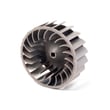
| Intermittent scraping, poor airflow noise | Blower wheel wear or damage | Dryer blower wheel WP697772 |
| Multiple noises or long-overdue maintenance | Several wear parts together | Dryer repair kit 4392067 |
Quick checks before you buy parts
These checks help confirm you are fixing the right problem.
- Unplug the dryer; verify the drum does not tumble when you start a cycle
- Check the lint screen and venting; restricted airflow can mimic “bad dryer” symptoms (long dry times, overheating)
- If the dryer will not run at all, check both household fuses or breakers (many electric dryers use two)
- If the drum turns but there is no heat, troubleshoot heat separately (belt is not the cause)
Why it matters
A failed belt stops tumbling, so clothes do not dry properly and the dryer can overheat from poor load movement. Replacing the belt and any worn rollers or idler parts restores smooth drum rotation and helps protect the motor and heater system.
Last updated: February 2026
How do I know what size my dryer belt is?
For your Sears 110C87562601 dryer, the most reliable way to confirm belt size is to match the belt to your exact model parts list rather than measuring. If you must measure, measure the belt’s total length and width, then compare those measurements to the replacement belt specs listed for your model in the owner's manual.
Best way: match the belt to your model
We recommend identifying the correct drive belt by model number because belts can look similar but differ slightly in length or rib/profile.
- Use model number 110C87562601 when selecting parts
- Compare the belt description to your dryer’s drive system style (ribbed vs. smooth)
- Replace worn drive components at the same time if the belt failed from drag or misalignment
- If the drum is hard to turn by hand, inspect rollers and idler before installing a new belt
If you need to measure the belt you have
If the belt is intact and you are measuring it to confirm a match:
- Unplug the dryer before opening panels
- Remove the belt and lay it flat (do not stretch it)
- Measure total length end-to-end around the belt (circumference)
- Measure width across the belt
- Note the profile (flat/ribbed) and number of ribs if ribbed
Quick measurement guide
| What to measure | How to measure | What to write down |
|---|---|---|
| Length | Tape measure around the belt (no stretching) | Inches or cm |
| Width | Across the belt face | Inches or mm |
| Profile | Visual check | Flat or ribbed |
Related parts to check while you are in the cabinet
A new belt can slip, squeal, or wear quickly if the drum support or idler system is worn.
- Drum support rollers (common noise and drag point): support WPW10314173
- Idler pulley (common squeal and poor tension): dryer idler pulley 279640
- Blower wheel (can cause rubbing noises and poor airflow if damaged): dryer blower wheel WP697772
- If multiple wear items are involved, consider a kit: dryer repair kit 4392067
Why it matters
Using the correct belt size keeps proper drum speed and tension. A belt that is slightly off can cause slipping, thumping, squealing, or premature belt failure, and it can overload the drive motor.
Last updated: February 2026
How much does it cost to replace a dryer start switch?
For the Sears 110C87562601 dryer, the total cost to replace a start switch is the price of the switch plus any labor. Start switches for dryers typically run $10 to $30 for the part; professional service commonly adds $100 to $250.
What you will pay for
- Start switch (part only): typically $10 to $30
- Service call and labor: commonly $100 to $250 total, depending on access and diagnosis time
- Extra parts: only if testing shows another failure (for example, a safety fuse)
Why the parts list matters for this model
On the 110C87562601 parts list, a start switch is not shown in the available parts we have listed here. Use the diagrams and the part lookup in the 110C87562601 owner's manual to identify the correct switch location and style, then match it to the correct replacement part for ordering.
Quick checks before you buy a start switch
These checks come straight from common “will not start” troubleshooting and help avoid buying the wrong part:
- Confirm the door is fully closed.
- Press and hold START for about 1 second.
- Verify the dryer is plugged into a grounded outlet.
- Check the household fuses/breakers; many electric dryers use two, and one can trip.
- Make sure the controls are set to a running/On position.
If it is not the start switch: common look-alikes
| Symptom | Often caused by | Example part on this model |
|---|---|---|
| Dryer will not start at all | Open safety fuse from overheating/vent restriction | Dryer thermal cut-off fuse kit 279973 |
| Motor hums but drum will not turn | Worn belt/idler system | Dryer idler pulley 279640 |
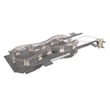
| Runs but no heat | Heating circuit issue | Dryer heating element WP8544771 |
Why it matters
A start switch is inexpensive, but “no start” problems are often power, door, or safety-circuit related. Checking those first keeps the repair cost low and gets the dryer running faster.
Last updated: February 2026