Installation guide
 Owner’s manual
 Error Codes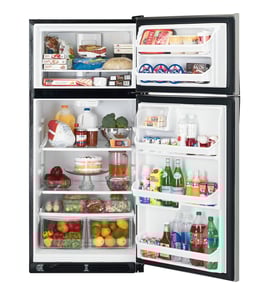



How do I tell what Frigidaire model I have?
Your Frigidaire refrigerator model number is printed on the serial plate inside the fresh food (refrigerator) compartment. On the GLRT83TESC-STYLE top-mount design, we look along the inside walls or door frame area; record both the model and serial number for parts matching and service.
Where to look on a Frigidaire top-mount refrigerator
Check these common label locations first:
- Inside the refrigerator compartment on a side wall (upper area is common)
- On the door frame when you open the fresh food door
- Near the crisper area or lower side wall inside the fresh food section
- Occasionally behind the toe grille or near the bottom front edge
For GLRT83TESC, the Use & Care information notes the serial plate is located inside the refrigerator compartment. Use the owner's manual to confirm the exact label location and how the model is formatted.
What the model number looks like (and what to write down)
The model number is a mix of letters and numbers (for example, GLRT83TESC). We recommend writing down:
- Model number (exactly as shown)
- Serial number
- Purchase date (helpful for maintenance and records)
Quick ID checklist
| Item | What it’s used for | Tip |
|---|---|---|
| Model number | Matching parts diagrams and fit | Copy it exactly, including any letters |
| Serial number | Production details and service history | Take a clear photo for reference |
| Product type | Confirms you are shopping the right category | “Top-mount refrigerator” means freezer on top |
Why it matters
We use the model number to match the correct Frigidaire parts for your exact configuration (shelves, door bins, crisper components, gaskets, and cooling system parts). Even small model differences can change which part fits.
Last updated: February 2026
What is the average lifespan of a Frigidaire refrigerator?
A Frigidaire refrigerator typically lasts 10 to 15 years. With consistent care (especially keeping airflow clear and cleaning the condenser), many units reach the upper end of that range; temperature stability and door-seal condition are big factors in real-world life.
Typical lifespan and what affects it most
Most refrigerators fail early due to heat stress, poor airflow, or moisture and odor issues that lead to heavier run time.
- Condenser cleanliness: periodic cleaning helps the refrigerator run more efficiently
- Ventilation and loading: avoid overcrowding and blocking cold air vents
- Door closing and leveling: level the cabinet so doors close tightly
- Temperature settings: keep fresh food around 37°F (34°F to 40°F range) and freezer at 0°F or lower
- Ice maker use (if equipped): heavy ice production increases run time and wear
Quick care checklist for longer life (GLRT83TESC)
Use these habits to reduce compressor run time and prevent warm spots.
- Vacuum or brush the condenser area on a regular schedule
- Keep the refrigerator at least 2/3 full in the freezer for efficient operation (without blocking vents)
- Wipe containers dry and cover foods to reduce internal moisture buildup
- Minimize door openings by grabbing everything you need at once
- Confirm the doors seal and close fully after every use
Lifespan expectations at a glance
| Item | Typical target | Why it matters |
|---|---|---|
| Overall refrigerator lifespan | 10 to 15 years | Normal wear on sealed system and controls |
| Fresh food temperature | ~37°F | Reduces spoilage and short cycling |
| Freezer temperature | 0°F or lower | Maintains safe frozen storage |
Why it matters
A refrigerator that runs longer than necessary (dirty condenser, blocked vents, warm settings, or poor door sealing) builds heat and stress on the sealed system. Keeping your GLRT83TESC efficient is the most reliable way to reach the full expected lifespan.
For model-specific operating and care guidance, follow the maintenance and temperature recommendations in the GLRT83TESC owner's manual.
Last updated: February 2026
Is a Frigidaire considered high end?
Frigidaire is generally considered a solid, mid-range appliance brand rather than a true luxury or high-end brand. For the Frigidaire GLRT83TESC top-mount refrigerator, you can expect practical features, reliable everyday performance, and widely available replacement parts, not premium-only finishes or pro-style customization.
What “high end” usually means for refrigerators
High-end refrigerators typically emphasize premium materials, advanced temperature management, and built-in style options. Most top-mount refrigerators, including GLRT83TESC, are designed for value and straightforward serviceability.
Common high-end differentiators include:
- Built-in or counter-depth designs with panel-ready options
- Dual evaporators or highly zoned cooling systems
- Premium interior lighting and high-end shelving systems
- Advanced air filtration and humidity management across multiple zones
- Longer feature lists (smart connectivity, specialty drawers, etc.)
Where Frigidaire fits in the market
Frigidaire is best known for dependable, practical refrigerators with a strong parts ecosystem. On GLRT83TESC, the manual highlights everyday food storage features like crisper drawers and (on some versions) a humidity control to help extend produce life. See the storage and care sections in the GLRT83TESC owner's manual.
Quick comparison
| Category | Mid-range (typical Frigidaire) | High-end (luxury tier) |
|---|---|---|
| Core goal | Reliable cooling, value | Premium design, advanced performance |
| Repairs/parts | Common, widely stocked | Often specialized, model-specific |
| Features | Practical storage, standard controls | Specialty zones, premium finishes |
Parts and upkeep that support long-term value
If you are judging “high end” by longevity and maintainability, routine care and easy-to-find parts matter as much as features.
A few common, model-relevant examples:
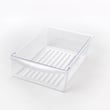
- Replace broken storage components like the refrigerator crisper pan 240337103
- Keep door storage functional with the Frigidaire refrigerator door gallon bin 240338001
- Use the correct lamp if the compartment light is out (see refrigerator light bulb 316538904)
- Follow the cleaning guidance in the manual, including gasket wipe-downs and coil area cleaning as needed
Why it matters
If you want premium aesthetics and advanced controls, “high end” usually means stepping up to a different refrigerator class. If you want dependable daily performance with straightforward maintenance, Frigidaire and the GLRT83TESC style of top-mount refrigerator are a strong fit.
Last updated: February 2026
What is the most common problem with a Frigidaire refrigerator?
The most common problem we see on Frigidaire refrigerators like model GLRT83TESC is a cooling complaint: the freezer stays cold but the fresh food section warms up. This usually traces to restricted airflow (dirty condenser coils), an evaporator fan issue, or defrost-system icing that blocks air movement; see the GLRT83TESC owner's manual for model-specific checks.
Most common symptoms and what they usually mean
- Freezer OK, fridge warm: airflow problem between compartments (fan not moving air or vents iced over).
- Frost or ice buildup on the back freezer wall: defrost system not clearing ice (heater, thermostat, timer/control).
- Clicking, snapping, or sizzling sounds: often normal operation during cycling and defrost (the manual describes these sounds).
- Not running at all: power supply issue, control set to OFF, or unit in a defrost cycle.
- Weak cooling overall: dirty condenser coils, blocked vents, or door not sealing.
Quick checks we recommend before replacing parts
- Confirm controls: set temperatures to a normal mid-range setting; allow 24 hours for temperatures to stabilize.
- Check airflow: do not pack items against vents; organize food to reduce door openings.
- Inspect for frost: heavy frost suggests a defrost problem; a full manual defrost can temporarily restore airflow.
- Clean condenser area: dust buildup reduces heat removal and can cause warm temperatures.
- Listen for the evaporator fan: you should typically hear air movement when the compressor is running.
Parts that commonly relate to cooling complaints on GLRT83TESC
| Symptom | Common area | Example part on this model |
|---|---|---|
| Fridge warm, freezer cold | Evaporator airflow | Refrigerator evaporator fan blade 5308000010 |
| Frost buildup, warm fridge | Defrost system | Refrigerator defrost bi-metal thermostat 5303918202 |
| Poor cooling, long run times | Sealed system (pro-level repair) | Refrigerator compressor 5304507765 |
Why it matters
Cooling problems are usually airflow-related, so a simple issue (blocked vents, dirty coils, or defrost icing) can look like a major failure. Catching it early helps protect food temperatures and reduces compressor strain.
Last updated: February 2026