Installation guide
 Owner’s manual
 Error Codes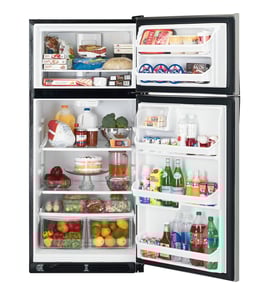


What is the upper part of a fridge called?
On the Frigidaire FRT21IL4FW7 top-mount refrigerator, the upper section is the freezer compartment. It’s the coldest area of the appliance, designed to keep food frozen and, on some setups, support an automatic ice maker.
What the freezer compartment does
- Maintains below-freezing temperatures for long-term storage
- Helps keep ice cream and frozen foods solid
- Often houses the ice maker area (if your model is equipped)
- Shares cooling airflow with the fresh food section through internal vents
If you’re hearing noises from the upper section
Some sounds that seem like they come from the freezer area are normal during operation, especially on high-efficiency refrigerators.
Common normal sounds include:
- A hum or pulsing sound from the compressor cycling
- Air movement from a fan pushing air through the system
- A brief buzzing sound when the water valve fills the ice maker (if equipped)
For sound descriptions and operating details specific to this model, use the FRT21IL4FW7 owner’s manual.
Quick terminology guide
| What people call it | Correct name | What it’s for |
|---|---|---|
| “Upper fridge” | Freezer compartment | Freezing and long-term storage |
| “Main fridge” | Fresh food compartment | Refrigerated (not frozen) storage |
| “Ice area” | Ice maker area (if equipped) | Ice production and storage |
Why it matters
Using the right term helps when ordering parts, following troubleshooting steps, or describing a problem to a technician. For example, ice maker issues are typically diagnosed in the freezer compartment, while temperature complaints may involve airflow between compartments.
Last updated: January 2026
Why is my Frigidaire top mount freezer not freezing?
If your Frigidaire FRT21IL4FW7 top-mount freezer is not freezing, the most common causes are incorrect temperature control settings, blocked air vents, a fan not circulating cold air, or poor heat removal from dirty condenser components. Start by adjusting controls in small steps and giving temperatures time to stabilize (see the FRT21IL4FW7 owner's manual).
Quick checks we recommend first
- Confirm the refrigerator is powered and running (not set to 0/off).
- Adjust temperature gradually; move the knob slightly toward Colder and wait for stabilization.
- Keep food packages from blocking cold air vents; airflow is required for both compartments.
- Listen for the evaporator fan in the freezer; no airflow often means no freezing.
- If you have an ice maker, remember it will not make ice until the freezer is cold enough.
Temperature controls: what to do and what to expect
The manual notes that turning the refrigerator control affects temperatures in both compartments, while the freezer control changes only freezer temperature (on some models). Make one small change at a time.
| Symptom | Control change to try | What it affects |
|---|---|---|
| Freezer too warm | Turn freezer control slightly toward Colder | Freezer only (some models) |
| Fresh food too warm too | Turn refrigerator control slightly toward Colder | Refrigerator and freezer |
| Temps swing after changes | Make smaller adjustments, wait longer | Stabilization time |
When airflow is the problem
A freezer can run but not freeze if cold air is not moving.
- Check for heavy frost on the back freezer panel (can indicate a defrost issue).
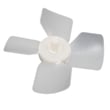
- If the fan motor is running but airflow is weak or noisy, inspect the fan blade.
- If the fan is not running at all, the motor or wiring may be at fault.
Helpful parts for airflow-related repairs on this model include the refrigerator evaporator fan blade 5308000010 and the refrigerator defrost bi-metal thermostat 5303918202.
Why it matters
A freezer that is not freezing can quickly put food safety at risk and can also force the compressor to run longer than normal. Correct control settings and clear airflow often restore normal cooling without major repairs.
Last updated: January 2026
How to fix a Frigidaire refrigerator door alignment?
On the Frigidaire FRT21IL4FW7 top-mount refrigerator, door alignment is corrected by leveling the cabinet first, then adjusting the hinges so the doors sit square and seal evenly. Most “crooked door” issues come from front rollers or leveling screws being out of adjustment. See the FRT21IL4FW7 installation guide for the exact leveling procedure.
Step-by-step: level first, then align
- Unplug the refrigerator for safety.
- Remove the toe grille.
- Adjust the front rollers or front leveling screws until all four corners rest firmly on the floor.
- Recheck door swing and gaps; many alignment issues correct once the cabinet is level.
- If the doors still look off, loosen hinge screws slightly, reposition the door, then retighten.
- If the door was recently removed, confirm the plastic washer is on the center hinge pin.
Hinge checks that commonly fix “sagging” doors
Use the hinge steps shown in the FRT21IL4FW7 owner’s manual to verify the hinge stack-up and alignment.
- Top hinge cover is seated and hinge screws are tight
- Center hinge pin is tightened with an adjustable wrench
- Center hinge and shim are positioned correctly (shim not trapped or missing)
- Bottom hinge pin is in the correct hole and fully tightened
- Door stops are installed on the correct side and not interfering with closing
Quick diagnosis table
| What you see | Most likely cause | What to do |
|---|---|---|
| Doors look tilted, cabinet rocks | Refrigerator not level | Adjust front rollers/leveling screws, then recheck |
| Freezer door rubs or gap is uneven | Top hinge shifted | Loosen, align door, tighten top hinge |
| Fresh food door sits low | Center hinge pin/washer issue | Confirm washer, tighten center hinge pin |
| Door won’t seal evenly | Cabinet not square or gasket not seating | Level cabinet; warm and reshape gasket if needed |
Why it matters
Proper door alignment helps the gasket seal, which prevents warm air leaks, frost buildup, temperature swings, and longer compressor run time. A level cabinet also reduces hinge wear and makes the doors close more reliably.
Last updated: January 2026
What is the most common problem with a Frigidaire refrigerator?
The most common Frigidaire refrigerator problem is poor cooling (warm fridge or freezer), usually caused by airflow restrictions, dirty condenser areas, or a failing fan. On the Frigidaire FRT21IL4FW7, start with basic power and temperature checks, then inspect airflow and ice buildup.
Most common symptoms we see
- Refrigerator section warm but freezer cold
- Freezer warming up or thawing
- Loud humming, buzzing, or fan noise (some operating sounds are normal)
- Frost buildup on the freezer back wall
- Ice maker not making ice (if equipped)
Quick checks that fix many “not cooling” calls
- Make sure the plug is fully seated in the outlet and the unit is getting steady power.
- Confirm the temperature control is not set to "O" (off).
- Wait 20 minutes if it just stopped; it may be in a defrost cycle.
- Allow 24 hours after changing settings for temperatures to stabilize.
- Keep vents clear inside both compartments so air can circulate.
What to check next (common root causes)
| What you notice | Likely cause | What to do |
|---|---|---|
| Frost blanket in freezer | Defrost system issue | Check for heavy ice; inspect defrost components and airflow |
| Warm fridge, freezer OK | Evaporator fan or airflow issue | Listen for fan operation; check for obstructions |
| No ice production | Water supply or ice maker issue | Verify water pressure, valve operation, and ice maker function |
| Runs a lot, weak cooling | Dirty condenser area or poor ventilation | Clean dust buildup and improve airflow around the cabinet |
Parts that commonly relate to these problems
If troubleshooting points to a failed component, these are common on this model:
- Refrigerator evaporator fan motor 241854401 (moves cold air through the refrigerator)
- Refrigerator defrost bi-metal thermostat 5303918202 (helps control defrost heating)
- Refrigerator ice maker assembly 241798231 (if your unit has an automatic ice maker)
Why it matters
Cooling problems usually get worse over time. Catching airflow restrictions, defrost ice buildup, or a weak fan early helps protect food, reduces run time, and can prevent compressor strain.
For model-specific operating guidance and safety steps (like unplugging before cleaning or replacing a bulb), use the FRT21IL4FW7 owner's manual.
Last updated: January 2026