Error Codes


How do I tell what model my Kenmore dryer is?
Your Kenmore dryer’s model number is printed on the appliance’s ID label; for Kenmore 11096581210, it’s typically inside the door opening on the cabinet frame, or on the back panel. Once you have the full model number, we can match the correct parts and diagrams.
Where to look for the model number label
Check these common spots on Kenmore electric dryers:
- Inside the dryer door opening (on the cabinet frame near the latch)
- On the back panel of the dryer cabinet
- Along the door opening edge near the top or bottom
- On the side panel near the front (less common)
- Sometimes behind the lint screen housing area (varies by design)
What the model number looks like (and why it matters)
Kenmore model numbers are usually a long string of digits. For many Kenmore dryers, the first three digits (such as 110) identify the manufacturing source, which helps ensure you get compatible items like a belt, thermostat, or door switch.
Quick ID checklist
- Write the model number exactly as shown (include all digits)
- Also record the serial number (useful for production variations)
- Use the model number to confirm fit before ordering parts
Common label types
| What you see on the label | What it’s used for | Example |
|---|---|---|
| Model number | Parts lookup and diagrams | 11096581210 |
| Serial number | Production run details | Varies |
| Electrical ratings | Power requirements | Varies |
If the label is missing or unreadable
If the sticker is damaged, we use other clues to narrow it down, then confirm with parts that match your dryer’s design.
- Check the back panel for a second label
- Look for a stamped plate around the door opening
- Compare your dryer’s door style and controls to common Kenmore layouts
- Match a known part from your dryer to a listing (for example, a belt or door switch)
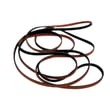
A common “fit-check” part on this model family is the drum belt 341241.
Why it matters
Using the exact model number prevents ordering the wrong Kenmore dryer parts, especially for items that look similar but differ in length, mounting, or wiring (like a timer, operating thermostat, or door switch).
Last updated: February 2026
What are the most common issues with 11096581210?
The most common problems we see with Kenmore electric dryer model 11096581210 are no heat, won’t start, won’t tumble, long dry times, and loud squealing or thumping. Many of these trace back to airflow restrictions or worn drum drive parts.
Most common symptoms and likely causes
- Long dry times or overheating: blocked venting, lint buildup, damaged blower wheel
- No heat: failed heating circuit safety components, thermostat issues, loose/burned wiring
- Won’t start: door switch not closing, start switch failure, timer or motor issue
- Won’t tumble: broken belt, seized idler pulley, motor problem
- Squealing or grinding: idler pulley wear, drum support wear, belt glazing
Parts to check first (based on the symptom)
| Symptom | High-probability parts to inspect |
|---|---|
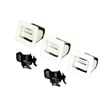
| Won’t start | Dryer door switch W10820036, dryer push-to-start switch WP3395382, dryer timer WP3398190 |
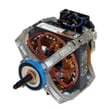
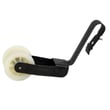
| Won’t tumble | Drum belt 341241, dryer idler pulley WP691366, drive motor 279827 |
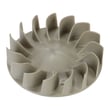
| Poor airflow, noise | Dryer blower wheel WP694089, dryer lint chute assembly W11117429 |
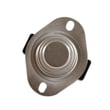
| Temperature cycling issues | Dryer operating thermostat WP3387134, temperature switch WP3399639 |
Fast checks you can do before replacing parts
- Clean the lint screen and confirm the screen housing is not packed with lint
- Run a timed dry cycle and check airflow at the outside vent hood
- Inspect the vent for kinks, crushing, or excessive length
- Listen for a motor hum with no drum movement (often belt or idler related)
- Unplug power and check for heat discoloration at the cord connection area
Why it matters
Fixing airflow first prevents repeat failures. Restricted venting makes an electric dryer run hotter and longer, which stresses thermostats, wiring, and the motor drive system.
Last updated: March 2026
What is the average lifespan of 11096581210?
A Kenmore electric dryer like model 11096581210 typically lasts 13 years with normal household use. Keeping airflow strong (clean lint screen, clear venting) and replacing wear items early helps this dryer reach its full service life.
What affects lifespan most
- Vent restriction (long runs, crushed flex vent, clogged exterior hood)
- Overloading, which strains the drum support and belt
- Heat stress from cycling issues (thermostat problems, poor airflow)
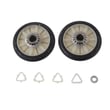
- Worn drum drive parts (belt, idler pulley, rollers)
- Electrical connection issues at the terminal block
Parts that commonly wear during the dryer’s life
If the drum stops turning, squeals, or thumps, these are typical wear items to check first:
Quick maintenance schedule (simple but effective)
| Task | How often | Why it matters |
|---|---|---|
| Clean lint screen | Every load | Improves airflow and drying time |
| Clean vent duct and outside hood | Every 6 to 12 months | Reduces overheating and cycling stress |
| Check drum noises and belt condition | Yearly | Catches wear before a breakdown |
| Verify tight, clean power cord connections | As needed | Prevents heat damage at wiring |
Why it matters
Most “short lifespan” complaints trace back to restricted airflow or ignored wear parts. Good airflow keeps temperatures stable, protects the heating circuit, and reduces strain on the motor and belt.
Last updated: March 2026