Installation guide
 Owner’s manual


How to identify a Kenmore washer model?
Your Kenmore washer model number is printed on the appliance ID label; for model 40249032012, use that exact number when ordering parts or looking up troubleshooting steps in the 40249032012 owner's manual. On most Kenmore washers, the label is inside the door opening (front-load) or under the lid (top-load).
Where to look on the washer
Check these common ID-label locations first:
- Inside the door opening around the door frame (front-load washers)
- Under the lid on the rim of the tub opening (top-load washers)
- On the back panel near the power cord entry
- Along the side of the cabinet near the control panel area
- Behind the lower access panel on some front-load designs
What the model number looks like (and why it matters)
Kenmore model numbers are typically a long string of numbers (often 11 or more characters). Using the full model number helps us match the correct diagrams and parts, such as a water inlet valve, drain pump, or door lock.
Quick ID checklist
- Write the model number exactly as shown (include all digits)
- Take a clear photo of the label before it wears or smudges
- Use the model number (not just “Kenmore washer”) when searching parts
- If there is also a serial number, record it separately
Model number vs. serial number
| Label item | What it’s used for | Example format |
|---|---|---|
| Model number | Parts lookup and repair info | 40249032012 |
| Serial number | Manufacturing tracking | Letters and numbers (varies) |
Why it matters
Kenmore washers can look similar across multiple series, but internal components and wiring can differ. The correct model number prevents ordering the wrong door boot, motor, or control panel and reduces install and return issues.
Last updated: February 2026
How to unclog drain hose on Kenmore washer?
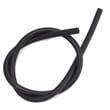
For Kenmore washer model 40249032012, we unclog the drain hose by safely disconnecting it, clearing the blockage, and reinstalling it without kinks. The installation requirements also matter: the standpipe must be at least 18 inches high and the drain connection must not be airtight (see the 40249032012 installation guide).
Safety first
- Unplug the washer from the 120V grounded outlet.
- Turn off both water faucets.
- Keep a shallow pan and towels ready for spillover.
- If the washer is full of water, drain it from the pump filter area first (see the 40249032012 installation guide).
Steps to unclog the drain hose
- Pull the washer forward carefully so you can reach the hose.
- Detach the drain hose from the standpipe or laundry tub.
- Check the hose end for lint, coins, socks, or sludge; remove debris by hand.
- Flush the hose with hot water; for buildup, soak the hose end in hot water with vinegar for 20 to 30 minutes, then flush again.
- Reinstall the hose so it is not twisted or tangled and has a smooth path to the drain.
Reinstall it the right way (prevents repeat clogs)
The drain setup can cause slow draining even when the hose is clear.
- Keep the standpipe 18 inches (46 cm) minimum.
- Make sure the drain hose to standpipe connection is NOT airtight.
- Avoid sharp bends; keep the hose unkinked.
- If the hose cannot be elevated conveniently, support it with the provided hose guide/support.
| What you see | Most likely cause | What we do |
|---|---|---|
| Water drains slowly | Partial clog or kinked hose | Clear hose, reroute to remove kinks |
| Washer stops and won’t drain | Pump filter packed with debris | Drain and clean pump filter |
| Gurgling or siphoning | Airtight standpipe connection | Reinstall with an air gap |
When a part is the real issue
If the hose is clear and the washer still will not drain, the drain pump can be failing or jammed. For this model, a common replacement is the samsung washer drain pump DC96-01585D.
Why it matters
A restricted drain hose can trigger drain errors, leave clothes soaking wet, and strain the drain pump. Correct hose routing and a non-airtight standpipe connection help the washer drain consistently.
Last updated: February 2026
What is the average lifespan of a Kenmore washer?
A Kenmore washer typically lasts 10 to 15 years with normal household use and basic maintenance. For your Kenmore model 40249032012, keeping the washer properly leveled, using correct installation practices, and cleaning the drain filter on schedule are the biggest factors that help it reach that range (see the 40249032012 installation guide).
What affects washer lifespan most
- Installation and leveling: an unlevel washer vibrates harder and wears bearings, suspension, and tub components faster.
- Drain system care: a clogged filter or restricted drain increases pump strain and can cause slow-drain problems.
- Load habits: frequent overloading and heavy items (rugs, comforters) accelerate wear.
- Detergent use: too much detergent can cause residue buildup and odors.
- Water quality: hard water can contribute to mineral buildup in valves and hoses.
Maintenance schedule we recommend
The installation instructions for this washer call out regular filter cleaning and proper leveling. Use this simple routine:
| Task | How often | Why it matters |
|---|---|---|
| Clean the drain filter | Every 2 months | Prevents drain pump strain and slow draining |
| Check leveling and lock nuts | Every 6 months | Reduces vibration and long-term mechanical wear |
| Inspect inlet hoses for bulges/cracks | Yearly | Helps prevent leaks and water damage |
| Run a cleaning cycle (empty, hot) | Monthly | Helps reduce residue and odor |
Signs it is near end-of-life
- Loud rumbling or grinding during spin
- Repeated out-of-balance shaking even after leveling
- Frequent drain issues or standing water after cycles
- Leaks from the door area or underneath the cabinet
- Multiple recurring error codes or cycle interruptions
Why it matters
A washer that is level, drains freely, and is not overloaded runs with less vibration and less pump stress. That directly reduces wear on high-cost components like the drive system and tub assembly, helping your Kenmore 40249032012 stay reliable longer.
Last updated: February 2026
What is the cubic foot of my Kenmore washer model 40249032012?
The exact tub capacity (cubic feet) for Kenmore washer model 40249032012 is listed in the product specifications section of the 40249032012 owner's manual. If you are comparing fit or load size, most Kenmore front-load washers of this design typically fall in the 3.0 to 4.5 cu. ft. range.
Where to find the cubic feet rating
We recommend checking the specifications page in the manual first because it’s the model-specific source.
- Look for “Capacity”, “Tub capacity”, or “Cubic feet (cu. ft.)”
- Check the specifications or features section (often near the back)
- If the manual lists dimensions but not capacity, check for a model spec table
- Use the model number 40249032012 to confirm you are reading the correct document
Quick sizing guidance (typical front-load capacity)
If you need a practical estimate for planning loads, here’s how common capacity ranges usually translate:
| Typical capacity range | Best for | Example loads |
|---|---|---|
| 3.0 to 3.5 cu. ft. | Small to medium households | 8 to 12 bath towels |
| 3.6 to 4.2 cu. ft. | Medium households | Queen sheet set plus towels |
| 4.3 to 4.5 cu. ft. | Larger loads | Bulky items (one at a time) |
Why it matters
Capacity affects how much laundry you can wash per cycle, how well items tumble for cleaning, and how likely you are to see out-of-balance vibration during spin. Overloading can also increase strain on the drive system and suspension.
Related setup tip that impacts real-world “usable capacity”
A washer that is not level can shake or stop during high-speed spin, which effectively reduces how much you can wash comfortably. The installation guide explains how to level the washer and run a spin test with a real load.
Last updated: February 2026
When was the Kenmore 90 series washer made?
Kenmore “90 Series” washers were produced across multiple years (not a single build year), and the exact manufacture date depends on the specific model number and serial number. For your Kenmore washer model 40249032012, use the serial number lookup details in the 40249032012 owner's manual to identify the unit’s production date.
How to find the manufacture date on your washer
Most Kenmore washers list the model and serial on a rating label; the serial format is what ties to a date code.
- Unplug the washer before reaching around the cabinet or opening panels.
- Check the door opening area (front-load) or under the lid (top-load) for the rating label.
- Also check the rear panel if you do not see a label in the opening.
- Write down the full MODEL and SERIAL exactly as shown.
- Use the manual’s “model and serial number” section to interpret the serial/date code.
90 Series vs. your model number (why this matters)
“90 Series” is a marketing line used on several Kenmore washers. The model number is what determines the platform, parts, and documentation.
| What you have | What it tells us | What to do next |
|---|---|---|
| “Kenmore 90 Series” label | Product line only | Confirm the exact model number |
| Model 40249032012 | Exact parts and service match | Use the manual to decode the serial |
| Serial number | Build date code | Record it before ordering parts |
If you are asking because you need parts
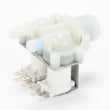
Once you confirm the model and serial, match parts by model (not by “90 Series”). For example, water fill problems often point to a water inlet valve such as DC62-30314K or DC62-30312J; installation and hose connection basics are also covered in the 40249032012 installation guide.
Quick checks that help date and diagnose at the same time
- Confirm the washer is level and stable (rocking can mimic “old washer” problems).
- Verify shipping bolts were removed if it was recently moved.
- Check inlet hose connections are not swapped (hot vs. cold).
- Inspect for leaks at the faucet and valve connections.
- Clean the drain pump filter periodically (many front-load designs recommend about every 2 months).
Why it matters
Knowing the exact manufacture date helps you choose the right repair approach, confirm compatibility for parts like a door lock or drain pump, and avoid ordering by a broad series name that spans multiple designs.
Last updated: February 2026