 Installation guide
 Owner’s manual
 Error Codes


How do I reset a Frigidaire washer?
To reset your Frigidaire washer model LWS3312DS0, stop the current cycle by pushing in the cycle selector knob, then select a new cycle and restart. This clears most “stuck cycle” situations and gets the washer running normally.
- Push in the cycle selector knob to stop the washer.
- Wait about 1 minute if the tub was spinning; the lid lock can stay engaged briefly.
- Turn the cycle selector knob clockwise to the desired setting.
- Close the lid (the tub will not spin unless the lid is closed).
- Pull out the knob to restart the washer.
For the exact control and cycle details for your unit, follow the steps in the LWS3312DS0 owner's manual.
These checks address the most common causes after a “reset” attempt:
- Confirm the lid is fully closed; spinning requires the lid closed and the lid lock working.
- If the washer stopped during spin, wait for the lid lock to release (about 1 minute) before trying again.
- Verify power at the outlet and that the circuit breaker or fuse is on.
- Run a complete cycle after restoring power to confirm proper operation.
- Look for draining issues (standing water can prevent normal cycle progression); inspect the drain hose for kinks.
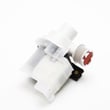
If you suspect a drain problem, the washer drain pump 137221600 is the model-matched pump commonly replaced when the washer will not drain or stalls mid-cycle.
On the LWS3312DS0, a reset is typically a control action (stop, reselect, restart) rather than a hidden button sequence. The washer’s design also includes a safety lid lock that prevents spinning with the lid open, which can look like the washer is “not responding” until the lid is closed.
| What you see | Most likely check | What to do next |
|---|---|---|
| Washer agitates but will not spin | Lid not closed or lid lock timing | Close lid; wait 1 minute after spin stops; restart cycle |
| Washer will not start at all | Power supply issue | Check breaker/fuse; confirm outlet power |
| Washer stops with water in tub | Drain restriction or pump issue | Check hose for kinks; consider drain pump diagnosis |
Resetting the washer the correct way prevents forcing the lid while locked, reduces repeat cycle interruptions, and helps you quickly narrow the issue to power, lid lock behavior, or draining.
Last updated: January 2026
How to fix E2 error in Frigidaire washing machine top load?
On the Frigidaire LWS3312DS0 top-load washer, an E2 error is most often tied to a drain problem (the washer cannot pump water out fast enough). Start by checking the drain hose installation and the drain path for kinks or clogs, then inspect the drain pump if the problem continues. See the LWS3312DS0 owner's manual for operating and safety guidance.
- Unplug the washer (or switch off power at the breaker) before inspecting parts.
- Make sure the drain hose is not kinked, crushed, or pinched behind the washer.
- Confirm the drain hose end is formed into a “U” shape and positioned correctly at the standpipe or laundry tub (a poor drain-hose setup can cause slow draining).
- Check the standpipe or laundry tub drain for a clog (a slow household drain can look like a washer failure).
- Run a rinse and spin cycle to see if draining improves after correcting the hose and drain.
If the hose and household drain are clear but the washer still will not drain, the drain pump or internal drain path is the next place to focus.
Common symptoms and what they point to:
- Hums but does not drain: pump impeller jammed or pump failing
- Drains slowly: partial blockage in hose, tub-to-pump path, or weak pump
- Leaks during drain: loose hose connection or damaged drain hose
| What you observe | Most likely cause | What to do next |
|---|---|---|
| Water stays in tub | Blocked/kinked drain hose or clogged standpipe | Correct hose routing; clear standpipe |
| Pump runs but little/no water exits | Pump jammed or failing | Inspect pump area; replace pump if needed |
| Drains but stops mid-cycle | Intermittent drain restriction | Recheck hose height/routing; clear restrictions |
A washer that cannot drain properly may not spin, may leave clothes soaking wet, and can strain the pump and drive system over time. Fixing the drain path first is the quickest, lowest-cost way to clear an E2 error.
Last updated: January 2026
How to fix E41 error on washing machine?
On the Frigidaire LWS3312DS0 washer, an E41 error typically points to a lid lock or lid-closed sensing problem, so the washer may not spin or complete the cycle until the lid is fully closed and the lock system is working correctly. Use the troubleshooting steps below and confirm normal lid-lock behavior in the LWS3312DS0 owner’s manual.
- Push the lid down firmly and try restarting the cycle.
- Make sure no clothing is caught between the lid and the top.
- Wait about 1 minute after the tub stops before trying to open the lid; the lid can stay locked briefly after spin.
- If the washer will not start, verify the outlet has power and the breaker is not tripped.
E41-style lid/lock errors are usually caused by one of these issues:
- Lid not closing squarely (hinge or cabinet alignment issue)
- Lid lock mechanism sticking or damaged
- Loose or damaged wiring to the lid lock circuit
- Control not “seeing” the lid-closed signal
If the washer fills and agitates but will not spin, that strongly supports a lid lock or lid-closed sensing issue.
- Disconnect power before any inspection.
- Open and close the lid several times; listen for a consistent lock/unlock action.
- Check for obvious damage around the lid strike area and top panel.
- If you can access the wiring harness safely, look for loose connectors or pinched wires.
- Restore power and run a short cycle to see if the error returns.
If the lid is closing properly and wiring looks intact but the error persists, the lid lock system is the most likely repair path.
| Symptom | Most likely direction | What to do next |
|---|---|---|
| Won’t spin, lid must be forced to close | Lid alignment/strike issue | Re-seat lid, check hinges and cabinet level |
| Intermittent error, works sometimes | Lock sticking or loose connection | Inspect lock area and harness connections |
| Error returns immediately after start | Failed lid lock/switch circuit | Test lid lock circuit per manual guidance |
Your LWS3312DS0 is designed so the tub will not spin unless the lid is closed and the safety lid lock system is working. Fixing the lid/lock issue restores safe operation and prevents incomplete cycles.
Last updated: January 2026
How do I get my Frigidaire washer to drain?
To get your Frigidaire washer model LWS3312DS0 to drain, set the timer to a Spin setting and start the cycle so the drain pump can remove water through the drain hose. For model-specific cycle and control details, use the LWS3312DS0 owner's manual.
- Turn the cycle selector to Spin.
- Pull the knob (or press Start, depending on your control style) to begin spinning and draining.
- Let it run about 1 minute to push water out.
- If the tub is still full, stop the washer and check the drain hose and standpipe for a blockage.
- If the washer hums but does not drain, the drain pump or an obstruction is the next place to check.
A washer can fail to drain if the drain hose is kinked, crushed behind the cabinet, or not positioned correctly in the standpipe.
- Make sure the drain hose end is formed into a "U" shape and points toward the drain.
- Confirm the hose is not pushed so far down the standpipe that it seals and causes siphoning or slow drain.
- Verify the washer is level and not rocking; excessive vibration can shift the hose position over time.
| What you see | Likely cause | What to do |
|---|---|---|
| Tub full, no water movement | Clog in hose/standpipe | Clear standpipe, inspect hose for kinks |
| Hums, drains slowly | Partial blockage or weak pump | Check for debris; consider pump replacement |
| Drains, then refills or won’t finish | Drain hose inserted too deep | Reposition hose to allow air gap |
If the hose and standpipe are clear and the washer still will not drain, the drain pump is a common failure point on this model.
- Consider replacing the washer drain pump 137221600 if the pump is noisy, seized, or not moving water.
- If you find cracks, soft spots, or internal collapse in the hose, replace the washer drain hose 134592700.
A washer that cannot drain will not spin properly, can leave clothes soaking wet, and can trigger overflow or siphoning problems. Getting the drain path (pump, hose, standpipe) working correctly restores normal wash and spin performance.
Last updated: January 2026



