Owner’s manual
 Error Codes
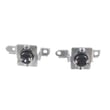


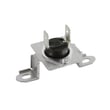

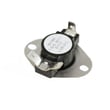
How do I know if my Kenmore dryer thermal fuse is blown?
If your Kenmore Elite dryer model 79681983410 runs but won’t heat, or won’t run at all, a blown thermal fuse is a common cause. The sure way to know is to unplug the dryer and test the fuse for continuity with a multimeter as outlined in the 79681983410 owner's manual.
Quick symptoms that point to a blown thermal fuse
A thermal fuse is a one-time safety device; when it opens, it stops heat (and on some designs can stop the motor) to prevent overheating.
Common signs include:
- Dryer will not start even though the outlet has power
- Dryer runs but produces no heat (electric or gas)
- Cycle ends early or clothes stay damp because heat shuts down
- You recently had restricted airflow (clogged lint, crushed vent, blocked outside damper)
- You see airflow warnings such as a blinking CHECK VENT indicator during operation
How we test it (basic continuity check)
- Unplug the dryer (or switch off the breaker) before opening any panels.
- Access the thermal fuse area (location varies by design); follow the access steps in the 79681983410 owner's manual.
- Pull one wire off the fuse terminal so you do not backfeed through the circuit.
- Set your multimeter to continuity (or the lowest ohms scale).
- Touch a probe to each terminal.
- Good fuse: continuity (meter beeps or reads near 0 ohms)
- Blown fuse: no continuity (no beep, OL, or very high resistance)
What to do if the fuse is blown
Replacing the fuse without fixing the overheating cause usually leads to another failure.
Check these airflow items first:
- Clean the lint screen and lint screen housing
- Inspect the vent duct for lint buildup, kinks, or crushing
- Confirm the outside vent hood opens freely
- Keep the duct run as short and straight as possible
Airflow vs. heat problem: quick guide
| What you see | Most likely issue | What we check first |
|---|---|---|
| Runs, no heat | Heating circuit or safety device opened | Venting, thermostats, heater |
| Long dry times | Restricted exhaust airflow | Duct, damper, lint buildup |
| CHECK VENT blinking | Restricted or blocked airflow | Exhaust system condition |
Why it matters
A blown thermal fuse usually means the dryer overheated. Restoring proper venting protects the heating system, improves drying performance, and helps prevent repeat shutdowns.
Last updated: February 2026
How do I reset my Kenmore Elite dryer?
To reset your Kenmore Elite dryer model 79681983410, we recommend doing a simple power reset: turn the dryer off, unplug it (or switch the breaker off) for about 5 minutes, then restore power and press POWER to restart.
Quick reset steps (power reset)
- Press POWER to turn the dryer off.
- Unplug the dryer from the outlet (or turn the circuit breaker off).
- Wait 5 minutes.
- Plug the dryer back in (or turn the breaker on).
- Press POWER, select a cycle, then press START/PAUSE.
If you want the exact control-panel sequence for your dryer, follow the control descriptions in the 79681983410 owner's manual.
If it still will not start after a reset
A reset clears many temporary control glitches, but it will not fix a failed switch, control, or power supply issue. Check these common causes next:
- Door not fully closed: the dryer will not start if the door switch is not made.
- Control lock enabled: some models lock the controls by pressing and holding CHIME for 3 seconds.
- Power supply problem: a tripped breaker, blown fuse, or incorrect cord wiring can prevent operation.
- Paused cycle: press START/PAUSE to resume if the cycle was paused.
- Error code present: use the display code to guide troubleshooting.
What to check first (fast triage)
| What you see | What it usually means | What to do |
|---|---|---|
| Dryer turns off after sitting | Auto shutoff after being stopped | Press POWER again, then START/PAUSE |
| Display shows PS (electric) | Power cord wired incorrectly | Recheck terminal block wiring and neutral position |
| Display shows nP or gAS | Power cord issue or gas supply off | Verify cord wiring; confirm gas shutoff valves are open |
Why it matters
A proper reset is the fastest way to clear a temporary control-state issue. If the dryer still will not run, the next checks focus on the most common “no start” blockers: door switch, control lock, and incoming power.
For code-based troubleshooting, we also use the Kenmore elite dryer error codes guide to match the display code to the most likely cause.
Last updated: February 2026
How to remove Kenmore dryer panel?
To remove the cabinet panels on your Kenmore Elite dryer model 79681983410, we unplug the dryer first, then remove the top fasteners and front-panel screws so the front panel can lift off its lower tabs. Use the step order in the 79681983410 owner's manual to protect clips and wiring.
Before you start
- Unplug the dryer or switch off the breaker.
- Let the dryer cool completely if it was running.
- Pull the dryer forward so you do not crush the exhaust duct.
- Use a Phillips screwdriver; keep screws grouped by location.
- Wear gloves; cabinet edges are sharp.
Typical top and front panel removal (common on 796-style Kenmore Elite dryers)
- Remove the lint screen; remove any screws near the lint screen opening (if present on your configuration).
- Remove screws along the back edge of the top panel; slide the top back slightly, then lift it off.
- If needed, remove control panel mounting screws; rotate the control panel up and support it so the harness is not strained.
- Insert a flat screwdriver between the upper and lower front panel seams to release the retaining clips.
- Remove front panel screws (often inside the door opening or along the top edge).
- Lift the front panel up and off the lower locating tabs; unplug the door switch connector if it limits movement.
What to disconnect (quick guide)
| What you see | What we do | Why it matters |
|---|---|---|
| Door switch wiring | Unplug before fully removing the front panel | Prevents a no-start issue from damaged wires |
| Control panel harness | Leave connected if the panel can rest safely | Reduces miswiring risk |
| Tight vent duct | Avoid bending or crushing it | Helps prevent long dry times |
If you are opening the dryer for a common repair
- Thumping or squealing: inspect the dryer drum support roller 4581EL2002H.
- Drum not turning: check the dryer drum belt 4400EL2001D and idler path.
- Poor drying: vacuum lint inside the cabinet and confirm the vent is clear.
Why it matters
Correct panel removal prevents broken tabs, protects the user interface wiring, and gives safe access to wear parts like rollers, the belt, and thermostats.
Last updated: February 2026
What are the codes for Kenmore Elite dryer?
Kenmore Elite dryer error codes are short messages (letters and numbers) shown on the display to point to a specific problem such as a power issue, wiring problem, control lock, or a temperature sensor failure on model 79681983410. Use the code to guide quick checks before replacing parts.
Common Kenmore Elite dryer codes and what they mean
Here are codes you may see and the most common meaning:
- PF: Power failure during a cycle.
- CL: Control lock is turned on (buttons appear disabled).
- tE1 to tE7: Temperature sensor (thermistor) failure.
- PS (electric models): Power cord wired incorrectly (neutral and L2 issue).
- nP (electric models): Power cord connection problem.
- gAS (gas models): Gas supply is off or gas service issue.
For the full list and model-family details, use the 79681983410 owner's manual.
What to do first (safe, fast checks)
We recommend these steps before ordering parts:
- Unplug the dryer (or switch off the breaker) for 2 minutes, then restore power to clear a one-time glitch.
- If you see PF, check the house breaker and the outlet for a loose plug.
- If you see CL, press and hold CHIME for 3 seconds to toggle Control Lock.
- If you see PS or nP, recheck the terminal block wiring and strain relief (electric dryers).
- If you see gAS, confirm both the house gas shutoff and dryer shutoff valves are fully open (gas dryers).
When a code points to a heating or sensor problem
Codes like tE1 to tE7 often relate to temperature sensing and airflow. If the dryer is also not heating or is overheating, these parts are commonly involved:
| Symptom | Most likely area | Example part for this model |
|---|---|---|
| No heat or heat cuts out | Heating circuit safety devices | Dryer thermal cut-off fuse kit 383EEL9001C |
| Poor temperature control | Temperature sensing | Dryer thermistor AGM30045804 |
| Overheating or shuts off | High-limit protection | Dryer high-limit thermostat 6931EL3003D |
Why it matters
Using the exact code helps prevent guesswork. For example, CL is a setting (no repair needed), while tE codes usually indicate a sensor or airflow issue that can affect drying time, fabric care, and heater safety.
Last updated: February 2026
What is the life expectancy of a Kenmore dryer?
Most Kenmore dryers, including the Kenmore Elite 79681983410, typically last about 13 years with normal household use. Consistent airflow maintenance (cleaning lint and keeping the vent clear) is the biggest factor in reaching that lifespan; overheating and long dry times shorten it.
What affects dryer lifespan the most
- Clean the lint screen after every load; restricted airflow is the most common cause of overheating.
- Keep the exhaust vent run short and unobstructed; long runs and crushed flex duct strain the heater and motor.
- Avoid overloading; heavy loads stress the drum, belt, and support rollers.
- Use the right cycle and dryness level; excessive heat and over-drying wear parts faster.
- Address new noises early; a squeal or thump often points to rollers, an idler, or a belt.
Quick maintenance schedule (simple and effective)
| Task | How often | Why it matters |
|---|---|---|
| Clean lint screen | Every load | Maintains airflow and drying performance |
| Check vent airflow at outside hood | Monthly | Prevents heat buildup and long dry times |
| Clean lint from cabinet and blower area | Yearly | Reduces overheating and protects components |
| Inspect drum support and belt wear | Yearly or when noisy | Prevents breakdowns and drum damage |
Parts that commonly wear as a dryer ages
These are normal wear items on many dryers; replacing them on time helps the dryer reach its full service life.
Why it matters
A dryer that runs hot or takes too long to dry usually is not “just getting old”; it is often fighting poor airflow. Fixing airflow and replacing worn drive parts reduces cycle time, lowers stress on the heating system, and extends the usable life of the Kenmore Elite 79681983410.
For model-specific use, care, and safety guidance, follow the 79681983410 owner's manual.
Last updated: February 2026
Where is the model number on a Kenmore Elite dryer?
On Kenmore Elite model 79681983410, the model and serial number are printed on an identification plate inside the dryer door opening. Open the door and look along the inner door frame area where the cabinet opening is.
Quick steps to find it
- Open the dryer door fully.
- Look on the cabinet frame just inside the door opening.
- Check the left and right sides of the opening, then the top edge.
- Use a flashlight; the plate can be easy to miss in low light.
- Write down both the model and serial number for parts lookup and service.
What the label typically looks like
Most Kenmore Elite dryers use a small sticker or metal plate with several lines of text.
| What you need | How it’s labeled | Why you need it |
|---|---|---|
| Model number | “Model No.” | Ensures you get the correct parts for your exact dryer |
| Serial number | “Serial No.” | Helps match production version and service information |
Why it matters
Kenmore Elite dryers often share similar styling across multiple model series (for example, 796.8198* and related versions). Using the exact model number from the door-opening identification plate prevents ordering the wrong dryer heating element, thermistor, or control board.
Where to confirm it in documentation
The location is also described in the 79681983410 owner’s manual.
Last updated: February 2026