Installation guide
 Owner’s manual
 Error Codes


How much does it cost to fix an F-06 error?
On Kenmore washer model 11026652500, the total cost to fix an F-06 error usually depends on whether you need a control part or just a wiring repair. Most repairs land in the $0 to $350 range (parts plus labor), with the exact total confirmed by the diagnostic steps in the 11026652500 owner's manual.
Typical cost ranges (parts and labor)
Costs vary by what actually failed and whether you DIY or hire service.
- Loose connection or damaged wire: $0 to $50 (supplies only)
- Control-related repair (common for F-06 style faults): $150 to $300 for parts
- Professional labor (if you choose service): typically 1 to 2 hours
- Multiple issues (for example, control plus drive system wear): $250 to $450
| Scenario | What you pay for | Typical total |
|---|---|---|
| DIY reseat connectors | Time, basic tools | $0 to $50 |
| DIY part replacement | Part only | $150 to $300 |
| Service call + repair | Labor + part | $250 to $450 |
What we check first (fast, no-parts steps)
Before replacing anything, we focus on the most common, lowest-cost causes.
- Unplug washer; wait 1 minute, then restore power (simple reset)
- Check for a loose harness plug at the drive motor and control area
- Look for pinched, rubbed-through, or corroded wiring
- Confirm the lid closes firmly; a lid-related interruption can mimic drive faults
- Run a short cycle to see if the error returns consistently
Parts that are commonly involved when the washer will not run or spin
If the washer won’t agitate or spin after basic checks, these model-compatible parts are often part of the repair path.
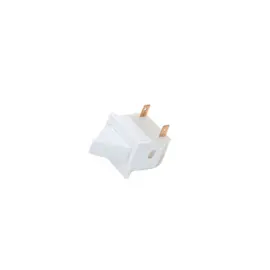
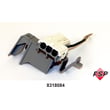
- Washer lid switch assembly WP8318084 (if the washer won’t run/spin with the lid closed)
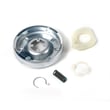
- Washer motor coupling 285753A (if the motor runs but the basket/agitator doesn’t move)
- Washer drive motor WP661600 (if the motor is not operating correctly)
Why it matters
An F-06 type error is often tied to the washer’s ability to sense and control the drive system. Fixing it early helps prevent repeat shutdowns, incomplete cycles, and extra wear on the clutch, coupling, and motor.
Last updated: February 2026
How to do a hard reset on a Kenmore washer?
For Kenmore washer model 11026652500, a hard reset is a simple power reset: unplug the washer (or switch off the breaker) for 1 minute, then restore power and start a cycle. This clears minor control glitches and gets the timer and cycle start logic back to normal.
Hard reset steps (power reset)
- Press the cycle control knob in to stop the washer.
- Unplug the washer from the outlet (or turn the breaker off).
- Wait 60 seconds.
- Restore power.
- Close the lid and pull the cycle control knob out to start.
- If the washer was mid-cycle, reselect the cycle and water level before restarting.
If it still acts up: quick checks that fix most “won’t start” complaints
Many “needs a reset” symptoms are actually a lid, drain, or load issue. We recommend these checks next:
- Confirm the lid is fully closed; a failed lid switch can stop agitation or spin.
- Make sure the washer drains freely; a partial clog can stall the cycle.
- Redistribute the load so it is even and not overloaded.
- Verify the washer is level; out-of-level cabinets can cause vibration and cycle problems.
- Confirm the water faucets are fully on.
Common parts related to reset-like symptoms
| Symptom | What to check | Model-matched part (if needed) |
|---|---|---|
| Won’t spin or stops when lid opens | Lid switch function | Washer lid switch assembly WP8318084 |
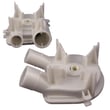
| Hums but won’t drain | Pump and drain path | Washer drain pump WP3363394 |
| Agitates poorly or “slips” | Agitator drive wear | Agitator dog 80040 |
Why it matters
A hard reset clears temporary electrical or timer confusion, but repeated “reset fixes it” behavior usually points to an underlying issue (lid switch, drain pump restriction, or an unbalanced load). Addressing the root cause prevents repeat stoppages and reduces wear on the drive system.
Where to confirm model-specific operating steps
For exact cycle-start and stop instructions for this washer, follow the procedure in the 11026652500 owner's manual.
Last updated: February 2026
How to identify a Kenmore washer model?
Your Kenmore washer model number is printed on the model and serial number label. For Kenmore model 11026652500, the 11026652500 owner's manual indicates the label is located under the washer lid, so lifting the lid is the fastest way to confirm the exact model for parts and service.
Where to look on Kenmore washers
Most Kenmore washers place the model/serial label in one of these spots:
- Top-load washers: under the lid (often along the rim of the opening)
- Front-load washers: inside the door opening (around the door frame)
- All styles: on the back panel near the power cord or control area
- Sometimes: behind the control console or on the cabinet side
What the model number looks like (and why it matters)
Kenmore model numbers commonly start with 110 and may include additional digits (for example, 11026652500). Using the full model number helps us match the correct washer parts, diagrams, and repair instructions.
Quick checklist before ordering parts
- Copy the model number exactly as shown (include all digits)
- Record the serial number too (useful for service and production date)
- Match the model number on your appliance to the one on your parts list
- Keep the information with your paperwork for future repairs
Model number vs. serial number
| Item | What it tells you | Used for |
|---|---|---|
| Model number | The exact washer design and parts fit | Ordering correct replacement parts |
| Serial number | Production details for that specific unit | Service history and identification |
Why it matters
Even small model number differences can change which lid switch, drain pump, timer, or agitator components fit your washer. Confirming the label first prevents wrong-part returns and speeds up troubleshooting.
Last updated: February 2026
Is it worth repairing a Kenmore washing machine?
For a Kenmore washer like model 11026652500, repairing is worth it when the fix restores reliable wash and spin performance for less than the cost of a comparable new washer, especially for common wear items such as the lid switch, drain pump, or motor coupling. Use the 11026652500 owner's manual to match symptoms to the right repair.
Quick way we decide: repair vs. replace
- Repair if the problem is isolated (no-spin, no-drain, won’t start) and the tub and basket are in good shape.
- Repair if the washer is otherwise quiet, doesn’t leak, and the cycle timer advances normally.
- Replace if you have repeated major failures (multiple expensive repairs in a short time).
- Replace if the cabinet is badly rusted or the tub/basket damage is severe.
- Repair if you can do the work yourself and the part cost is reasonable.
Common, cost-effective repairs on this model
These are frequent fixes that often bring an older Kenmore top-load washer back to normal operation:
| Symptom | Likely area | Example part for 11026652500 |
|---|---|---|
| Won’t spin or won’t start | Lid safety circuit | Washer lid switch assembly WP8318084 |
| Won’t drain, water left in tub | Drain system | Washer drain pump WP3363394 |
| Agitates poorly or “slips” | Agitator drive | Agitator dog 80040 |
| Motor runs but washer won’t move | Drive connection | Washer motor coupling 285753A |
Why it matters (and what the manual supports)
A washer lasts longer when loads are balanced and not overloaded, and when items can move freely during washing. Overloading and tangling can strain seams and components, which can turn a small repair into a bigger one. Those usage checks are called out in the 11026652500 owner's manual.
Before you spend money: 5 checks that save time
- Confirm the lid closes and latches firmly (a bad switch can stop spin).
- Check for standing water (points to a drain pump or blockage).
- Listen for motor running with no agitation/spin (often a coupling issue).
- Look for burning smell or repeated tripping (stop and inspect wiring and motor).
- Re-test with a small, balanced load to rule out overload-related symptoms.
Last updated: February 2026
Is it worth replacing a motor in a washing machine?
Yes, replacing the motor in your Kenmore washer model 11026652500 is worth it when the washer is otherwise in good shape and the total repair cost stays well below the cost of a comparable replacement washer. If the washer also has leaking, no-spin, or repeated breakdowns, replacement usually makes more sense.
Quick decision checklist
- The washer fills, drains, and spins normally when it does run (no major secondary symptoms).
- The tub and basket are solid (no severe rust, cracks, or wobble).
- You have not had multiple major repairs in the last 12 to 24 months.
- The motor failure is confirmed (not a lid switch, coupling, pump, or timer issue).
- The repair cost (parts plus labor) is comfortably under about half the price of a similar new washer.
What to check before you buy a motor
Many “bad motor” complaints on direct-drive Kenmore 110 top-load washers are caused by simpler parts. We recommend checking these first:
| Symptom | More common cause | Example part for this model |
|---|---|---|
| Motor runs but washer will not agitate or spin | Broken coupling between motor and transmission | Washer motor coupling 285753A |
| Washer will not drain, then won’t spin | Clogged or failed drain pump | Washer drain pump WP3363394 |
| Washer won’t spin or start with lid closed | Lid switch not closing electrically | Washer lid switch assembly WP8318084 |
| Agitator moves weakly or “ratchets” | Worn agitator dogs/cam | Agitator dog 80040 |
Why it matters
A motor is one of the higher-cost repairs. Confirming the real failure first prevents spending money on a drive motor when the actual problem is a coupling, lid switch, clutch, or drain pump.
Safety and installation notes
- Disconnect power before servicing; the installation instructions emphasize proper grounding and using a correctly grounded outlet.
- Do not reach into the washer if the tub or agitator is moving.
- Only perform repairs you understand and have the skills to carry out; follow the steps in the 11026652500 owner's manual.
Last updated: February 2026
What is the average lifespan of a Kenmore washer?
A Kenmore washer typically lasts 10 to 15 years with normal household use. For Kenmore model 11026652500, consistent care such as avoiding overloading, keeping loads balanced, and using bleach correctly helps you reach the high end of that range (see the 11026652500 owner's manual).
What affects washer lifespan the most
These are the biggest day-to-day factors that shorten or extend life on a top-load Kenmore washer:
- Overloading: loads should move freely during washing
- Unbalanced loads: repeated off-balance spinning strains the drive system
- Improper bleach use: undiluted bleach can damage fabrics and create cleanup issues
- Wear-and-tear parts: couplings, clutches, pumps, and lid switches commonly wear over time
- Installation basics: correct leveling and hookups reduce vibration and leaks (see the 11026652500 installation guide)
Typical lifespan by usage (quick guide)
| Usage pattern | Typical lifespan | What usually fails first |
|---|---|---|
| Light (1 to 3 loads/week) | 12 to 15 years | Lid switch, drain pump |
| Average (4 to 7 loads/week) | 10 to 13 years | Motor coupling, clutch |
| Heavy (daily loads) | 7 to 10 years | Drive components, suspension |
Parts that often extend the life of this washer
If performance changes (no spin, won’t drain, agitation issues), these model-compatible parts are common fixes:
- Washer motor coupling 285753A (helps restore agitation/spin when the motor runs but the tub does not)
- Washer drain pump WP3363394 (helps with slow or no draining)
- Washer lid switch assembly WP8318084 (helps when the washer won’t spin because the lid isn’t sensed as closed)
Why it matters
A washer that is overloaded or frequently out of balance wears the drive system faster and can turn a small, inexpensive repair into a larger breakdown. Following the loading and care guidance in the manual helps protect the basket, tub, and gearcase over the long term.
Last updated: February 2026