 Owner’s manual
 Error Codes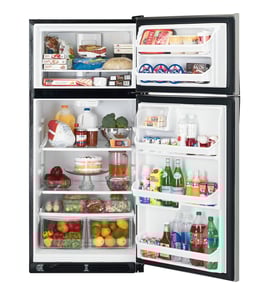



How to tell cubic feet of Kenmore refrigerator by model number?
For Kenmore model 11160612910, the capacity is 18.2 cu ft (total). You can confirm the exact capacity for your specific unit by checking the specifications section in the owner's manual.
Quick ways to confirm capacity (and when to use each)
- Use the manual specs: fastest and most accurate for model 11160612910.
- Check the rating label: many refrigerators list capacity on the interior data tag.
- Measure and calculate: helpful if labels are missing or unreadable.
- Compare model families: useful when you only have a partial model number (less precise).
Measure-and-calculate method (if you need it)
If you want to estimate cubic feet from interior space, measure the usable interior (not the outside cabinet):
- Measure width, height, and depth in inches for the refrigerator compartment.
- Multiply:
W x H x D = cubic inches. - Convert to cubic feet:
cubic inches ÷ 1728 = cubic feet. - Repeat for the freezer compartment and add the two results.
Typical accuracy
| Method | What you get | Accuracy |
|---|---|---|
| Manual specification | Manufacturer-rated total capacity | High |
| Interior measurement | Usable space estimate | Medium |
| Model-number guessing | Rough size class | Low |
Why it matters
Capacity (cubic feet) helps you choose the right replacement bins and shelves, plan food storage, and compare refrigerator sizes. It also prevents confusion between similar Kenmore 111-series models that look alike but have different internal volume.
If you’re troubleshooting display messages while checking specs, our Kenmore 111 model top freezer refrigerator error codes guide can help you match codes to common causes.
Last updated: February 2026
What is a top mount refrigerator?
A top-mount refrigerator is a classic fridge layout where the freezer compartment is on top and the fresh-food (refrigerator) compartment is below. Your Kenmore 11160612910 is a top-mount design, which typically offers straightforward storage and easy access to frozen items.
How a top-mount refrigerator is laid out
In a top-mount (also called top-freezer) refrigerator, you will usually see:
- Freezer section on the top with shelves or a bin
- Fresh-food section on the bottom with adjustable shelves and drawers
- Temperature controls located inside the fresh-food section or near the top
- Door bins for frequently used items (condiments, drinks, butter)
For model-specific features and control locations, use the owner's manual.
Why people choose a top-mount design
Top-mount refrigerators are popular because they balance freezer and refrigerator space without adding complex drawer mechanisms.
Common advantages include:
- Simple, familiar layout
- Typically lighter doors and fewer moving parts than drawer-style freezers
- Good freezer visibility at eye level
- Often easier to service basic items like door gaskets, shelves, and fans
Quick comparison: top-mount vs. bottom-freezer
| Feature | Top-mount refrigerator | Bottom-freezer refrigerator |
|---|---|---|
| Freezer position | Top | Bottom (drawer) |
| Fresh-food access | Lower | More at eye level |
| Typical feel | Simple, traditional | Convenience-focused |
| Common tradeoff | Bending for fresh food | Bending for freezer |
Why it matters for troubleshooting and parts
The freezer-on-top layout affects airflow and cooling. For example, cold air is produced at the evaporator (usually in/near the freezer) and circulated to the refrigerator section, so frost buildup or a weak evaporator fan can show up as “freezer cold, fridge warm.”
If you are diagnosing display codes or cooling issues on Kenmore model families, our Kenmore 111 model top freezer refrigerator error codes guide is a good starting point.
Last updated: February 2026
What is the top part of a fridge called?
In a Kenmore top-mount refrigerator like model 11160612910, the top section is the freezer compartment (often just called the freezer). It is designed to keep foods frozen and typically houses the ice maker area when equipped.
What you will see in the top (freezer) section
Common freezer-area components include:
- Freezer door and door gasket (seal)
- Freezer shelves or bins
- Ice maker (optional on many models)
- Air vents that move cold air between freezer and fresh food section
- Temperature control settings (location varies by design)
Freezer vs. refrigerator: quick comparison
| Compartment | Typical purpose | Typical temperature range |
|---|---|---|
| Freezer (top) | Long-term frozen storage, ice production | Around 0°F |
| Refrigerator (bottom) | Fresh food storage | Around 37°F to 40°F |
Why it matters
Knowing the correct name helps when you are reading troubleshooting steps, looking up error codes, or checking care and safety instructions in the owner's manual. It also makes it easier to describe issues like frost buildup, warm temperatures, or ice maker problems.
Helpful next steps if you are troubleshooting
If the “top part” is not freezing well, these checks usually help:
- Confirm the freezer temperature is set correctly
- Make sure vents are not blocked by packages
- Check the door gasket for gaps or tears
- Look for heavy frost on the back wall (possible defrost issue)
- Listen for the evaporator fan running when the door switch is pressed
For model-specific operation and safety details, use the owner's manual.
Last updated: February 2026





