Owner’s manual
 Error Codes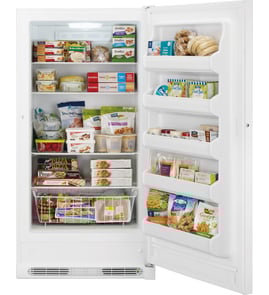

Where is the model number on a Kenmore upright freezer?
On a Kenmore upright freezer like model 5649235012, the model number is printed on a rating label inside the cabinet or on the cabinet frame. Common spots include the inside side wall, the ceiling area, behind the kick plate, or on the back of the unit; confirm the exact location in the owner's manual.
Most common places to check
- Inside the freezer on a side wall (often near the front opening)
- On the inside ceiling area
- On the cabinet frame around the door opening
- Behind the lower front kick plate or toe grille
- On the back exterior panel
What the label looks like and what to copy
The label typically includes both a model number and a serial number. Write down:
- Model number (for example: 5649235012)
- Serial number
- Date purchased (helpful for records)
| Item | What it’s used for | Example |
|---|---|---|
| Model number | Matching parts and diagrams | 5649235012 |
| Serial number | Identifying production run details | Varies |
Why it matters
We use the model number to match the correct Kenmore freezer parts list and troubleshooting info. Even small model differences can change the thermostat, door gasket, hinge parts, or electrical components.
Quick tip if you cannot find it right away
- Look for a paper or foil sticker near the door opening first
- Check low-front areas next (kick plate area)
- Check the back panel last (you may need a flashlight)
Last updated: February 2026
Is there a reset button on a Kenmore upright freezer?
Kenmore upright freezer model 5649235012 does not use a dedicated “reset button” for normal operation. If the freezer is acting up, the practical reset is a power reset: unplug it for a few minutes, then plug it back in and allow several hours to stabilize (we follow the operating guidance in the owner's manual).
How to reset it safely (power reset)
- Unplug the freezer from the wall outlet.
- Wait 5 minutes (this lets the control and compressor pressures equalize).
- Plug it back in.
- Set the temperature back to your normal setting (if your model has an adjustable control).
- Wait at least 4 hours before judging temperature performance.
What to check if it still will not cool correctly
These items cause “needs a reset” symptoms but are usually airflow, loading, or maintenance issues:
- Door not sealing fully; check the gasket for gaps and make sure the cabinet is level.
- Condenser coils dirty on the back; cleaning improves cooling efficiency.
- Warm room location; this freezer runs best around 65°F to 110°F ambient.
- Overloading right after restart; wait before adding a lot of unfrozen food.
- Frequent door openings; temperature swings are normal when the door is opened often.
Quick troubleshooting guide
| Symptom | Most common cause | Best first step |
|---|---|---|
| Freezer too warm | Door not fully closed or poor seal | Confirm door closes, level the freezer |
| Runs a lot after restart | Normal pull-down to temperature | Give it 4+ hours before rechecking |
| Moisture outside | Humid air from frequent openings | Reduce door-open time, check gasket |
Why it matters
A power reset clears minor control glitches and gives the refrigeration system a clean restart. Waiting the full cool-down time prevents unnecessary part replacement and helps you confirm whether the issue is maintenance (like dirty coils) or a true cooling problem.
For more model-specific operating and care details, use the owner's manual.
Last updated: February 2026
What's the average lifespan of an upright freezer?
An upright freezer typically lasts 10 to 15 years. For a Kenmore upright freezer like model 5649235012, keeping it in the right environment and maintaining airflow and cleanliness can push service life closer to the high end of that range.
Typical lifespan and what changes it
Most upright freezers fail early because they run too hot, run too often, or build up frost and airflow restrictions.
- Location temperature matters: heat makes the compressor run longer and wear faster
- Ventilation clearance matters: restricted airflow raises operating temperature
- Door seal condition matters: air leaks cause longer run times and frost
- Defrost system health matters: heavy frost can block airflow and reduce cooling
- Cleaning matters: dusty condenser areas increase heat and energy use
Model-specific setup that helps it last longer
Your 5649235012 manual calls out conditions that directly affect longevity.
| Setup item | What to do | Why it helps lifespan |
|---|---|---|
| Room temperature | Keep the freezer in a dry, ventilated area around 65°F to 110°F | Extreme temps shorten freezer life and increase run time |
| Clearance | Allow about 3 inches on sides and rear, and 4 inches on top | Prevents overheating from poor air circulation |
| Installation type | Keep it freestanding only (not built-in) | Built-in installs trap heat and stress the sealed system |
For the exact placement and clearance guidance for this unit, use the owner's manual.
Signs it is nearing end of life
These symptoms usually mean the freezer is working harder than it should:
- Runs almost constantly even when not being opened much
- Temperature swings or soft food despite correct settings
- Loud clicking/humming from the compressor area
- Heavy frost buildup on shelves or interior panels
- Hot cabinet sides combined with weak cooling
Why it matters
A freezer that runs hot or leaks air can still “sort of” freeze, but it does it by overworking the compressor. That increases energy use and shortens the life of the sealed system.
Last updated: February 2026
What causes an upright freezer to stop freezing?
An upright freezer like Kenmore model 5649235012 usually stops freezing because it is not getting steady power, it cannot move heat off the condenser, the door is leaking warm air, or a cooling-system component (thermostat, relay, compressor) is failing. Use the owner's manual troubleshooting steps to narrow it down safely.
Quick checks we recommend first
- Confirm the freezer is plugged into a grounded 3-prong outlet and the circuit is not overloaded.
- Make sure the door closes fully; level the cabinet so the door seals evenly.
- Clean the condenser coils on the back so the unit can shed heat.
- Reduce frequent door openings; temperature rises quickly with repeated openings.
- If the freezer was just started or moved, allow about 4 hours to reach storage temperature before loading.
Most common causes (and what you will notice)
| Likely cause | What you typically see | What to do next |
|---|---|---|
| Dirty condenser coils | Runs a lot, still too warm | Clean coils; restore airflow behind unit |
| Door gasket leak or cabinet not level | Frost, moisture, warm spots near door | Inspect gasket for gaps; level freezer |
| Thermostat/control not calling for cooling | Warmer than set point, inconsistent cycling | Check temperature setting; test thermostat if applicable |
| Compressor start relay issue | Clicking, compressor not starting | Follow a relay diagnostic and replacement procedure |
| Poor ventilation or hot location | Works poorly in warm garage/room | Move to a dry, ventilated area (about 65°F to 110°F) |
Why it matters
When an upright freezer cannot remove heat (dirty coils, poor ventilation) or keeps pulling in warm air (door seal leak), the compressor may run constantly and still not reach safe food-storage temperatures. Fixing airflow and sealing issues first prevents unnecessary part replacement.
Repair guidance for deeper issues
If the basic checks do not restore freezing, we use these step-by-step guides to diagnose common failures:
- How to replace a freezer compressor start relay
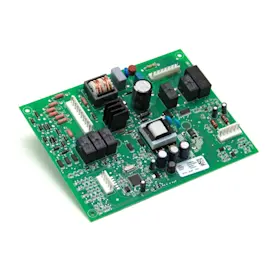
- How to replace a freezer electronic control board
- How to replace a freezer defrost heater
Last updated: February 2026
What is the most reliable brand of upright freezer?
The most reliable upright freezer is the one that matches your space and is installed correctly; brand alone does not prevent temperature swings, frost issues, or sealed-system strain. For your Kenmore 5649235012, following the placement, clearance, and leveling steps in the owner's manual directly improves long-term performance.
What “reliable” means in real use
Reliability comes from consistent freezing, a good door seal, and a refrigeration system that does not have to run excessively.
- Holds a steady temperature with minimal warm-ups
- Door closes easily and seals tightly
- Adequate airflow around the cabinet (prevents overheating)
- Correct ambient room temperature for the location
- Simple controls and clear alarms or indicators
What to look for when comparing brands and models
Use these checkpoints to compare any Kenmore, GE, Frigidaire, Whirlpool, or other upright freezer.
| What to compare | What “good” looks like | Why it helps reliability |
|---|---|---|
| Door seal and hinge feel | Even gasket contact, no sagging | Prevents moisture and warm air leaks |
| Cooling consistency | Minimal temperature swing | Protects food and reduces compressor cycling |
| Defrost design | Frost-free convenience or manual-defrost simplicity | Fewer icing problems when matched to your needs |
| Ventilation needs | Clearances you can actually maintain | Reduces heat buildup and run time |
Kenmore 5649235012 setup habits that improve reliability
These are model-specific basics from the manual that reduce warming and moisture issues.
- Place the freezer in a dry, ventilated area; ambient range is 65°F to 110°F
- Keep airflow clearance: 3 inches on each side and rear, and 4 inches on top
- Level the cabinet so the door seals properly
- Keep condenser coils clean to improve cooling efficiency
When “reliability” problems show up
If you see an alarm or code on an electronic-control Kenmore freezer, use the correct code list for the control style:
- Kenmore electronic control module freezer error codes
- Kenmore deluxe elecontronic control module freezer error codes
Why it matters
Most upright-freezer failures start as airflow, door-seal, or temperature-location problems; fixing those early prevents heavy compressor run time and food-thaw events.
Last updated: February 2026