 Installation guide
 Owner’s manual



Can you still get parts for a Kenmore dishwasher?
Yes. We still support replacement parts for Kenmore dishwashers, and for Kenmore model 58714409400 you can match parts by model number to get the correct fit for common repairs like a door that will not latch, leaks at the tub seal, or poor washing from spray issues.
How to make sure you get the right part
Use the model number 58714409400 and confirm the part by name and identifier before ordering.
- Match the full model number on the rating label to 58714409400
- Compare the part name to the symptom (latch issue, leak, dispenser problem)
- Check for color/finish differences on cosmetic parts (for example, control panels)
- Use the diagrams and part lists in the 58714409400 owner's manual
- If you are installing or reconnecting the dishwasher, follow the 58714409400 installation guide for electrical grounding and connection details
Common parts people replace on this model
These are frequent wear or failure items that solve many everyday dishwasher problems.
| Symptom | Likely part to check | Example part for this model |
|---|---|---|
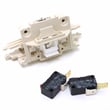
| Door will not close or start | Door latch | Dishwasher door latch 5304535183 |
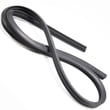
| Water leaking at the door/tub edge | Tub gasket | Dishwasher tub gasket 5304512895 |
| Detergent door not opening or not dispensing | Detergent dispenser | Dishwasher detergent dispenser assembly 5304460911 |
| Poor cleaning, weak spray | Spray arm hardware | Dishwasher upper spray arm nut 5304461019 |
Why it matters
Using the exact model number and the correct Kenmore-compatible part prevents repeat leaks, wash performance issues, and door safety problems. It also helps you avoid installing a similar-looking part that does not seal, latch, or mount correctly.
Last updated: February 2026
Is it worth repairing a Kenmore dishwasher?
Yes, repairing a Kenmore dishwasher like model 58714409400 is usually worth it when the problem is a common wear item (latch, gasket, dispenser) and the repair cost stays well below the price of a replacement. If the unit is very old and needs major electrical or pump work, replacement often makes more sense.
Quick way we decide: repair vs. replace
- Repair when the dishwasher still cleans well, the tub is solid, and the issue is isolated (won’t start, leaks at the door, dispenser problems).
- Replace when you have repeated breakdowns, heavy corrosion, or multiple expensive failures close together.
- Always start with the basics: the manual troubleshooting section calls out simple causes like the door not being firmly closed and items preventing the door from sealing. See the 58714409400 owner's manual.
Typical repairs that are often worth it
- Door won’t latch or won’t start because the door is not closing securely
- Leaks around the door from a worn seal
- Detergent door not opening or dispenser not working correctly
- Rattling or ticking from loading issues (items hitting the spray arm)
Common model-matched parts to consider
| Symptom | Likely area | Example part for this model |
|---|---|---|
| Won’t start, door won’t stay shut | Door latch | Dishwasher door latch 5304535183 |
| Water at the bottom of the door | Door seal area | Dishwasher tub gasket 5304512895 |
| Soap not dispensing | Dispenser | Dishwasher detergent dispenser assembly 5304460911 |
Cost and age guidelines we use
| Dishwasher age | Recommendation |
|---|---|
| 0-7 years | Repair is typically the best value for most failures. |
| 8-12 years | Repair is worth it for smaller fixes; avoid stacking multiple big repairs. |
| 13+ years | Replace unless it’s a simple, low-cost part and the unit is otherwise in great shape. |
Why it matters
A dishwasher that won’t run because the door isn’t latching, or that leaks due to a worn gasket, can look like a “major” failure but is often a straightforward repair. The manual also emphasizes safe servicing practices (disconnect power before service and use a qualified technician for repairs). See the 58714409400 installation guide for installation-related checks that can affect leaks and operation.
Last updated: February 2026
What are common problems with Kenmore dishwashers?
Common problems we see with the Kenmore 58714409400 dishwasher include poor cleaning, poor drying, leaking, and “won’t start” situations caused by a door not fully latching or a power issue. Many symptoms improve with correct loading, hot water (120°F), and routine filter cleaning; see the 58714409400 owner's manual.
Most common symptoms and what to check first
- Dishes not clean: confirm correct cycle, proper loading, and fresh detergent; clean the filter after each wash.
- Dishes not drying: refill rinse aid, use hotter water, and consider heat-dry settings; open the door at end of cycle to air dry.
- Leaking: make sure nothing sticks out and prevents the door from sealing; avoid oversudsing by using only dishwasher detergent.
- Noise: swishing and pulsating is normal; loud ticking often means an item is hitting a spray arm.
- Won’t start or stops mid-cycle: confirm the door is firmly closed and latched; pauses between cycles can be normal.
Quick troubleshooting by problem
| Problem | Likely cause | Best first action |
|---|---|---|
| Not cleaning well | Loading, water temp, filter clogged | Clean filter; verify 120°F hot water |
| Not drying | No rinse aid, low temp, no heat dry | Add rinse aid; use hotter water |
| Leaking | Door not sealing, oversudsing | Clear obstructions; use correct detergent |
| Ticking/rattle | Dishes contacting spray arm/racks | Re-load so items do not touch |
Parts that commonly relate to these issues
If the door will not close securely or the unit will not start, the latch is a frequent wear item. For leaks around the tub opening, the door seal area is a common inspection point.
- Dishwasher door latch 5304535183: helps the door close and signal the dishwasher to run.
- Dishwasher tub gasket 5304512895: helps seal the tub opening to reduce leaks.
- Dishwasher detergent dispenser assembly 5304460911: can affect detergent release and cleaning results.
Why it matters
Dishwashers depend on a tight door seal, correct water temperature, and unobstructed water circulation. Fixing loading, detergent, and filter issues first often restores performance and prevents repeat leaks or wash problems.
Last updated: February 2026
What are the commonly replaced parts in a dishwasher?
On the Kenmore 58714409400 dishwasher, the most commonly replaced parts are the ones that control water flow, sealing, and washing action: door latch and gaskets (leaks or won’t latch), spray arm parts (poor cleaning), and dispenser or control parts (cycle and detergent issues). See the 58714409400 owner's manual for feature and care details.
Commonly replaced parts (and what they fix)
- Door latch and door sealing: door won’t close, unit won’t start, or water leaks at the door (example: dishwasher door latch 5304535183, dishwasher tub gasket 5304512895)
- Spray system parts: weak wash performance, dishes left dirty, or spray arm not turning (example: dishwasher spray arm 5304461012, dishwasher upper spray arm nut 5304461019)
- Detergent dispenser: detergent door won’t open, detergent not dispensing, poor cleaning (example: dishwasher detergent dispenser assembly 5304460911)
- User interface and controls: buttons not responding, cycle selection problems (example: dishwasher control panel (white) 5304461532)
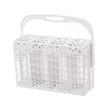
- Rack accessories: broken basket or fit issues (example: dishwasher silverware basket 5304461023)
Quick troubleshooting checks before buying parts
- Clean the filter assembly regularly; a clogged filter reduces cleaning performance and can mimic spray or pump problems.
- Confirm the dishwasher fills and drains normally; a drain air gap (if installed) must be clear for proper draining.
- Inspect the door seal area for debris; even small food particles can cause leaks.
- Check spray arm holes for blockage; clear mineral or food buildup.
- Run a normal cycle after any repair and check all connections for leaks.
Symptom-to-part guide
| Symptom | Most likely area | Example part from this model |
|---|---|---|
| Won’t start unless you push on the door | Door latch | Dishwasher door latch 5304535183 |
| Water leaking at the door | Tub gasket / door sealing | Dishwasher tub gasket 5304512895 |
| Dishes still dirty | Spray arm / filter maintenance | Dishwasher spray arm 5304461012 |
| Detergent still in cup | Dispenser | Dishwasher detergent dispenser assembly 5304460911 |
| Buttons don’t respond | Control panel | Dishwasher control panel (white) 5304461532 |
Why it matters
Dishwashers clean by filling to a set level and continuously pumping water through rotating spray arms; when seals leak, spray parts clog, or the dispenser/control fails, cleaning and reliability drop fast. Routine filter cleaning helps prevent many “bad part” symptoms.
Last updated: February 2026
What is the spinning thing at the bottom of a dishwasher called?
In the Kenmore 58714409400 dishwasher, the spinning part at the bottom is the lower spray arm (often just called the spray arm). It rotates while the pump circulates hot water and detergent to wash the dishes.
What it does (and what it is not)
The lower spray arm is the main “washer” under the bottom rack; it sprays pressurized water upward and around the tub.
- Sprays water through small jet holes to scour dishes
- Rotates from water pressure (and sometimes a bearing surface)
- Works with the pump and filter area to keep water moving
- Can be blocked by tall pans, utensils, or a fallen item
- If it cannot spin, cleaning performance drops fast
Quick checks if it is not spinning well
Use these steps before replacing parts; they solve most spray issues.
- Make sure nothing protrudes through the bottom rack and hits the arm
- Confirm the spray holes are not clogged with seeds, labels, or mineral buildup
- Verify the arm turns freely by hand when the dishwasher is off
- Load large items to the sides so they do not block rotation
- Use hot water; incoming water should be 120°F to 150°F for best wash performance
Common symptoms and likely causes
| Symptom | Most common cause | What to do first |
|---|---|---|
| Top rack not clean | Upper spray path blocked | Re-load, clear obstructions |
| Grit on dishes | Poor circulation or clogged jets | Clean spray holes, check filter area |
| Arm hits dishes | Overloading or tall items | Reposition items, avoid protruding handles |
| Weak wash overall | Water not hot enough | Run hot water at sink before starting |
Why it matters
Your dishwasher cleans by continuously pumping hot, clean water through the rotating spray arms. If the lower spray arm is blocked or clogged, water cannot reach soiled surfaces effectively, especially on the bottom rack.
For diagrams and part locations specific to this model, use the 58714409400 owner’s manual.
Last updated: February 2026
Where to find model number on a Kenmore dishwasher?
On Kenmore dishwasher model 58714409400, the model number is printed on the model and serial number label located on the inside edge of the door area. Open the door fully and look along the inner frame (typically the left side) for the rating label.
Where to look (fast checklist)
- Open the dishwasher door and keep it fully open
- Check the inner door frame (the vertical edge of the tub opening)
- Look first on the left-hand side of the opening
- Find the label that lists both model and serial numbers
- Write the model number exactly as shown (for example, 58714409400)
What the label looks like
The label is usually a small rectangular sticker or metalized tag with several lines of text.
| Label item | What it’s used for |
|---|---|
| Model number | Matching exact replacement parts and diagrams |
| Serial number | Identifying production details for service |
| Electrical ratings | Confirming power requirements |
Why it matters
We use the model number to ensure parts like a door latch, detergent dispenser, or control panel match your exact Kenmore dishwasher configuration. Even small model-number differences can change fit and wiring.
Helpful tip for parts and service
- Record the model and serial number together
- Keep the info with your paperwork
- Use the model number when checking diagrams and ordering parts
For additional label location details and appliance identification info, check the 58714409400 owner’s manual.
Last updated: February 2026





