Owner’s manual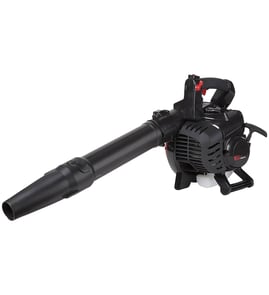

How many mph is a Husqvarna 125BT blower?
The Husqvarna 125BT blower’s MPH rating depends on the nozzle setup and how the manufacturer measures air speed. For the most accurate spec for your exact 125BT configuration, we recommend checking the Technical data section in the 125BT operator’s manual.
Look for these areas in the manual:
- Technical data (specifications table)
- What is what? (nozzle and tube identification)
- Assembly (which tubes/nozzle are installed for operation)
If you are comparing models, make sure you are comparing the same test conditions (same nozzle, same measurement method).
MPH is not a single fixed number in real-world use because it changes with setup and technique:
- Nozzle type and tube length affect air speed at the outlet
- Throttle position changes airflow and velocity
- Distance from the ground changes the effective clearing force
- Debris type (wet leaves vs. dry) changes perceived performance
| Spec | What it tells you | Why it matters for clearing |
|---|---|---|
| MPH | Air speed at the nozzle | Helps move heavier or stuck debris |
| CFM | Total air volume moved | Helps push a wider swath of leaves |
| Blowing force | Combined effect of speed and volume | Better indicator of real clearing feel |
When you are choosing settings or comparing blowers, MPH alone can be misleading. Matching the correct nozzle setup and using the recommended operating technique from the manual helps you get the best clearing performance while keeping control of the air stream.
Last updated: February 2026
What are the common problems with a Husqvarna 125BT?
Common Husqvarna 125BT problems are hard starting, rough idle, stalling, low power, and overheating. On this model, the most frequent root causes are fuel mixture issues, a dirty air filter, spark plug fouling or incorrect gap, and a cooling system packed with debris; the maintenance sections in the 125BT operator’s manual cover these checks.
- Hard starting or no start: fouled spark plug, stale fuel, incorrect fuel mixture
- Low power under load: restricted air filter, spark arrestor screen plugged, carburetor needs adjustment
- Runs poorly at idle or stalls: air leak at fuel line, dirty air filter, spark plug deposits
- Overheats or loses power when hot: cooling fins or air intake blocked (engine cannot shed heat)
- Intermittent running: loose or damaged cables and connections
- Airflow: clean or replace the air filter; clear leaves and dust from intake areas
- Cooling: brush debris off the starter air intake and cylinder cooling fins weekly (more often in dusty work)
- Ignition: remove the spark plug, clean deposits, and set the electrode gap to the spec in the manual
- Fuel delivery: inspect the fuel pipe for cracks or softness; replace if needed
- Muffler: check and clean the muffler spark arrestor screen if equipped
Use the technical data table in the manual for exact targets for your 125BT.
| Item | What to use | Why it matters |
|---|---|---|
| Spark plug gap | Manual specification | Incorrect gap causes weak spark, misfire, and hard starting |
| Idle speed | Manual specification | Too low stalls; too high makes handling unsafe |
| Max speed | Manual specification | Prevents over-revving and engine damage |
Most performance complaints on the 125BT come down to three basics: clean air in, correct fuel mix, and proper spark. Keeping the cooling system clear also prevents overheating that can damage the cylinder and piston.
Last updated: February 2026
What does BT mean on leaf blower?
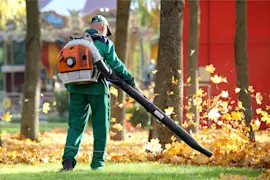
On the Husqvarna 125BT blower, BT identifies the backpack blower configuration with the throttle control on the blower tube (right-hand throttle). This label helps you match the correct control layout and handle assembly when operating, assembling, or ordering replacement parts; see the owner's manual.
Use these quick checks on your 125BT:
- Look for the throttle trigger and stop switch on the control handle mounted to the blower tube
- Verify the control handle clamps to the operating tube during assembly
- Confirm the throttle can be held with a throttle adjuster (cruise-style setting)
- Make sure the flexible hose, operating tube, intermediate tube, and nozzle lock together securely
- Check that the intake and outlet ports are clear so performance does not drop
BT vs other letter combinations is mainly about where the throttle is located and how the controls are routed. That affects:
- Comfort and control while aiming the air nozzle
- Correct assembly of the operating tube and control handle
- Troubleshooting issues like low air output (often caused by blocked intake or outlet)
| Label | Throttle location | What you notice during use |
|---|---|---|
| BT | On the tube (right-hand throttle) | Your hand stays on the tube-mounted control handle |
| BF | On the frame (left-hand throttle) | Controls are on the backpack frame instead of the tube |
For safe operation and consistent performance:
- Operate outdoors with good ventilation; never run the blower in enclosed spaces
- Keep bystanders, children, and pets at least 10 m (33 ft) away
- Stop the engine before maintenance; remove the spark plug before service work
- If vibration or unusual noise starts, stop and inspect for loose or broken parts
Last updated: February 2026