Owner’s manual
 Error Codes




What is the biggest problem in a Whirlpool refrigerator?
For Whirlpool refrigerators like model WRF560SEYM02, the biggest and most common “big problem” we see is a cooling problem (fresh food too warm, freezer not cold enough, or temperature swings). In many cases, the root cause is airflow or heat-release related, not the sealed system itself; start with basic checks in the WRF560SEYM02 refrigerator manual.
Most common causes behind “not cooling”
These are the issues we recommend checking first because they are frequent and often fixable without major disassembly:
- Dirty condenser area (restricted heat release, longer run times)
- Evaporator fan not moving air through the refrigerator section
- Frost buildup from a defrost system problem (air can’t pass the evaporator)
- Door not sealing (warm air leaks in, moisture and frost increase)
- Controls or sensors not reading temperature correctly
Quick triage: what you notice vs. what it often points to
| Symptom you notice | What it often points to | What to check first |
|---|---|---|
| Freezer cold, fridge warm | Airflow issue | Damper, evaporator fan, blocked vents |
| Both sections warm | Heat release or compressor start issue | Condenser area, start device, capacitor |
| Heavy frost in freezer | Defrost issue or air leak | Door seal, defrost heater, defrost controls |
| Loud humming or clicking | Fan or compressor start components | Fan blades, start relay, run capacitor |
Model-relevant parts that commonly relate to cooling complaints
If troubleshooting leads to a failed component, these are examples of compatible parts listed for WRF560SEYM02:
- Refrigerator evaporator motor WPW10464673 (moves cold air through the compartments)
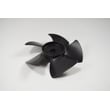
- Fan blade WP2163777 (damaged blades can reduce airflow and increase noise)
- Refrigerator condenser fan WPW10139483 (helps remove heat near the compressor)
- Refrigerator start device WPW10448874 and refrigerator run capacitor WPW10662129 (help the compressor start and run)
Why it matters
Cooling problems can spoil food quickly and also force the refrigerator to run longer than normal, which increases wear on the compressor, fans, and electronic controls. Catching airflow and maintenance issues early is usually the lowest-cost path.
Last updated: January 2026
What's the average lifespan of a Whirlpool refrigerator?
Most Whirlpool refrigerators, including the Whirlpool WRF560SEYM02 bottom-mount model, commonly last about 10 to 20 years with normal household use. Real-world lifespan depends more on maintenance (airflow, coil cleaning, door sealing) and repair history than on the model number alone; see the WRF560SEYM02 manual for care and operating guidance.
What affects lifespan the most
- Condenser coil cleanliness (dust buildup makes the compressor work harder)
- Ventilation space around the cabinet (restricted airflow increases heat and run time)
- Door gasket condition (air leaks cause longer run times and frost issues)
- Temperature settings and loading (overpacking blocks airflow)
- Water and ice system upkeep (clogs and leaks can create secondary damage)
Quick maintenance checklist (helps you reach the high end of the range)
- Vacuum and brush the condenser area regularly.
- Keep food from blocking interior air vents.
- Wipe door gaskets and confirm the doors close squarely.
- Replace consumables on schedule (air filter, water filter if equipped).
- Address unusual noises, warming temps, or frost buildup early.
“Repair or replace?” a practical rule of thumb
We cannot determine the exact age of your WRF560SEYM02 from the model number alone, but these guidelines help:
| If your fridge is… | Usually makes sense to… |
|---|---|
| Under ~8 years old | Repair common wear items and keep up maintenance |
| ~8 to 15 years old | Compare repair cost vs. overall condition |
| Over ~15 years old | Consider replacement if major sealed-system or compressor issues occur |
Parts that often extend usable life
If performance issues trace back to a specific component, replacing the right part can be more cost-effective than replacing the refrigerator.
- Refrigerator air filter W10311524 (odor control and airflow support)
- Refrigerator condenser fan WPW10139483 (moves heat away from the condenser)
- Refrigerator start device WPW10448874 (helps the compressor start and run)
Why it matters
A refrigerator that runs longer and hotter than it should can shorten compressor life and raise energy use. Simple upkeep and timely part replacement often prevent “domino effect” failures.
Last updated: January 2026
Why is my Whirlpool refrigerator leaking from the bottom?
If your Whirlpool WRF560SEYM02 refrigerator is leaking from the bottom, the most common causes are a clogged/iced defrost drain, a water supply leak (if connected), or the cabinet not being level so water spills forward from the drain pan. Start with leveling and drain checks in the WRF560SEYM02 owner’s manual.
Quick checks we recommend first
- Unplug the refrigerator or turn off power at the breaker before inspecting behind panels.
- Look for water source: clear water (often defrost or supply line) vs. tinted/dirty water (often drain pan overflow).
- Check if the leak happens after defrosting (intermittent puddles) or constantly (more likely a supply leak).
- Verify doors close fully; warm air can increase frost and cause drain backups.
- Confirm the refrigerator is level front-to-back and side-to-side.
Most likely causes on a bottom-mount design
1) Defrost drain clogged or frozen
When the defrost drain plugs, meltwater can back up and run down into the fresh food section, then out to the floor.
- Clear visible ice in the drain trough (warm water flush is typical)
- Check the drain outlet and tube for debris
- If the drain tube/funnel is damaged or restricted, replacing it can restore proper drainage
A compatible drain component for this model is the refrigerator drain tube W11190084.
2) Water inlet valve or water line leaking (if you have an ice maker/water line)
A slow drip at the rear can travel along the base and show up as a front puddle.
- Inspect the household supply connection and tubing for wetness
- Check the valve body and fittings for mineral tracks or droplets
A compatible valve option listed for this model is the refrigerator water inlet valve WPW10238100.
3) Refrigerator not level (drain pan overflow)
If the cabinet tilts forward, water can collect at the front of the drain pan and spill out.
What to do based on where you see water
| Where the water appears | Most common cause | What to check |
|---|---|---|
| Front center under doors | Not level, drain pan spillover | Leveling feet/rollers, pan position |
| Inside fresh food, then onto floor | Clogged/iced defrost drain | Drain trough, drain tube |
| Back of unit, then spreads forward | Supply line/valve leak | Tubing connections, inlet valve |
Why it matters
Bottom leaks can lead to floor damage and can also signal a defrost drainage problem that may later cause ice buildup and poor cooling. Fixing the root cause early helps protect food temperatures and prevents repeat puddles.
Last updated: January 2026