Owner’s manual
 Error Codes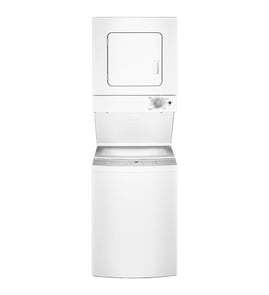


How many cubic feet is my Whirlpool duet washer?
Your Whirlpool LTE5243BW2 is a stacked laundry center (not a Whirlpool Duet front-load washer), so the “Duet washer cubic feet” spec does not apply. For this Whirlpool Thin Twin style washer, capacity is typically measured as a compact top-load tub size; confirm the exact capacity in the LTE5243BW2 owner's manual.
What you have vs. what a “Whirlpool Duet” is
“Whirlpool Duet” usually refers to a front-load washer line with a published drum volume in cubic feet. The Whirlpool LTE5243BW2 is a washer/dryer laundry system with a top-load washer, so capacity is commonly described differently.
| Appliance type | Typical capacity label | What it means |
|---|---|---|
| Front-load “Duet” washer | Cubic feet (cu. ft.) | Drum volume is a primary spec |
| Thin Twin laundry center (LTE5243BW2) | Compact tub capacity | Load size is often described by load level/size settings |
How to estimate capacity for laundry planning
If you are trying to match load size to performance, these guidelines work well for LTE5243BW2-STYLE laundry centers:
- Use the washer’s load size setting to match water level to the load
- Fill loosely; do not pack items down
- For bulky items, keep the load smaller so the agitator can circulate items
- If clothes come out with dry spots, reduce load size
- If the washer struggles to agitate, reduce load size and rebalance
Why it matters
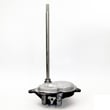
Capacity affects cleaning, rinsing, and spin performance. Overloading a compact top-load washer can cause poor agitation, out-of-balance spinning, and extra wear on drive components like the coupling 285753A.
Last updated: February 2026
What is the life expectancy of a whirlpool washing machine?
A Whirlpool washing machine typically lasts 10 to 14 years. For your Whirlpool LTE5243BW2 stacked laundry center, consistent maintenance and avoiding overloads are the biggest factors that keep the washer drive system, drain pump, and hoses working reliably over time; see the LTE5243BW2 owner's manual for care and operating guidance.
Typical lifespan and what affects it
Most Whirlpool top-load washer designs in laundry centers like the LTE5243BW2 land in this range:
| Usage pattern | Typical life expectancy | What usually shortens life |
|---|---|---|
| Light (1 to 3 loads/week) | 12 to 16 years | Long periods of non-use, hose aging |
| Average (4 to 7 loads/week) | 10 to 14 years | Overloading, poor leveling |
| Heavy (8+ loads/week) | 7 to 11 years | Frequent overloads, repeated unbalanced spins |
Maintenance that adds years (practical checklist)
We recommend these habits to reduce wear on the motor, coupling, clutch, and gearcase:
- Keep loads balanced; mix large and small items to prevent repeated off-balance spinning.
- Do not overload; overloading is the fastest way to stress the drive system.
- Use the correct amount of HE detergent (too much causes excess suds and extra strain).
- Check fill and drain hoses periodically for bulges, cracking, or leaks.
- Level the laundry center so the tub spins smoothly and the cabinet does not shake.
- Leave the lid open after use when possible to help reduce moisture and odors.
Parts that commonly wear first on this model
If the washer still fills and drains but will not agitate or spin, these are common wear items on Whirlpool direct-drive platforms:
- Coupling 285753A (connects the motor to the transmission input)
- Clutch (helps the basket reach full spin speed)
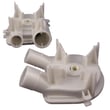
- Drain pump (can jam with debris and slow or stop draining)
Why it matters
Knowing the expected 10 to 14-year lifespan helps you decide whether to maintain and repair (often cost-effective for a simple wear part) or plan for replacement when multiple major components start failing close together.
Last updated: February 2026
What is the most common problem with whirlpool washers?
The most common Whirlpool washer problem is a no-drain or no-spin condition. On the Whirlpool LTE5243BW2 laundry center, start with the basics in the LTE5243BW2 owner's manual: power, lid closed, cycle knob set, and water supply on; then move to likely wear parts such as the drain pump or motor coupling.
Most common symptoms (and what they usually mean)
- Washer won’t drain: clogged pump, blocked hose, or a failing pump
- Washer won’t spin: lid not closed, drive system issue, or a worn coupling
- Stops mid-cycle: power interruption, timer/cycle control issue, or lid opened
- Fills but then drains right away: drain hose installed too low or siphoning
- Loud noise or burning smell: drive components slipping or binding
Quick checks we recommend first (5 minutes)
Use the troubleshooting checklist in the LTE5243BW2 owner's manual and verify:
- Power cord is firmly plugged into a live outlet
- House fuse is good and breaker is not tripped
- Hot and cold faucets are fully open
- Supply hoses are not kinked
- Lid is fully closed and cycle control knob is set and pulled out
Parts that commonly fix “won’t drain” or “won’t spin”
If the quick checks pass, these model-matched parts are frequent fixes:
| Symptom | Common fix | Example part for LTE5243BW2 |
|---|---|---|
| Won’t drain, water left in tub | Replace drain pump | Washer drain pump WP3363394 |
| Motor runs but won’t agitate/spin | Replace motor coupling | Coupling 285753A |
| Spins weakly or slips | Inspect clutch and drive components | Clutch (model-matched) |
Why it matters
A washer that won’t drain or spin usually leaves clothes soaking wet and can strain the drive system. Catching a failing pump or coupling early helps prevent bigger repairs like gearcase or motor damage.
Last updated: February 2026