





Is GE profile considered high-end?
Yes. GE Profile is generally considered GE’s higher-end mainstream line, positioned above standard GE models with more premium features and finishes; it is not GE’s top luxury tier. For your GE dishwasher model GDT535PSM5SS, “Profile” mainly signals upgraded design and feature sets, not a different repair approach.
GE Profile typically focuses on premium convenience and performance features compared with base GE lines:
- More advanced wash options and sensors (cycle optimization, soil sensing)
- Quieter operation targets compared with entry-level models
- More premium exterior styling and controls
- More tech-forward features on many models (varies by appliance type)
- Higher typical price point than standard GE
Even if a dishwasher is positioned as “high-end,” the most common service issues are still the same categories: draining, washing, heating, and door closure. These parts are often the first places we look when symptoms show up.
| Symptom | Common area to check | Example part on this model page |
|---|---|---|
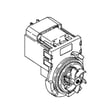
| Not draining | Drain path and pump | Dishwasher drain pump WD19X25461 |
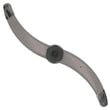
| Poor cleaning | Spray system | Dishwasher spray arm, lower WD22X33499 |
| Not drying well | Heating circuit | Dishwasher heating element WD05X35098 |
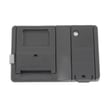
| Won’t start or won’t latch | Door latch system | GE dishwasher door latch lock WD21X10490 |
“High-end” is mostly about features, noise level, and finish. When troubleshooting, what matters most is the symptom and the exact model number (GDT535PSM5SS) so you match the correct GE dishwasher parts and electrical components.
For troubleshooting help that fits many GE electronic models, use our GE electronic dishwasher error codes guide.
Last updated: February 2026
What is the average life expectancy of a GE dishwasher?
A GE dishwasher like model GDT535PSM5SS typically lasts 12 years. With normal household use and basic care, 10 to 15 years is the standard life expectancy range for most modern dishwashers.
- How often you run it (daily use wears pumps, seals, and racks faster)
- Water quality (hard water speeds up scale buildup on the heater and in the sump)
- Cleaning and maintenance (filters, spray arms, and the tub)
- Drying habits (leaving the door cracked after cycles reduces moisture damage)
- Fixing small issues early (leaks, poor draining, weak wash)
- Clean the filter area and sump regularly; food debris strains the wash and drain system.
- Check spray arm holes for clogs; a weak spray pattern makes cycles longer and harder on the pump.
- Run hot water at the sink before starting a cycle to reduce heat-up time.
- Use the right detergent amount; excess suds can cause poor washing and draining issues.
- Address leaks promptly; worn seals can let water reach components under the tub.
| Symptom | What it often points to | Example part for GDT535PSM5SS |
|---|---|---|
| Not draining, standing water | Drain restriction or failing drain pump | Dishwasher drain pump WD19X25461 |
| Not drying well | Heater circuit or heating element issue | Dishwasher heating element WD05X35098 |
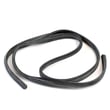
| Leaking at the door or tub edge | Worn gasket or seal | Dishwasher tub gasket WD08X23476 |
| Dishes not getting clean | Clogged or damaged spray arm | Dishwasher spray arm, lower WD22X33499 |
Knowing the typical 10 to 15 year lifespan helps you decide whether to repair or replace. If your GDT535PSM5SS is near the 12-year mark and you are seeing multiple issues (leaks plus draining plus poor cleaning), replacing several major parts at once usually costs more than targeted repairs.
For troubleshooting by fault code on GE models, use our GE electronic dishwasher error codes guide.
Last updated: February 2026
Is it worth fixing a GE dishwasher?
Yes, it’s worth fixing a GE dishwasher like model GDT535PSM5SS when the unit is under 10 years old and the repair is a common, single-part failure (drain, latch, spray issue) that costs far less than replacing the dishwasher; repeated major failures usually make replacement the better value.
- Age: Under 10 years old usually favors repair; 10+ years old usually favors replacement.
- Problem type: One clear symptom (won’t drain, won’t latch, poor cleaning) favors repair.
- Repair cost: If the repair is under 50% of replacement cost, repair is typically the better value.
- Repeat breakdowns: Multiple failures in a year usually favors replacement.
- Tub leaks or heavy corrosion: Usually favors replacement.
- Performance history: If it has cleaned and dried well until recently, repair is usually worthwhile.
These are frequent, fixable issues that often come down to a single part:
| Symptom | What we check first | Example part on this model |
|---|---|---|
| Not draining | Kinked/clogged hose, then pump | Dishwasher drain pump WD19X25461 |
| Door won’t start cycle | Door not latching fully | GE dishwasher door latch lock WD21X10490 |
| Dishes not clean | Clogged spray arm jets, low spray | Dishwasher spray arm, lower WD22X33499 |
| Not drying well | Heat circuit and element | Dishwasher heating element WD05X35098 |
A dishwasher repair makes sense when it restores reliable washing with a predictable, contained cost. Replacement makes sense when you are chasing multiple problems (especially electrical controls, leaks, or recurring pump issues) because downtime and repeat service add up fast.
- Reset power (turn breaker off for 1 minute, then on).
- Confirm the door closes firmly and the latch engages.
- Clean the filter area and check spray arms for blocked holes.
- Verify the sink drain and garbage disposer are clear (a clog can mimic a dishwasher drain failure).
- Look for an error code and match it to GE dishwasher error codes.
Last updated: February 2026
What is the most common problem with a GE dishwasher?
The most common GE dishwasher problems are not draining and not starting. On the GE GDT535PSM5SS, we see these symptoms most often tied to a blocked drain path (filter, hose, pump) or a door that is not fully latching, which prevents the cycle from running.
- Standing water in the bottom: drain restriction, drain pump issue, or a kinked/blocked drain hose
- Hums but won’t drain: debris in the pump area or a failing drain pump
- No response when you press Start: door not fully closed, latch problem, or control issue
- Starts then stops: fill or sensing problem, sometimes related to water level sensing
- Poor cleaning: spray arm ports clogged or spray arm not spinning freely
- Cancel/Drain and listen for the drain pump running.
- Check the sink drain/disposal connection for a blockage (a common choke point).
- Inspect the drain hose for kinks and make sure it loops up high under the counter.
- Open the door and confirm racks are not preventing a full close.
- If the unit shows an error, match it to GE dishwasher error codes.
| Problem you see | Part that commonly addresses it | What it does |
|---|---|---|
| Won’t start or stops immediately | GE dishwasher door latch lock WD21X10490 | Confirms the door is closed so the control will run the cycle |
| Not draining | Dishwasher drain pump WD19X25461 | Pumps water out through the drain hose |
| Not filling or fill-related errors | GE dishwasher pressure sensor WD21X25468 | Helps the dishwasher sense water level/pressure |
| Poor wash performance | Dishwasher spray arm, lower WD22X33499 | Distributes wash water to clean dishes |
Drain and start issues are “system-stoppers”; the dishwasher either cannot move water out safely or cannot verify the door is secure. Fixing the root cause early helps prevent repeat clogs, odors, and incomplete cycles.
Last updated: February 2026





