 Owner’s manual


What is the life expectancy of a GE washing machine?
A GE washing machine typically lasts 10 to 14 years. For your GE GTW485ASJ5WS top-load washer, consistent maintenance (proper loading, correct detergent, and periodic cleaning) and replacing wear items like fill hoses on schedule can help you reach the high end of that range.
Typical lifespan and what affects it
Most washer life comes down to how hard it works and how well it is maintained.
- Usage frequency: multiple loads per day shortens lifespan faster than light weekly use
- Load habits: chronic overloading stresses the suspension, drive system, and tub
- Water quality: hard water can increase buildup and wear
- Ventilation and drying: leaving the lid open after use helps reduce odor and residue
- Preventive replacements: hoses and other wear parts replaced before failure reduce damage risk
Maintenance schedule we recommend
Your GTW485ASJ5WS manual calls out a key preventive item: replace water supply hoses every 5 years. Use the GTW485ASJ5WS owner's manual for the exact guidance and safety notes.
| Item | When to do it | Why it matters |
|---|---|---|
| Water supply hoses | Every 5 years | Reduces risk of hose failure and water damage |
| Washer cleaning cycle or tub cleaning routine | Monthly to quarterly | Helps prevent odor and detergent buildup |
| Leveling check | Any time it vibrates or moves | Reduces cabinet rubbing and suspension wear |
| Load and detergent check | Every load | Prevents strain and oversudsing issues |
Signs your washer is nearing end-of-life
These symptoms often show up as the washer approaches the 10 to 14 year mark:
- Frequent no-drain or slow-drain problems
- Increasing vibration or out-of-balance spinning
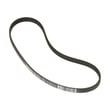
- Burning rubber smell or belt squeal
- Agitation or spin becoming weak or inconsistent
- Repeated electrical or control issues
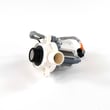
If you are troubleshooting a drain issue, the washer drain pump assembly WH23X28418 is a common repair part for this model.
Why it matters
Knowing the expected lifespan helps you decide whether to maintain and repair (belt, pump, suspension) or plan for replacement. Simple preventive steps, especially hose replacement and correct loading, can add years of reliable service.
You can order replacement parts for your GTW485ASJ5WS from the parts list for this model, or search by model number on Sears PartsDirect.
Last updated: February 2026
How to do a hard reset on a GE washer?
For the GE GTW485ASJ5WS washer, a hard reset is typically a simple power reset: unplug the washer for 2 minutes, plug it back in, then press Start. This clears many control glitches without changing your cycle settings.
Hard reset steps (recommended)
- Press Start/Pause to stop the cycle.
- If the lid is locked, wait for it to unlock, then open the lid.
- Unplug the washer from the outlet.
- Wait 2 full minutes (this is the reset time used in the troubleshooting guidance).
- Plug the washer back in.
- Select a cycle and press Start.
If the washer still will not start
These checks solve the most common “looks dead” or “won’t run” situations after a reset.
- Confirm the power cord is fully seated in the outlet.
- Reset the home breaker or replace the fuse (washers should be on a dedicated outlet).
- Turn both hot and cold water faucets fully on.
- Close the lid completely, then press Start.
- If water is sitting in the basket, run Drain & Spin to clear it.
What a reset will and will not fix
| Symptom | Reset helps most when | Likely next step if it returns |
|---|---|---|
| Buttons unresponsive or cycle “stuck” | Control logic needs a reboot | Check lid lock operation; review error/status lights |
| Fill light flashing | Water supply issue or valve off | Verify faucets and hoses; wait out any lockout |
| Won’t spin or stops mid-cycle | Out-of-balance or lid issue | Rebalance load; inspect lid lock |
Why it matters
A proper 2-minute power reset clears minor electronic faults without replacing parts. If problems keep coming back, the symptom often points to a specific system such as the lid lock or draining.
Parts that commonly relate to “won’t run” symptoms
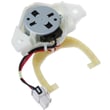
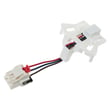
- Washer lid lock WH08X37938 (lid must be closed and lock must function during parts of the cycle)
- Washer drain pump assembly WH23X28418 (draining issues can prevent normal cycle progress)
For model-specific control behavior and indicator light meanings, use the owner's manual. If you need to order replacement parts for GTW485ASJ5WS, start with the parts list for this model, or search by model number on Sears PartsDirect.
Last updated: February 2026
How to replace auger on GE washer?
On the GE GTW485ASJ5WS top-load washer, replacing the agitator auger is a straightforward twist-lock job: remove the dispenser/cap, lift the old auger off, then set the new auger on the tabs and twist it to lock before reinstalling the dispenser. Use the GTW485ASJ5WS owner's manual for model-specific access details.
Steps to replace the auger
- Unplug the washer for safety.
- Open the lid and remove the fabric softener dispenser or top cap (if equipped).
- Lift the auger straight up and off the agitator base.
- Install the new auger by setting it over the tabs, then twist counterclockwise until it locks.
- Reinstall the dispenser/cap and press firmly so it seats in the grooves.
- Run a quick rinse or small load to confirm normal agitation.
Parts that commonly apply to this repair
If the auger is stripped, loose, or not moving clothes through the wash, these model-matched parts are the usual fixes:
| Symptom | Most likely part | What it affects |
|---|---|---|
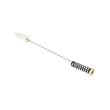
| Auger won’t turn or slips | Washer agitator auger WH43X31240 | Upper auger action and clothing rollover |
| Whole agitator feels loose or wobbly | Washer agitator base WH43X34257 | Lower agitator mounting and stability |
Why it matters
A properly locked auger helps move items down into the wash water and improves turnover. If the auger is not fully seated on the tabs, you can get poor cleaning, tangling, or a clicking/grinding sound during agitation.
Quick checks before you button it up
- Confirm the auger sits flat before twisting to lock.
- Make sure the dispenser/cap snaps in securely.
- Avoid overloading; loosely place items around the agitator for best wash performance.
If you need to order the correct replacement parts for GTW485ASJ5WS, use the parts list for this model or search by model number on Sears PartsDirect.
Last updated: February 2026
What is the difference between 4.5 cu ft and 5.0 cu ft washer?
A 5.0 cu. ft. washer has about 0.5 cu. ft. more tub volume than a 4.5 cu. ft. washer; that extra space mainly helps with bulky items and reduces how often you need to run loads. For your GE GTW485ASJ5WS, focus on correct loading and cycle choices; see the GTW485ASJ5WS owner's manual.
What the extra 0.5 cu. ft. changes in real use
That capacity bump is most noticeable with high-volume, air-trapping loads.
- Bulky items (comforters, blankets, winter coats) fit with less compression.
- Better turnover (items move more freely), which improves cleaning and rinsing.
- Fewer loads for large households or heavy towel and bedding weeks.
- Lower chance of out-of-balance spinning because the load can redistribute.
- More forgiving loading, especially in top-load washers with an agitator.
How this relates to GE GTW485ASJ5WS operation
Even though the question compares 4.5 vs 5.0 cu. ft., the practical takeaway for GTW485ASJ5WS is that high-efficiency washers rely on proper loading and sensing. The manual describes Automatic Load Sensing and notes that water levels can look lower than older washers; that is normal.
Loading guidance that matters more than the number
- Load loosely; do not pack items down.
- Keep bulky items balanced (mix large and small pieces).
- Use the cycle and options intended for bulky loads when needed.
- If you add wet items, select an appropriate load size option per the manual.
Quick comparison
| Item | 4.5 cu. ft. | 5.0 cu. ft. |
|---|---|---|
| Capacity difference | Baseline | +0.5 cu. ft. |
| Bulky bedding | Fits, easier to overload | Fits more comfortably |
| Load turnover | Good | Better for bulky loads |
| Weekly loads | More cycles | Fewer cycles |
Why it matters
Capacity affects how well water and detergent circulate, how evenly the washer can balance the load in spin, and how often you need to wash. More space usually means better movement for bulky items.
When to look at parts (performance issues that mimic “too small”)
If loads seem to stay too wet, bang around, or fail to drain, a repair can restore normal performance.
- Slow or no drain: washer drain pump assembly WH23X28418
- Frequent out-of-balance: washer suspension rod and spring assembly WH16X26911
- Lid won’t lock or cycle won’t start: washer lid lock WH08X37938
You can order GTW485ASJ5WS replacement parts from the parts list for this model, or search by model on Sears PartsDirect.
Last updated: February 2026


