Owner’s manual


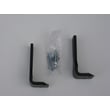
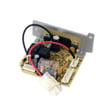
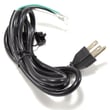
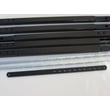
Where can I buy Craftsman garage door opener parts?
You can buy replacement parts for your Craftsman garage door opener model 13953919D through Sears PartsDirect by using the model-based parts list and diagrams to match the exact part you need. For part identification and accessory compatibility, use the 13953919D owner's manual.
Best way to find the right part
- Confirm the opener model number on the motor unit label: 13953919D
- Use the parts list and exploded diagrams to identify the exact assembly (rail, motor unit, installation hardware)
- Match the part description to where it installs (for example: trolley, belt, idler bolt, safety sensor hardware)
- If you are buying an accessory (remote, keyless entry, rail extension), verify it is listed for your opener series
- Keep your door height handy (7 ft, 8 ft, 10 ft) because rail extension kits depend on door height
Common parts and accessories people order
The manual for this Craftsman opener lists several common accessories and assemblies that customers replace.
| What you need | What it affects | Typical symptom |
|---|---|---|
| Remote control or keyless entry | Operation from car or keypad | Opener runs only from wall button |
| Safety sensor brackets/hardware | Door closing safety | Door will not close, lights blink |
| Rail extension kit (8 ft or 10 ft) | Full door travel | Door does not open fully |
| Emergency key release (no service door) | Manual entry from outside | Cannot disengage trolley from outside |
For troubleshooting before you order, use Craftsman error codes to interpret flashing lights and diagnostic patterns.
Why it matters
Garage door openers use model-specific parts and accessory families; ordering by 13953919D helps ensure the rail assembly, motor unit parts, and safety sensor components fit and operate correctly.
Last updated: February 2026
Is it cheaper to repair or replace a garage door opener?
For a Craftsman garage door opener like model 13953919D, it’s cheaper to repair when the problem is limited to adjustments, sensors, or controls and the unit is otherwise reliable. Replacement makes more sense when the opener is older, repairs are frequent, or the repair cost is close to half the price of a new opener.
Quick decision guide
- Repair when the door is binding, sensors are misaligned, or force/travel settings are off.
- Repair when the opener runs but the door reverses unexpectedly (often adjustment or safety sensor related).
- Replace when the motor or drive system is failing repeatedly.
- Replace when safety features cannot be set to pass the reversal test consistently.
- Replace when you want quieter operation or newer features (keyless entry, motion lighting, etc.).
Cost and value comparison (typical)
| Situation | Usually best choice | Why |
|---|---|---|
| Minor safety sensor or adjustment issue | Repair | Low parts/labor; restores safe operation quickly |
| Door won’t close and lights blink (sensor issue) | Repair | Often alignment, wiring, or sunlight interference |
| Multiple major failures in a short time | Replace | Repair costs stack up; reliability stays poor |
| Motor or gear/drive failure plus labor | Replace | High labor; replacement improves long-term value |
Model-specific checks that often avoid replacement
These checks align with how the 13953919D is designed to operate and be adjusted:
- Confirm the safety reversing sensors are mounted solidly; some garages need brackets or wood blocks.
- Check the floor-to-door gap at the bottom; it must be 1/4 inch (6 mm) or less for the safety reversal system to work correctly.
- Verify the door reverses on contact with a 1-1/2 inch object (a 2x4 laid flat is commonly used).
- If the door is heavy or unbalanced, address the door hardware first; the opener is not meant to compensate.
For step-by-step adjustment and safety test procedures, follow the owner's manual.
Why it matters
A garage door opener is a safety device as much as a convenience. If the door does not reverse correctly or the sensors are not working, repairing the setup and adjustments is often the most cost-effective path and helps prevent damage to the door, opener, and vehicles.
Last updated: February 2026
What is the life expectancy of a Craftsman garage door opener?
A Craftsman garage door opener typically lasts 10 to 15 years. With normal residential use and basic upkeep (sensor alignment checks, force and travel checks, and periodic safety testing), many openers reach the high end of that range; heavy daily cycling shortens it.
What affects lifespan most
- Cycles per day: more open/close cycles wear gears, sprockets, and the motor faster.
- Door condition: a heavy or binding door forces the opener to work harder.
- Safety sensor issues: misaligned photo eyes can cause repeated reversals and extra cycling.
- Force and travel settings: incorrect settings strain the drive system.
- Maintenance habits: simple checks prevent small problems from becoming major failures.
Maintenance checklist we recommend (for model 13953919D)
Use the care and testing steps in the owner's manual and keep these items on a routine schedule:
- Test the safety reversal system monthly.
- Test The Protector System (safety sensors) monthly.
- Confirm the door moves smoothly by disconnecting the opener and operating the door by hand.
- Recheck force and travel adjustments if the door starts reversing or stops short.
- Replace light bulbs with the correct type and wattage listed in the manual.
Repair vs. replace: quick guide
| What you’re seeing | What it usually means | Best next step |
|---|---|---|
| Door reverses or won’t close | Sensor alignment or force setting issue | Re-align sensors; verify force/travel per manual |
| Motor runs but door doesn’t move | Worn drive gear, sprocket, or trolley issue | Inspect drive components; plan a gear repair |
| Intermittent operation, blinking lights | Diagnostic code condition | Check Craftsman error codes |
| Frequent breakdowns after years of use | Multiple worn components | Compare repair cost vs. replacement |
Why it matters
A garage door opener is a safety device as much as a convenience feature. Keeping the reversal system and safety sensors working correctly helps prevent damage to the door and reduces the risk of injury.
Last updated: February 2026
How do I know if my garage door limit switch is bad?
If your Craftsman garage door opener model 13953919D stops short, will not fully close, or reverses unexpectedly, the travel limit system (limit settings) is the first thing to check. Most “bad limit switch” symptoms are caused by limits that need to be reprogrammed using the owner's manual.
Signs the travel limits are wrong (or the limit circuit is failing)
- Door stops before fully open or fully closed
- Door reverses before touching the floor (no obstruction)
- Opener strains at the end of travel
- Motor runs briefly after the door stops
- Door closes too far and the rail bows upward or the belt/chain sags
What to do first: reprogram travel limits (13953919D)
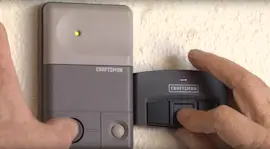
The manual procedure uses the black and purple buttons to set UP and DOWN stop points.
- Enter limit programming mode (indicator light flashes)
- Set the UP (open) position for vehicle clearance
- Confirm UP limit with the remote or wall control
- Set the DOWN (close) position so the door seals without excessive pressure
- Run 2 to 3 open/close cycles to confirm consistent stopping points
Safety checks after any limit change
After any travel-limit adjustment, test the safety reversal system.
| Test | What to do | Pass result |
|---|---|---|
| Reversal on object | Close onto a 1-1/2 inch object (or a 2x4 laid flat) | Door reverses on contact |
| Sensor beam | Block the photoeye beam during closing | Door will not close from a remote |
Why it matters
Incorrect travel limits can interfere with safe operation and the safety reversal system; it also increases opener strain and can cause door damage.
Last updated: February 2026
What are the common problems with Craftsman garage door openers?
The most common problems we see on the Craftsman 13953919D garage door opener are safety reversing sensor issues that stop the door from closing (often with blinking opener lights), remote or wall-control lock/programming problems, and travel or force settings that need adjustment. Use the 13953919D owner's manual diagnostic chart to narrow it down fast.
Common symptoms and likely causes
- Door will not close; opener lights blink: Safety sensors are blocked, misaligned, or wired incorrectly.
- Remotes will not activate the door: Wall control lock mode is on, remote needs programming, or receiver/logic issue.
- Door reverses while closing: Sensor beam interrupted, obstruction, or force setting too sensitive.
- Door stops or strains: Door hardware is binding (rollers/tracks), or travel limits are off.
- Sensor LEDs not steady: Sensor alignment or wiring polarity/open-short problem.
Quick checks we recommend first (no disassembly)
- Clear the sensor path; confirm both sensor indicator lights are steady.
- Try closing with the wall control; if it closes only from the wall control, focus on sensors.
- Check the wall console for lock mode (blinking indicator); turn lock mode off and retest.
- Watch the motor unit diagnostic LED flashes; match the pattern to the manual chart.
Diagnostic clues at a glance
| What you notice | Most likely cause | Next step |
|---|---|---|
| Lights blink; won’t close by remote | Safety sensor issue | Align sensors; remove obstructions |
| Sensor LEDs dim/flashing | Slight misalignment | Adjust brackets until steady |
| Remotes don’t work | Lock mode or not programmed | Disable lock mode; reprogram |
Why it matters
The safety reversing sensors are designed to prevent a closing door when the beam is blocked. When sensors are misaligned or miswired, the opener blocks remote closing to keep operation safe.
Helpful DIY references
- Use Craftsman error codes to interpret diagnostic flashes and symptoms.
- Follow how to maintain a garage door opener to reduce noise and wear.
Last updated: February 2026