Owner’s manual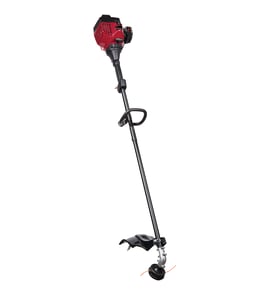


What is the fuel mix for a Craftsman gas trimmer?
For the Craftsman 316731930 gas trimmer, use a 40:1 fuel mix (40 parts fresh unleaded gasoline to 1 part 2-cycle engine oil). This ratio helps the 2-cycle engine lubricate properly, start easier, and avoid plug fouling and premature wear.
Quick mix chart (40:1)
| Gasoline amount | 2-cycle oil needed |
|---|---|
| 1 gallon | 3.2 fl oz |
| 2 gallons | 6.4 fl oz |
| 1 liter | 25 ml |
How we recommend mixing fuel
- Use a clean, approved fuel can (not the trimmer tank) for mixing.
- Add about half the gasoline first, then add the measured 2-cycle oil.
- Cap and shake to blend, then add the remaining gasoline and shake again.
- Use fresh fuel; old fuel is a common cause of hard starting and poor acceleration.
- Store mixed fuel tightly sealed and away from heat sources.
What to use (and what to avoid)
- Use 2-cycle air-cooled engine oil (often labeled for trimmers, blowers, and chainsaws).
- Use fresh unleaded gasoline (most owners use 87 octane).
- Avoid automotive 4-cycle oil; it is not designed to mix with gasoline.
- Avoid guessing the ratio; measure the oil every time.
Why it matters
A 2-cycle Craftsman trimmer relies on the oil in the fuel for lubrication. Too little oil can score the cylinder and piston; too much oil can cause heavy smoke, carbon buildup, and spark plug fouling.
For model-specific fuel and maintenance notes, follow the 316731930 owner’s manual.
Last updated: January 2026
How to unflood a string trimmer?
If your Craftsman gas trimmer model 316731930 is flooded, we clear it by stopping fuel flow, opening the throttle, and pulling the starter to purge excess fuel, then restarting with the correct choke position. Use the starting steps in the 316731930 owner's manual as your baseline.
Quick steps to unflood (works for most 2-cycle trimmers)
- Move the switch to OFF and set the trimmer on a flat surface.
- Set the choke to RUN/OFF (not FULL CHOKE).
- Hold the throttle wide open (this lets more air in).
- Pull the starter rope 6 to 10 times to clear the cylinder.
- Turn the switch to ON, keep throttle open, and pull until it tries to start.
- Once it fires, feather the throttle for 10 to 20 seconds so it stays running.
If it still will not start
Check the spark plug
A wet plug will not ignite fuel reliably. Remove it, dry it, and reinstall; replace it if it is fouled.
| What you see | What it usually means | What we do next |
|---|---|---|
| Plug tip is wet with fuel | Engine is still flooded | Dry plug, purge again, restart with throttle open |
| Plug is black/sooty | Rich mix or old plug | Replace plug and check air filter |
| Plug looks dry | Fuel may not be reaching cylinder | Check primer/choke operation and fuel condition |
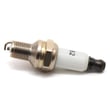
If you need a replacement, use the exact spark plug listed for this model: spark plug 794-00082.
Check airflow
A clogged air filter can make flooding easier and restarting harder. Inspect and replace if dirty: mtd line trimmer air filter 751-12833.
Why it matters
Flooding is simply too much fuel and not enough air for ignition. Clearing the cylinder and drying the spark plug restores the correct air-fuel balance so the ignition system can light the mixture.
Last updated: January 2026
What size string for Craftsman string trimmer?
For the Craftsman gas trimmer model 316731930, most owners use 0.095-inch (0.095 in) trimmer line for everyday trimming; it balances cutting power and feed reliability. For the exact line diameter and winding direction for your specific cutting head, follow the 316731930 owner's manual.
Recommended line sizes (what to use and when)
- 0.095 in: best all-around choice for thicker grass and light weeds
- 0.080 in: smoother feeding, good for lighter trimming (may wear faster)
- 0.105 in: heavy-duty cutting (can reduce runtime and may feed less smoothly)
Quick fit check before you buy line
Use these checks so the line feeds correctly and the bump head does not jam:
- Confirm your trimmer uses a bump-feed cutting head (common on gas trimmers)
- Match the diameter printed on the spool or in the manual
- Use round line for the most consistent feeding
- Replace line if it is brittle, flattened, or fused from heat
- Wind the line evenly and tight, without crossing wraps
Common symptoms and the likely cause
| Symptom | Most common cause | What to do |
|---|---|---|
| Line will not feed | Line too thick or wound wrong | Re-spool with the correct diameter and direction |
| Line feeds too fast | Line too thin or worn head parts | Move up one size or inspect the head |
| Line breaks constantly | Old line or hitting hard edges | Replace line; avoid fences, rocks, and curbs |
Why it matters
Using the correct trimmer line size helps the cutting head feed smoothly, reduces engine load, and prevents premature wear on the drive shaft and head components.
Last updated: January 2026
How to replace line on Craftsman gas trimmer?
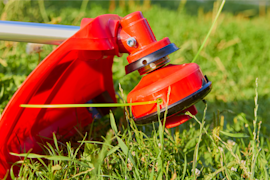
On the Craftsman 316731930 gas trimmer, you replace the cutting line by opening the bump head, removing old line, and winding new line evenly so it does not overlap. Even, non-overlapping wraps feed smoothly and reduce tangles.
Before you start
- Shut the engine off and let it cool completely.
- Disconnect the spark plug boot so the trimmer cannot start accidentally.
- Clean grass and debris off the cutting head and debris shield.
- Use the line diameter recommended in the 316731930 owner's manual.
How to reload the bump head (typical steps)
- Press the locking tabs (or remove the cap) to open the cutting head.
- Pull out any remaining line and remove tangled pieces.
- Cut two equal lengths of trimmer line (many heads use two pieces).
- Insert the line ends into the eyelets or anchor holes in the spool.
- Wind the line in the direction of the arrows on the spool.
- Keep the wraps tight and side-by-side with no overlapping.
- Feed the line ends through the head eyelets, reinstall the spool and cap, then pull the line to equal lengths.
Quick checks if the line will not feed
- Line is fused or stuck: rewind with looser, even tension.
- Wrong line size: too thick binds; too thin can slip.
- Overfilled spool: remove some line and rewind.
- Dirty head: clean the spool cavity and eyelets.
- Worn head components: replace the head if the spool will not latch or the eyelets are damaged.
| Symptom | Most common cause | What we do next |
|---|---|---|
| Line tangles inside head | Overlapping wraps | Rewind with tight, side-by-side wraps |
| Line breaks often | Line too thin or brittle | Use correct diameter, replace old line |
| Bump does nothing | Spool overfilled or stuck | Reduce line, clean and rewind |
Why it matters
Correct line loading protects the cutting head, improves trimming performance, and prevents constant stoppages from tangles, poor feeding, and premature line breakage.
Last updated: January 2026