Installation guide
 Owner’s manual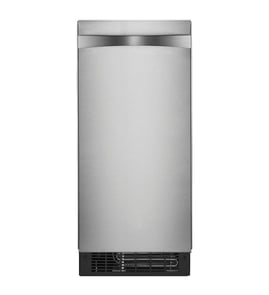




How do you reset the icemaker on a KitchenAid refrigerator?
For the KitchenAid KUIS18NNZB0 freestanding ice maker, the most reliable “reset” is a power reset: turn the selector switch Off, disconnect power, then restore power and turn it back On. This clears minor control glitches and restarts the ice-making cycle; use the steps in the KUIS18NNZB0 owner's manual.
- Push the selector switch to Off.
- Unplug the ice maker (or disconnect power at the breaker).
- Wait 1 minute.
- Plug back in (use a grounded 3-prong outlet).
- Turn the selector switch back On.
- Give the unit time to cycle; initial ice can take a while after a reset.
These checks match common “no ice” causes for this style of KitchenAid freestanding ice maker:
- Confirm the unit is plugged into a grounded 3-prong outlet and the breaker is not tripped.
- Make sure the control is turned On (not Off).
- Verify the room temperature is above 55°F (13°C); colder rooms can stop production.
- If water remains in the bin, check the drain hose for kinks or pinches.
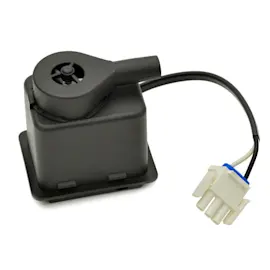
- If your unit uses a drain pump and it is not clearing water, inspect the ice maker drain pump W11542868.
| Reset type | What it does | When to use it |
|---|---|---|
| Power reset (Off, unplug, wait, restore power) | Reboots the control and restarts the cycle | Most intermittent issues, after a power flicker |
| Control troubleshooting | Targets a failed sensor/control/board | When it will not run even with correct power and water |
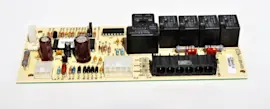
A proper reset helps you avoid unnecessary part replacement. If the ice maker restarts after a power reset, the issue is usually a temporary control interruption, not a failed component like the electronic control board, water fill sensor, or recirculation pump.
Last updated: January 2026
Why is my KitchenAid icemaker not making ice?
If your KitchenAid KUIS18NNZB0 freestanding ice maker runs but makes no ice, the most common causes are the control being OFF, the water supply being turned off or restricted, or the water filter not being fully locked in place. Start with the control and water checks in the KUIS18NNZB0 owner's manual.
- Confirm the ice maker control is set to ON/OFF = ON.
- Verify the household water shutoff valve is fully open.
- Check for kinked or pinched water tubing behind the unit.
- Make sure the water filter is installed correctly and locked; if it is not locked, the unit will not produce ice.
- If you use reverse osmosis (RO), confirm it can maintain steady pressure; low RO pressure can prevent filling.
- If the unit was recently moved or installed, recheck the water connection steps in the KUIS18NNZB0 installation guide.
This model needs a steady water supply. RO systems often struggle to keep up, especially if the RO tank is depleted or the RO sediment filter is restricted.
| What you see | Likely cause | What to do |
|---|---|---|
| Runs but no ice | Water supply off or not connected | Turn on supply, confirm connection |
| Very little ice | Low water pressure or restricted supply | Check RO tank, replace RO filters, verify pressure |
| Loud fill noise | High water pressure | Have a plumber reduce pressure (about 50 psi is commonly recommended) |
If the filter is not fully seated and turned to the locked position, the ice maker can run but not make ice.
- Remove and reinstall the filter, aligning the pin and turning until it locks.
- If the filter status light indicates replacement, install a new filter.
- If the filter housing or cap is damaged, inspect the filter area components such as the cartridge hood F2WC9I1.
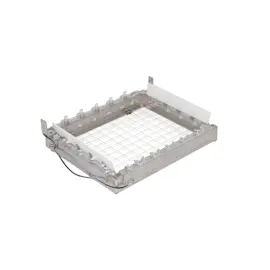
Ice production depends on correct fill, circulation, and freezing. A small issue like a partially closed valve, a kinked line, or an unlocked filter can stop water from entering, so the machine cannot form an ice sheet for the cutter grid.
Last updated: January 2026
What is the average lifespan of KUIS18NNZB0?
A KitchenAid freestanding ice maker like model KUIS18NNZB0 typically lasts 8 to 10 years with proper installation, clean water supply, and routine maintenance. Lifespan is strongly affected by water quality, cleaning frequency, and keeping the condenser area clear.
- Water quality and pressure; scale buildup shortens pump, valve, and evaporator life
- Cleaning and descaling schedule (mineral deposits reduce ice production and strain components)
- Ventilation and ambient temperature; poor airflow makes the compressor work harder
- Drain setup; slow or restricted draining can overwork the drain pump
- Door seal condition; air leaks cause longer run times and more frost
- Clean and descale on the schedule in the owner's manual
- Keep the front grille and condenser area free of dust and pet hair
- Confirm the unit is level and has proper clearance (see the installation guide)
- Replace a worn door gasket if you see gaps, sweating, or heavy frost
- Address slow draining promptly to protect the pump
These parts do not fail on a fixed schedule, but they are frequent decision points when an older unit stops making ice.
| System | What you may notice | Example part for KUIS18NNZB0 |
|---|---|---|
| Sealed refrigeration | Warm evaporator, long run times | Compressor, evaporator |
| Water circulation | Thin/soft cubes, poor freeze pattern | Recirculation pump |
| Drain | Water backing up, shutoffs | Drain pump |
| Controls/sensing | Intermittent operation | Control board, fill sensor |
Knowing the 8 to 10 year average helps you decide whether to repair (often best for pumps, sensors, gaskets) or plan replacement when major sealed-system components like the compressor or evaporator are involved.
Last updated: March 2026