Installation guide
 Owner’s manual
 Error Codes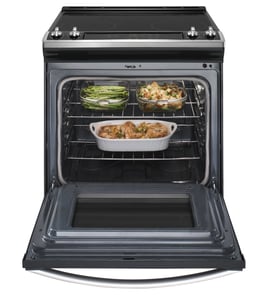





Are KitchenAid appliances high end?
KitchenAid is generally a premium, upper-mid-range brand; you typically get stronger build quality, better cooking performance, and more refined design than entry-level ranges. For your KitchenAid KESA907PSS00 electric slide-in range, the warranty coverage in the owner's manual also reflects that premium positioning.
What “high end” usually means in ranges
“High end” can mean different things depending on what you value most.
- Premium (KitchenAid’s typical lane): strong features and performance for serious home cooking
- Luxury: higher price tiers, more customization, and more specialized pro-style options
- Value/entry: fewer features and simpler controls, usually at lower cost
How KitchenAid compares (quick guide)
| Tier | What you usually get | Where KitchenAid fits |
|---|---|---|
| Entry/value | Basic heating, fewer modes, simpler controls | Usually above this tier |
| Premium | Better temperature control, more features, upgraded styling | Commonly here |
| Luxury | Pro-style build, specialty features, higher price | Typically above KitchenAid |
Model-specific clue: warranty coverage
For KitchenAid cooking products like ranges, the warranty commonly includes:
- 1-year full warranty (parts and repair labor for defects, when operated and maintained as instructed)
- Limited coverage in years 2 through 5 on certain components (such as electric elements and touch control systems, depending on product type)
- Limited coverage in years 2 through 10 on certain porcelain oven cavity or inner door conditions (as described in the warranty section)
Those longer limited-coverage periods are a common sign you are looking at a premium product line.
Why it matters
If you are deciding whether to repair or upgrade, “premium” usually means parts like an oven sensor, bake element, or control interface are worth maintaining because the overall platform (cabinet, insulation, door build, and cooking system) is designed for longer-term use.
Last updated: February 2026
What is the life expectancy of a KitchenAid oven?
Most KitchenAid ovens, including the KitchenAid KESA907PSS00 electric slide-in range, typically last 15 years with normal household use and basic maintenance. Heavy use, power surges, and heat-related wear on electronic controls and heating elements can shorten that lifespan; consistent cleaning and prompt repairs help it reach full life.
Typical lifespan and what affects it
For an electric range/oven like the KESA907PSS00, longevity usually comes down to heat stress, electrical health, and how quickly small issues are fixed.
- Typical life expectancy: about 15 years
- Light use and good care: often reaches 15 to 20 years
- Heavy daily use: can wear out key parts sooner
- Electronics and sensors: often fail before the oven cavity itself
- Heating elements: are wear items and may need replacement during the oven’s life
Parts that commonly limit oven life (and are replaceable)
If baking temperatures drift, preheat takes too long, or broil is weak, these are common repair points for this model:
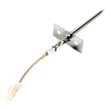
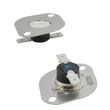
- Oven sensor WP8274149
- Wall oven temperature sensor WPW10131825
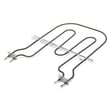
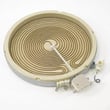
- Bake element 4451175
- Oven broiler element WP9760774
- Range membrane switch WP9756595ES
Quick symptom-to-part guide
| Symptom | Most likely area | Example part on this model |
|---|---|---|
| Food undercooks or overcooks | Temperature sensing | WP8274149 or WPW10131825 |
| No bake heat or slow preheat | Bake heating circuit | 4451175 |
| No broil heat | Broil heating circuit | WP9760774 |
| Buttons not responding | Control panel input | WP9756595ES |
Why it matters
Knowing the expected lifespan helps you decide whether to repair or replace. On a 15-year appliance, replacing a single wear part (like a bake element or sensor) often restores performance for years at a much lower cost than a new range.
Maintenance that extends life
We recommend these habits for electric ranges:
- Keep the oven interior clean to reduce heat retention and smoke
- Avoid slamming the oven door; it stresses hinges and door alignment
- Use cookware that fits the rack to promote even airflow
- Address temperature issues early (often a sensor or element)
- Follow operating and care instructions in the owner's manual
Last updated: February 2026
Why does my KitchenAid oven take so long to heat up?
If your KitchenAid KESA907PSS00 electric slide-in range is slow to preheat, the most common causes are a weak bake or broil element, an oven temperature sensor that is reading wrong, or airflow issues from a running cooling blower. Checking the heating parts first usually pinpoints the problem fastest.
Quick checks we recommend first
- Confirm you are using Bake, not Self-Clean (self-clean locks the door and runs a long timed cycle). See the KESA907PSS00 owner's manual for normal operation details.
- Preheat with an empty oven; heavy cookware and foil can slow heat-up.
- Verify the oven door closes fully; heat loss can add several minutes.
- Watch the bake element during preheat; it should glow red at times.
- If you smell overheating at the back or see unusual heat at the vent, check that the cooling fan is running and vents are not blocked.
Parts that commonly cause slow preheat on this model
A slow preheat is usually a heating or sensing problem. These parts are commonly involved:
| Symptom | Most likely part | What it affects |
|---|---|---|
| Takes a long time to reach set temp | Bake element 4451175 | Primary heat source in Bake |
| Top browns poorly, long preheat | Oven broiler element WP9760774 | Assists heat-up and balances temperature |
| Temperature swings, underheats or overheats | Oven sensor WP8274149 | Tells the control the actual oven temperature |
| Heat seems excessive at vent, fan noise changes | Oven blower W10810687 | Moves cooling air; can affect heat management |
How we troubleshoot it (simple, safe approach)
- Power off at the breaker before inspecting or testing anything.
- Visual check: look for blisters, cracks, or burned spots on the bake and broil elements.
- Performance check: if the oven eventually reaches temperature but is consistently slow, the bake element is a prime suspect.
- Sensor check: if temperatures are inconsistent (food undercooks, then suddenly overbrowns), the sensor is often the issue.
- Wiring check: if you see heat damage on wires/connectors, repair before replacing parts; use high-temp wire such as cooking appliance splicing wire when needed.
Why it matters
Long preheat times usually mean the oven is not producing full heat or the control is getting the wrong temperature feedback. Fixing the root cause helps restore normal bake times, improves temperature accuracy, and reduces strain on the control and wiring.
Last updated: February 2026
What does error code F9E0 mean on a KitchenAid oven after power outage?
On the KitchenAid KESA907PSS00 electric slide-in range, error code F9E0 after a power outage points to an oven temperature sensing problem, most often the oven sensor circuit (sensor, wiring, or the electronic control reading the sensor). Start by resetting power, then check the sensor and its connections.
Quick reset steps (after an outage)
- Turn the range breaker OFF for 1 minute, then turn it ON.
- If the code returns, press OFF/CANCEL to clear the display.
- If the oven was in Sabbath Mode during the outage, the oven can stop actively cooking after power is restored; press OFF to return to normal operation (non-Sabbath mode). See the KESA907PSS00 owner's manual.
What to check next (most common causes)
- Oven sensor resistance: A failing sensor can read out of range and trigger F9E0.
- Loose or damaged wiring: Look for pinched, burned, or corroded connectors between the sensor and control.
- Control board connection: A slightly loose plug at the control can cause intermittent sensor readings.
- Heat damage: High-heat events can weaken terminals and cause poor contact.
Parts that commonly fix F9E0 on this model
If testing points to a sensor issue, these model-matched parts are commonly involved:
| Symptom you see | Most likely area | Part to consider |
|---|---|---|
| F9E0 returns quickly after reset | Sensor out of range | Oven sensor WP8274149 |
| Oven temp swings, bakes unevenly | Sensor drifting | Wall oven temperature sensor WPW10131825 |
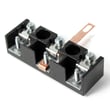
| Code appears after moving range or vibration | Loose connection at power input | Terminal block WP8203546 |
Why it matters
The oven control relies on the temperature sensor signal to regulate bake and broil safely. When the sensor circuit reads incorrectly, the control may stop heating or heat unpredictably, so clearing the code without fixing the cause can lead to poor cooking results.
Last updated: February 2026